





Key Takeaways
What is the fundamental difference between day and overnight camps?
Day camps operate during standard business hours (typically 6–9 hours a day), allowing children to return home every evening, whereas overnight camps provide 24/7 supervision and lodging.
How do day camps accommodate the schedules of working parents?
Most programs align with the typical workday, and many offer Extended Care options with drop-off as early as 7:30 AM and pick-up as late as 6:00 PM.
At what age can a child typically start attending a day camp?
While the sweet spot is ages 6–10, many programs accept toilet-trained children as young as 3 years old, offering modified schedules with nap times and sensory play.
What should parents look for regarding safety and staffing?
A high-quality camp should maintain a staff-to-child ratio of 1:6 to 1:10 and require all staff to undergo background checks and CPR/First Aid certification.
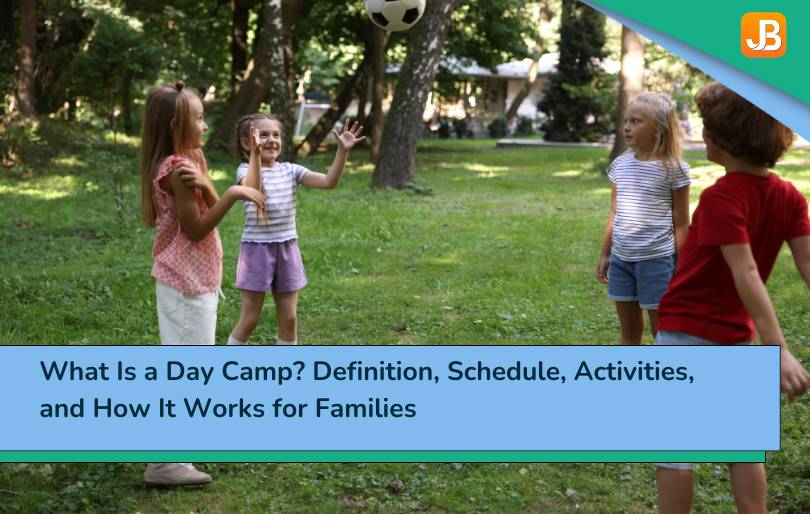
A day camp is a structured program where children participate in supervised activities during the day and return home each evening. Typically operating during standard business hours, these programs provide a blend of education, physical activity, and social interaction without the overnight stay required by sleepaway camps.
This guide breaks down everything you need to know about day camps from typical schedules and age-appropriateness to the logistical benefits for working parents.
What Is a Day Camp?
A day camp is a structured daytime program where children attend supervised activities during set business hours and return home to their families each evening.
Day Camp vs. Overnight Camp: What’s The Difference?
The primary difference between day camps and overnight camps is the sleeping arrangement and the duration of the program. While overnight or sleepaway camps involve 24/7 engagement for weeks at a time, day camps function more as a school schedule but with a focus on recreation and socialization.
This is the difference between day and overnight camps in one glance:
| Feature | Day Camp | Overnight Camp |
| Duration | 6–9 hours per day | 24 hours a day |
| Setting | Local schools, parks, or centers | Remote cabins or campuses |
| Best For | First-timers, younger kids, local families | Older kids, independence building |
| Cost | Generally more affordable | Higher (includes room and board) |
How Do Summer Day Camps Work Day to Day?
Unlike sleepaway camps that begin with a morning bugle call in a cabin, summer day camps begin when children arrive in the morning. The rhythm of the day is designed to maximize energy in the morning and provide structured quiet periods as pick-up time approaches.
Typical Day Camp Schedule from Drop-off to Pick-up
A well-organized camp follows a predictable block schedule to help children feel secure, and transitions stay smooth.
- Morning (8:30 AM – 9:15 AM): Drop-off and Morning Rally
Kids arrive, check in with counselors, and often participate in peaceful games such as Four Square or friendship bracelets while the full group assembles. - Late Morning (9:30 AM – 11:30 AM): Core Activities
This is when day camp activities, including sports, swimming, or STEM projects, take place while the campers’ energy is at its highest. - Noon (12:00 PM – 1:00 PM): Lunch and Rest
This is a vital period for refueling. Many camps implement “quiet time” or “bunk time” where kids read or do light crafts to avoid mid-day burnout. - Afternoon (1:30 PM – 3:30 PM): Special Events
Color wars, relays, matches, or guest presentations often happen here. - End of Day (3:45 PM – 4:00 PM): Closing Circle and Pick-up
Camps often end with a group song or awards before parents arrive.
What Should Parents Expect at Drop-off and Pick-up?
Safety is the priority. Most camps use a “Check-in/Check-out” system. Parents should expect to show ID or a digital “pick-up pass.”
Also, Do day camps have early drop-off and late pick-up?
Many programs offer “Extended Care” for an additional fee. This typically allows parents to drop off as early as 7:30 AM and pick up as late as 6:00 PM to accommodate full-time work schedules.
Types of Day Camps
Day camps come in various formats ranging from traditional multi-activity programs to specialized academic or sports tracks designed to meet a child’s specific interests.
Traditional Multi-activity Day Camps
Traditional camps are best for elementary through pre-teens who want variety.
These camps offer a wider range of experiences, including a little bit of sports, a little bit of art, and plenty of outdoor play. They are ideal for kids who need to build general social skills and confidence without the pressure of specializing in one skill.
Sports Day Camps
Children with high energy or sports aspirations will enjoy sports day camps the most. These camps focus on specific sports, such as soccer or basketball, or general physical literacy. They are excellent for developing teamwork and motor skills.
STEM and Academic Day Camps
School-aged kids who enjoy science, technology, and math may need day camps with a bit more specialized programs offering robotics, coding, and hands-on experiments. They are perfect for students interested in future careers in tech who want to explore concepts in a low-pressure, fun environment.
Arts and Performance Day Camps
These camps provide a specialized, supportive environment for children and teens to explore their creativity through theater, dance, music, or fine arts. Unlike general camps, the focus here is on the process of creation, helping campers build technical skills while gaining the confidence to share their work with others.
Nature and Outdoor Exploration Day Camps
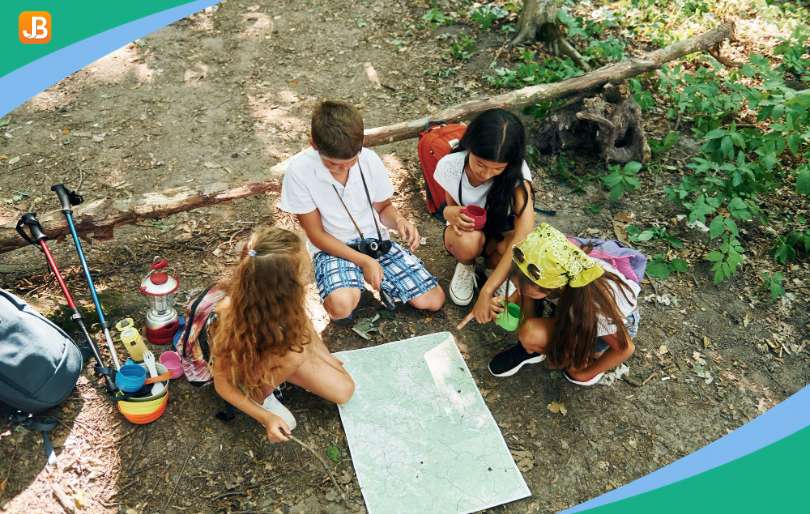
Commonly held at parks or nature centers, these camps focus on hiking, wildlife education, and environmental stewardship.
Who should attend? This type of camp is ideal for children who enjoy playing in open spaces and have a natural curiosity about plants, animals, and the environment.
Day Camp Activities: What Kids Actually Do
The variety of programming is what defines the camp experience. A high-quality day camp balances high-energy physical movement with quiet challenges to make sure kids stay engaged without becoming overstimulated. Since each camp often has a distinct theme, the specific daily activities will vary, but most follow a core curriculum of social and physical play.
High-energy Group Games
These activities focus on physical development, collaboration, and leadership. Group games are designed to get kids moving while teaching them how to work toward a common goal.
- Team Challenges: Classic games such as Capture the Flag, relay races, and “The Floor is Lava” obstacle courses.
- Outdoor Skills: Many camps include shelter building, scavenger hunts, and basic orienteering or rock climbing.
- Large Group Games: These are perfect for building “camp spirit,” involving the entire camp in field days or “Color Wars.”
Creative Stations (Art, Music, Drama)
Creative stations provide a “flow state” where kids can focus on individual expression and fine motor skills. These are often the most memorable parts of the day for many campers.
- Visual Arts: Activities include traditional painting and sculpting, as well as more unique projects such as papier-mâché, clay modeling, and printmaking.
- Performance: Kids often participate in drama games, skit rehearsals, or music workshops where they learn rhythm and basic instruments.
- Traditional Crafts: Classic camp activities such as tie-dyeing, lanyard weaving, and friendship bracelet making remain popular for a reason: they encourage social bonding during the process.

Learning-based Activities (STEM, Projects)
These activities engage the mind through hands-on projects that feel like play rather than schoolwork.
- Science Experiments: Kids might build baking soda volcanoes, create slime, or launch water rockets to learn about chemical reactions and physics.
- Engineering Challenges: Building bridges from popsicle sticks to test weight limits or constructing egg-drop containers are popular ways to teach problem-solving.
- Technology: Many modern camps include intro-level coding, robotics, or digital photography projects tailored to different age groups.
Indoor Camp Activities
Great camps never let the weather stop the fun; they simply shift to “Rainy Day Protocols.” When outdoor space is limited, staff think of indoor camp activity ideas to keep children entertained.
Indoor activities can take many shapes:
- Indoor Games: Trivia contests, board game tournaments, and indoor Olympics keep the energy high.
- Quiet Enrichment: Baking and cooking projects, movie sessions, or extended art workshops are common indoor alternatives.
- Logistics: Professional camp registration software is often used by directors to send real-time SMS alerts to parents when weather changes the pickup location or schedule.
What Ages Are Day Camps For?
Day camps serve a broad age range, typically from toddlers aged 3 to teenagers aged 15. Many parents wonder at what age a child can start day camp. While the general answer is around age 5, many preschool programs accept toilet-trained children as young as 3.
Day Camp for Kids: Preschool Through Middle School
The structure of the day shifts significantly as kids grow, ensuring that the level of independence matches their maturity.
- Preschoolers (Ages 3–5): At this stage, the focus is on sensory play, foundational social rules, and plenty of rest. These programs often include scheduled nap times and shorter activity blocks to prevent overstimulation.
- Elementary Scholars (Ages 6–10): Often considered the sweet spot for summer day camps, these years are defined by group games, skill-building, and the development of close friendships.
- Middle and High Schoolers (Ages 11–15): Older campers often graduate from standard play to specialized tracks. Many programs offer leadership programs where teens learn responsibility by assisting staff with younger groups.
Because of these distinct needs, parents often ask, “Do day camps group kids by age?” The answer is almost always yes. Grouping by age ensures that a 6-year-old isn’t competing in sports against a 12-year-old and that the curriculum remains challenging but achievable for everyone.
Signs a Child Is Ready for Day Camp
Age isn’t the only factor; emotional readiness is equally important. A child is generally ready for a day camp once they can follow basic directions from a non-parental adult, are comfortable in group settings, and are willing to try new things away from home.
It is natural to worry, “What if my child has separation anxiety?” This is a common hurdle for first-time campers. To manage this, look for programs with low staff-to-child ratios and trained staff to help children settle in.
Benefits of Day Camps for Kids and Why Parents Choose Them
While day camps are fun, they also serve a critical developmental and logistical role:
- Social Skills and Confidence: Camp is one of the few places where kids interact with different age groups outside of a strict classroom setting.
- Routine and Structure: It keeps children on a healthy sleep cycle during school breaks, making the transition back to school much easier.
- Flexibility for Working Families: For many, day camp is an essential childcare solution that offers much more enrichment than a standard daycare center.
Is day camp basically childcare?
While it provides the service of childcare, the focus is on enrichment. Unlike a babysitter, camp offers a curriculum designed to foster growth, skill acquisition, and community.

Safety and Supervision: What Great Day Camps Have in Place
A parent’s peace of mind is the foundation of any successful camp.
Staff training and ratios
A gold-standard camp usually maintains a ratio of 1 staff member for every 6–10 children (depending on age). Staff should undergo:
- Background checks (FBI/State level)
- CPR and First Aid certification
- Conflict resolution training
Health policies
Camps must have clear protocols for:
- Allergies: Nut-free zones and Epi-Pen storage.
- Medication: Securely logged and administered by a designated health officer.
- Incidents: A clear “Incident Report” system to notify parents of scrapes or bumps.
Overall, what safety policies should a day camp have?
At a minimum, ask about their “Rule of Three” (no staff member is ever alone with a single child) and their emergency weather/evacuation plans.
Cost and Registration of Day Camps
On average, the cost of a day camp is between $200 and $800 per week. These programs are ideal for families who prefer a flexible drop-off and pick-up schedule and want their children to return home each evening. In contrast, overnight camps typically range from $500 to $1,500 per week, offering a fully immersive experience that includes supervised nighttime activities and outdoor adventures.
Before paying the tuition, learn about what forms parents fill out for day camp registration. Expect to provide a medical history form, immunization records, emergency contact info, and liability waivers. Most modern camps use online registration systems to make this paperless and fast.
How to Start a Day Camp
If you are looking to launch a program at your school, church, or community center, here is a foundational checklist to get you started:
1. Program Design
Define your niche. Will you be a STEM camp or a traditional outdoor program?
- Capacity: How many kids can your facility safely hold?
- Staffing: You’ll need a Director, Counselors, and potentially a Health Officer.
2. Compliance and Legal
Safety is non-negotiable.
- Insurance: Secure general liability and accident insurance specifically for youth programs.
- Licensing: Check your state’s Department of Health or Social Services for summer camp regulations.
3. Enrollment and Operations
Managing 50 or 500 kids requires organization.
- Waitlists: Popular camps fill up fast; you need a system to manage the queue.
- Payments: Automated billing and deposit tracking save hours of administrative work.
- Communication: Centralized updates ensure parents get the right info at the right time.
But what’s the easiest way to manage camp registrations?
Using a dedicated camp registration software such as Jumbula allows you to handle forms, payments, and communication in one dashboard. This reduces administrative overhead and provides a professional experience for families.
Conclusion
Day camp programs offer the perfect balance of enrichment and convenience, allowing kids to dive into day camp activities while returning home each evening. For families, it is a bridge to independence; for providers, running a day camp for kids is an invaluable opportunity to build community and foster development.
Whether you are navigating summer day camps as a parent or learning how to start a day camp as an administrator, organization is the key to a stress-free season.
Frequently Asked Questions
What is a day camp in one sentence?
A day camp is a supervised daytime program where children participate in structured recreational or educational activities and return home to their families each evening.
How long is a day camp session: day, week, or month?
Day camp sessions are most commonly booked in one-week blocks, though programs typically run for 8 to 10 weeks throughout the summer. While some specialty programs offer single-day “pop-up” sessions, most families enroll for 2–4 weeks to allow their child to fully integrate into the camp culture.
What should my child bring to day camp?
Every child should have a lightweight backpack containing a refillable water bottle, closed-toe shoes, sunscreen, and a hat. If the camp includes water play, you should also pack a swimsuit, a towel, and a plastic bag for wet clothes. Always label every item with your child’s name to prevent them from ending up in the lost-and-found.
Can my child attend only one week?
Yes, the majority of day camps offer the flexibility to register for a single week. This is an ideal way for first-time campers to “test the waters” or for families to fit camp around a scheduled summer vacation.
Do day camps provide lunch?
It depends on the program. Many municipal and “all-around” camps require parents to pack a nut-free sack lunch, while private or university-based camps may include a hot lunch or a catered meal plan in the tuition. Always check the camp’s food policy for refrigeration rules and allergy restrictions.
Is day camp good for first-time campers?
Day camp is widely considered the best choice for first-time campers because it builds social independence in a familiar daytime setting. It allows children to experience the magic of camp in the shape of making new friends and learning skills, without the potential stress of sleeping away from home for the first time.