




Key Takeaways
What are the best camping games for kids?
The best camping games are simple, safe, and adaptable to space, age groups, and energy levels, helping kids stay engaged while encouraging teamwork and participation.
Which types of camping games work in different camp situations?
High-energy outdoor games, calm campfire activities, rainy-day indoor games, and mixed-age team challenges all serve different purposes depending on schedule, weather, and group dynamics.
Why are team-building and cooperative games important at camp?
Cooperative activities promote communication, inclusion, and shared problem-solving, making them especially effective for mixed-age groups and structured camp programs.
How can camps organize games more effectively?
Clear scheduling, accurate rosters, and organized communication help staff choose suitable activities, maintain safety, and run games smoothly with fewer disruptions.
Camping games for kids help keep campers engaged, active, and off screens during camp programs and outdoor trips. Whether you’re managing a campsite, organizing a cabin schedule, or leading a full-day program, children benefit from structured activities that match the space, time available, and energy level, rather than last-minute ideas that create confusion.
This guide brings together 40+ fun, safe game ideas, organized by setting, age group, and prep level, so it’s easier to choose the right activity for each moment. From high-energy outdoor play and calm campfire options to rainy-day fillers and mixed-age challenges, every activity is designed to be practical and easy to run.
What Are the Best Camping Games for Kids?
The best camping games for kids are easy to explain, safe to supervise, and flexible enough to work across different camp environments. Well-designed activities keep children engaged without requiring extensive setup, which makes them suitable for campsites and organized group programs.
In general, the most effective options share three key traits:
- They match the available space and energy level.
- They encourage inclusive group participation.
- They adapt easily to different ages and group sizes.
Choosing the Right Game for Each Moment
The table below offers quick guidance for choosing games based on how and when they’ll be used.
Camp situation | Best game type | Example games | Why it works |
| First-day icebreakers | Simple social games | Name & Action, Two Truths and a Tale, Would You Rather | Builds comfort quickly |
| Hot afternoons | Active outdoor games with breaks | Water relays, Sharks and Minnows, Frisbee toss | Allows movement with rest |
| Cool mornings | Light movement games | Follow the Leader, Nature Walk Bingo, Stretch & Freeze | Warms kids up gradually |
| Evenings | Low-energy group games | Story circle, Silent Ball, Campfire charades | Helps groups wind down |
| Before bedtime | Quiet focus games | Sound guessing, 20 Questions, Counting circle | Supports transition to rest |
| Rainy tent or cabin time | Indoor-friendly games | Simon Says, Drawing Telephone, Guess the Leader | Works in a limited space |
| Mixed-age groups | Simple team games | Scavenger hunt, Charades, Red Light Green Light | Easy to scale by age |
| Large groups | Structured team games | Capture the Flag, obstacle course, group relays | Helps maintain order |
| Small groups | Cooperative or creative games | Story building, puzzle challenge, nature art | Encourages participation |
| Limited supplies | No-prep games | I Spy, Rock–Paper–Scissors, animal sound circle | No materials needed |
| Short downtime | Quick-play games | Duck Duck Goose, counting games, Name & Action | Fills gaps quickly |
Use this table to help plan games for kids at camp based on your setting, group size, and schedule.
Games for Kids at Camp vs. Games for Family Camping: What’s the Difference?
The difference between these activities lies in scale, structure, purpose, and how the games are designed to operate in real-world settings.
Games for kids at camp are built for larger groups and structured schedules. They rely on clearly defined rules, designated play areas, and a quick setup so activities can run efficiently under supervision. These games are designed to keep many children engaged simultaneously while maintaining order and safety.
Family camping games, by contrast, are better suited to smaller groups and unstructured time. They move at a slower pace, allow for flexible rules, and don’t require strict organization. The emphasis is on shared enjoyment and adaptability rather than coordination.
Put simply, camp-based games prioritize efficiency and group management, while family camping games focus on ease, flexibility, and relaxed participation.
Which Outdoor Active Camping Games Work Best for High Energy?
High-energy activities are most effective when movement stays fun but controlled. Clear play zones, short rounds, and straightforward rules allow kids to release energy while keeping games manageable in busy camp environments.
Tag Variations That Work at a Campsite
Tag games are easy to start and naturally energetic, but campsite-friendly versions help keep movement contained and reduce risks around tents, trees, and shared spaces. As part of well-planned camping games for kids, these variations balance excitement with safety.
- Partner Tag: Players move in pairs, limiting unsafe sprinting and encouraging teamwork.
- Circle Tag: Play remains within a marked perimeter, making supervision easier.
- Flashlight Tag: A nighttime variation where players are tagged using a light beam instead of physical contact.
- Freeze Tag: Tagged players freeze in place until freed by a teammate.
- Shadow Tag: Players tag shadows rather than bodies, adding a creative twist during daylight hours.
- Safety rules: Night-only, walking feet only, define a small lit boundary, no running near tents/fire rings, and an adult stays at the edge of play.
Classic Large-Group Games Adapted for Campsite Boundaries
Familiar games work well in camp settings when adapted to smaller spaces and clearly defined boundaries, making them safer and easier to supervise in large groups.
- Red Rover, modified: Controlled crossings replace physical collisions.
- Steal the Treasure: Teams collect objects from a shared central zone.
- Capture the Flag, compact: Defined home zones limit roaming.
- Hide-and-Seek with safety zones: Play is restricted to approved areas only.
- Kick the Can, supervised: A soft object and visible perimeter keep play controlled.
What Are the Best Campfire and Evening Games for Kids?
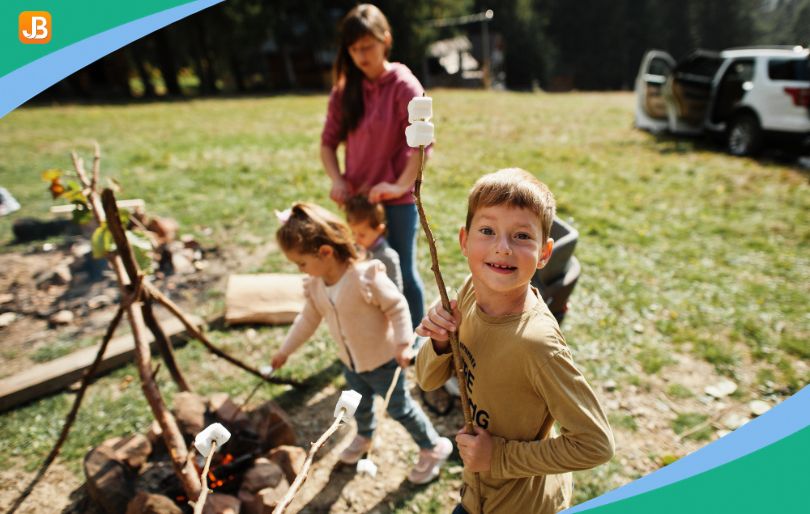
The best campfire and evening games are calm, easy to follow, and designed for group participation with minimal movement. These camping games for kids encourage shared focus and simple interaction, making them ideal for campfires, lantern light, and quiet outdoor circles at the end of the day.
Campfire Games Kids Can Play With No Gear
Campfire games rely on conversation, listening, and imagination, making them easy to start and manage after a full day of camp programming.
- Would You Rather: Outdoor-themed choices encourage discussion and help campers learn about each other.
- Two Truths and a Lie: Campers share facts while the group guesses which statement is false.
- Story-building circle: Campers create a shared story by adding one sentence at a time.
- Campfire charades: Camp-themed actions or animals are acted out while the group guesses.
- Fortunately / Unfortunately: Campers take turns adding positive or negative twists to a shared story.
- Who Am I?: Players guess a mystery character or animal by asking yes-or-no questions.
Nighttime Nature Games
The games draw attention to the surrounding environment, helping campers stay engaged while naturally lowering energy levels.
- Guess-the-sound listening game: Campers identify insects, wind, or distant animals by listening closely.
- Stargazing challenge: Groups look for a few easy-to-spot constellations or patterns in the night sky.
- Sky stories: Campers create simple stories inspired by shapes they see among the stars.
- Night color hunt: Campers quietly identify objects by shade or silhouette rather than color.
- Moon watch: Groups observe the moon’s shape and brightness and share what they notice.
Low-Prep and No-Equipment Camping Games: Need Something Fast?
Low-prep, no-equipment games can start immediately, require no materials, and fit easily into short time windows. These camping games for kids are especially useful when groups are waiting, schedules shift, or activities need to begin without advance setup.
Easy No-Equipment Games You Can Start Immediately
The games below use simple prompts and familiar rules, which makes them quick to explain and easy to manage in almost any camp setting.
- I Spy: Players search for natural objects using descriptive clues.
- Simon Says: Leaders give camp-themed commands that guide movement.
- 20 Questions: Players guess animals, gear, or outdoor items through yes-or-no questions.
- Rock–paper–scissors tournament: Short rounds create instant engagement for any group size.
Educational and Nature-Based Camping Games: Learning Without the Classroom
Educational and nature-based activities help children learn through hands-on experience rather than formal instruction. Through exploration and observation, nature-based games build problem-solving skills and environmental awareness without feeling like school.
Scavenger Hunts With a Learning Twist
Scavenger hunts encourage close attention to the natural world and help campers recognize patterns, differences, and details in their surroundings. Games for kids at camp turn learning into active discovery without the structure of a traditional lesson.
- Texture and color hunt: Campers search for natural items that match specific textures or colors.
- Leaf shape hunt: Players compare and group leaves by size, shape, or edge patterns.
- Photo-based hunt: Campers document their findings with photos rather than collecting items, supporting leave-no-trace practices.
Skill-Building Games for Older Kids
Skill-building games focus on practical outdoor skills while giving older campers more independence and responsibility. They support confidence, leadership, and real-world problem-solving in a camp setting.
- Basic orienteering: Campers use simple maps and compasses to navigate short, clearly marked routes.
- Wildlife spotting challenges: Players identify animals or signs of wildlife using visual clues and field guides.
- Knot-tying challenge: Campers learn and practice basic knots used for tents, tarps, or gear setup.
- Camp setup planning game: Small groups plan the layout of a campsite, deciding where to place tents, cooking areas, and shared spaces.
Why Team-Building and Cooperative Camping Games Work So Well
Team-building activities emphasize collaboration over competition, making them easier to run with mixed-age groups. When success depends on working together, campers of different abilities can contribute meaningfully and feel included.
Group Challenges Using Natural Materials
Activities using simple campsite materials encourage communication, planning, and shared problem-solving by prioritizing teamwork over speed or individual performance.
- Tent-building teamwork challenge: Small groups set up a tent using assigned roles, fostering coordination and clear communication.
- Build-a-bridge challenge: Teams use sticks and leaves to span a short gap while testing balance and stability.
- Problem-solving relay: Campers pass an object through the group while following specific constraints that require cooperation.
- Nature shelter challenge: Teams design a small shelter using natural materials, focusing on structure and shared decision-making.
- Group pattern build: Campers work together to recreate a shape or pattern on the ground using stones, sticks, or leaves.
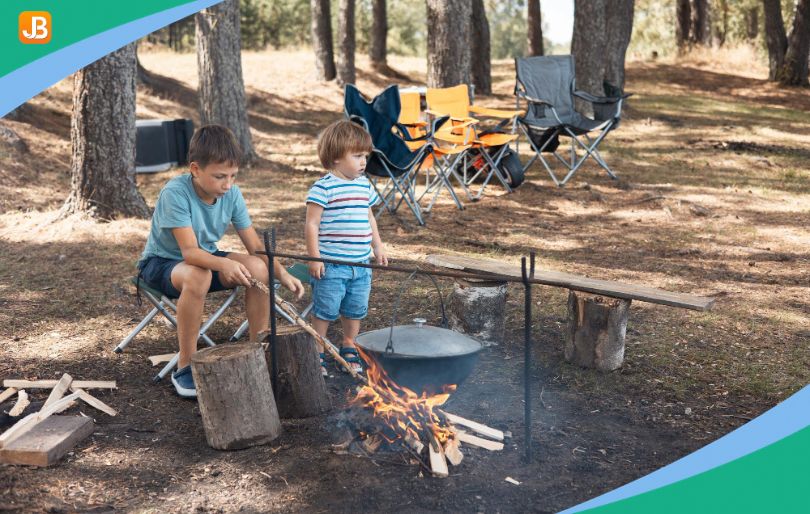
Stuck Inside? Tabletop and Travel Camping Games for Rainy Days
When weather, quiet hours, or limited space prevent active play, tabletop and travel games offer a simple way to keep kids engaged and focused. Games for kids at camp work especially well in tents, cabins, or shared indoor spaces where movement needs to stay minimal.
What to Look for in Travel-Friendly Games
The best travel-friendly options are easy to carry, quick to explain, and durable enough for repeated use in camp settings. Simple formats make it easier to start and stop games without disrupting the overall schedule.
- Small footprint: Games should fit easily into backpacks or camp bins.
- Quick rules: Short learning curves help keep downtime productive.
- Durable materials: Cards or pieces that withstand moisture and frequent handling last longer in camp environments.
Examples: a simple deck of cards, dice games, or compact prompt games (great for cabins and rainy tent time).
Reliable choices include compact card games, dice games, simple strategy games, and creative prompt-based options that don’t require boards or large setups. These games can be rotated during rainy periods or quiet time to keep groups engaged when outdoor play isn’t possible.
Water and Summer Camping Games: Beating the Heat Safely
On hot days, water-based activities offer a fun way to cool down while keeping play controlled. The most effective options use clear play zones, simple rules, and slip-resistant surfaces, helping kids stay safe while remaining active.
Easy Water Relays and Toss Games
Water games help campers cool off without requiring full water play or large equipment. Because they rely on limited water and predictable movement, they are easier to supervise and safer to run in shared camp spaces.
- Sponge toss relay: Teams transfer water using sponges, focusing on coordination rather than speed.
- Bucket relay: Campers pass water down a line with clear start and stop points.
- Floating object races: Players guide sticks or leaves across water using gentle airflow or controlled movement.
- Target splash toss: Campers toss wet sponges at ground targets to practice aim without running.
- Cup-fill challenge: Teams use small cups to fill a container, encouraging patience and teamwork.
Camping Games for Mixed Age Groups: How Do You Make Them Work?
Running activities for mixed-age groups work best when games remain flexible rather than rigid. By adjusting rules, pacing, and responsibilities, games for kids at camp can stay engaging for younger campers while still offering enough challenge for older ones.
How to Adapt Games for Different Age Groups
Adapting games by age helps prevent younger campers from feeling overwhelmed and older campers from losing interest.
- Ages 4–7: Use short rounds and simple rules.
Example: In tag games, reduce the play area and end rounds quickly to keep attention focused. - Ages 8–12: Add team goals or time limits.
Example: Turn a scavenger hunt into a team challenge with a countdown instead of individual searching. - Teens: Introduce strategy and leadership roles.
Example: Assign teens as team captains in Capture the Flag or planners in a problem-solving challenge.
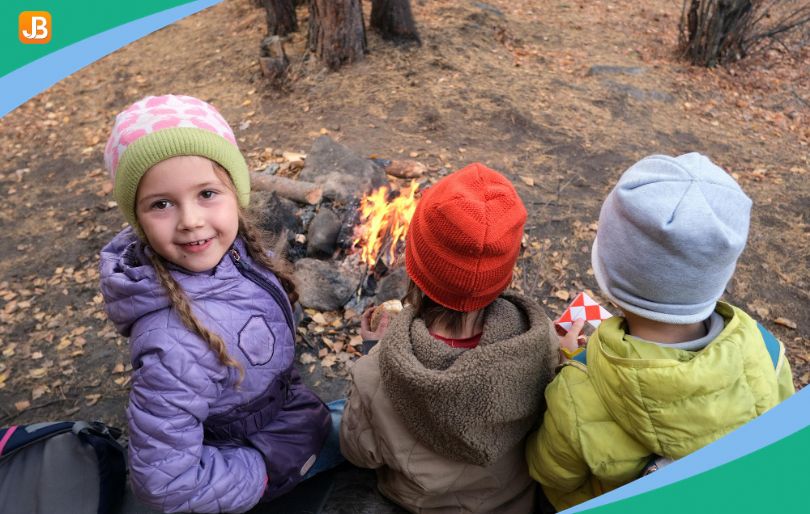
How Do You Keep Camping Games Safe and Organized?
Camping games stay safe and organized when they’re planned intentionally rather than adjusted on the fly. By considering space, conditions, and group size in advance, many common issues can be prevented before activities begin.
Safety and Camp Management Checklist
Use this checklist before starting any group activity to reduce risk and avoid disruptions.
- Set clear boundaries and assign buddies: Mark play zones clearly and pair campers before the game begins.
- Check for wildlife risks: Avoid areas near food storage, water edges, or known animal paths.
- Quiet-hour options: Keep low-noise choices ready (Would You Rather, story circle, sound-guessing).
- Stage first-aid access: Place supplies nearby and confirm who is responsible if assistance is needed.
- Weather-based swaps (backup list): Pre-pick 3 rainy-day games and 3 heat-safe games so staff can switch fast.
When these steps are in place, camping games for kids remain organized, safe, and easier to supervise across different environments.
How Scheduling and Group Management Impact Camp Activities
Camp activities rely on coordination across age groups, locations, and time blocks. When rosters, schedules, or communication aren’t aligned, games become harder to manage, groups overlap incorrectly, and staff are pulled away from leading activities to resolve logistical issues.
How Camp Registration Software Supports Better Activities
Camp registration software (for example, Jumbula) helps keep rosters, schedules, and key camper information organized, so staff spend less time chasing details and can plan and manage activities with greater consistency and fewer disruptions.
- Accurate rosters by age group and session: Staff can select activities that match the actual group size and age mix.
- Capacity limits and waitlists: Popular games are managed to avoid overcrowding.
- Clear parent communication: schedule updates and changes are shared quickly and reliably.
- Central access to camper information: Waivers, allergies, medical notes, and pickup permissions are available when needed.
When scheduling and group data are reliable, games for kids at camp run more smoothly, stay better organized, and require less staff intervention.
Final Thoughts
Planning activities is easier when games are chosen based on clear criteria rather than guesswork. This guide shows how to select camping games for kids based on setting, group size, energy level, and prep time, so activities stay controlled, adaptable, and appropriate throughout the day.
When those decisions are supported by organized schedules and accurate rosters, often managed through camp registration software such as Jumbula, games for kids at camp become simpler to run, easier to supervise, and more consistent across sessions.
FAQ
What are fun outdoor camping games for kids with no equipment?
Fun no-equipment outdoor options include tag variations, I Spy, Follow the Leader, animal-sound circles, and 20 Questions.
What are the best campfire games for children?
The best campfire games are calm, easy to follow, and encourage group participation. Popular choices include Would You Rather, Two Truths and a Lie, storytelling circles, campfire charades, and listening-based nature games that fit a low-energy evening setting.
What are safe camping games for kids in a small campsite?
In small campsites, safety comes from controlled movement and clear boundaries. Games like Circle Tag, Simon Says, scavenger hunts, quiet relay challenges, and charades work well because they limit running and are easy to supervise.
What games work best for mixed-age groups at camp?
Scavenger hunts, team relays, cooperative challenges, and problem-solving games allow younger campers to participate while older campers take on leadership roles, making them effective for groups with varied age ranges.
How do I keep kids entertained when it rains while camping?
During rainy weather, tabletop games, card games, drawing activities, guessing games, and storytelling challenges are effective. These indoor-friendly activities help maintain focus and energy without requiring space for movement.