




Key Takeaways
What is the most effective way to manage a large group of kids?
Use the “Station Method.” Divide kids into small groups and rotate them through different activities every 15 minutes to keep engagement high and prevent bottlenecks.
How can I keep event costs under $50?
Focus on recycled and household items. Use cardboard boxes for “Maker Faires,” household ingredients for “Ice Cream in a Bag,” and ask participating families to contribute one simple item like ice or napkins.
Which activities work best for mixed age groups?
Choose scalable events like the Sand-Sculpture Contest or Chalk Art. These allow toddlers to enjoy sensory “free-play” while older children can engage in more complex, themed competitions.
What should I do if a planned activity isn’t working?
Stay flexible and move on quickly. The best events prioritize the children’s engagement over the schedule; having a “no-prep” backup like Flashlight Tag ensures the fun doesn’t stop.
Finding the right summer events for kids is harder than it should be, especially when you’re juggling budgets, mixed ages, and limited prep time. This list is built for real life: quick wins, low-stress setups, and ideas that scale from “my backyard” to “community day.”
Inside, you’ll get summer event ideas for kids grouped by setting (outdoor, STEM, water, food, social nights), plus age and budget filters you can apply fast. I’ve also included a printable checklist (supplies + roles + safety reminders) and a few “no prep” options for when plans change.
Outdoor and Nature-Based Adventures (outdoor summer activities for children)
Outdoor summer activities for children provide a much-needed break from screens and allow kids to engage with their local ecosystem. These events leverage the outdoors as a free venue, making them highly cost-effective.
Why do outdoor summer events boost kids’ well-being?
Outdoor events reduce stress, boost mood, and build resilience through movement and sunlight. Kids practice coordination, curiosity, and social play while screens disappear and attention improves naturally.
1. Park-to-Table Picnic and Foraging Walk
This event teaches kids that food does not just come from a grocery store.
- The Setup: Invite a local naturalist or use a plant identification app to lead a walk along a local trail.
- The Activity: Focus on identifying edible vs. non-edible plants first to ensure safety.
- The Differentiator: End the walk with a picnic where every snack represents a part of a plant (roots = carrots, seeds = sunflower seeds, etc.).
2. Nature Scavenger Hunt with QR-Code Clues
Modernize the traditional hunt by integrating a digital element.
- The Setup: Hide laminated QR codes on trees, benches, or rocks.
- The Activity: When scanned, the code reveals a riddle about the next location.
- Pro Tip: Use a Jumbula RSVP form to let teams register their start times so you don’t create a bottleneck at the first station.
3. Beach-Side Sand-Sculpture Contest
If you are not near a coast, a large sandbox at a local park, or even a dirt construction site works perfectly.
- The Setup: Provide tools such as spray bottles, old credit cards for carving, and plastic spoons.
- Age Breakdown: Group toddlers into free-build zones while older kids (8+) compete for titles including “the most realistic” or “tallest structure”.
4. “Bio-Blitz” Census Day
Turn kids into citizen scientists for a morning.
- The Activity: Give each child a magnifying glass and a clipboard. Their goal is to count as many different species of insects or birds as possible in 30 minutes.
Creative Arts and DIY Mini-Festivals (creative summer crafts for kids)
Summer is the ideal time for creative crafts for kids, since the potential mess can stay outside. This opportunity allows for maximum expression with minimum cleanup.
How can recycled crafts cut event costs?
Recycled materials reduce costs by reusing what you already have. They also reduce supply runs, keep cleanup simple, and make creativity more open-ended than craft kits.
5. Chalk-Art Block Party
Transform your driveway or a quiet cul-de-sac into a giant canvas.
- The Setup: Buy bulk sidewalk chalk. Map out galleries using painter’s tape to give each child their own defined space.
- Real-World Scenario: If a child is stuck, give them a theme such as “Under the Sea” or “Space Exploration” to kickstart their imagination.
6. Tie-Dye Station
This is a staple of special event ideas for kids because it results in a wearable souvenir.
- The Setup: Use one-step dye kits that only require water.
- The Process: Have kids bring their own white cotton items to save on costs. Use the rubber band and soak method for the best results.
7. Up-cycle Maker Faire
Challenge the kids to build a city of the future or a fleet of cardboard robots.
- The Materials: Collect boxes for two weeks prior. Provide duct tape and safety scissors.
- The Twist: At the end of the event, let the kids learn more about each other’s creations by explaining how their machines or buildings work.
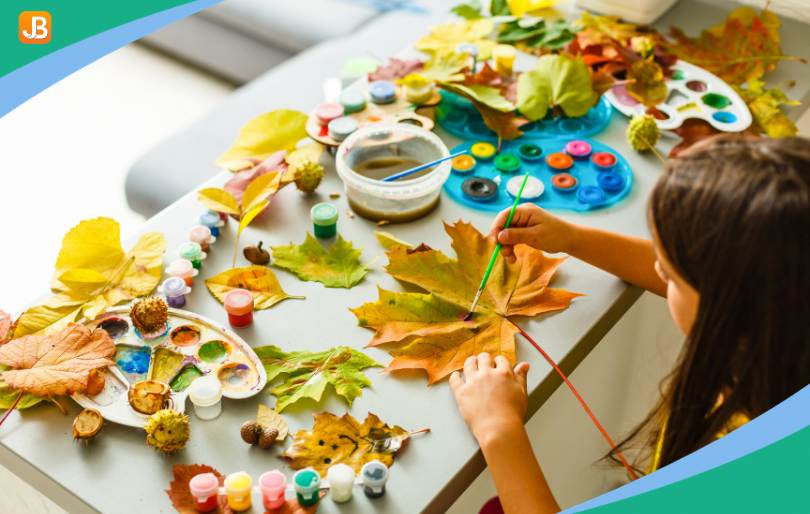
8. Nature Printmaking
Use the sun or local flora to create art.
- The Activity: Use Sun-Print paper (Cyanotype) and place leaves or flowers on it. Leave it in the sun for 2 minutes, rinse, and watch the image appear.
STEM and Learning Pop-Ups (educational summer ideas for home learning)
Educational summer ideas for home learning can be just as exciting as a trip to a theme park. Removing learning from the classroom and placing it in a backyard makes it feel like an adventure.
Who says science can’t be messy?
Messy science is memorable because kids can see cause-and-effect instantly. Outdoors gives you space for safe spills, bigger experiments, and fast cleanup, without worrying about floors and furniture.
9. Backyard Fizz and Rockets Lab
- The Experiment: Use film canisters or small plastic bottles. Fill 1/3 with water, add half an Alka-Seltzer tablet, snap the lid on, and flip it over.
- The Lesson: This demonstrates gas pressure and Newton’s Third Law of Motion.
10. Story-Pod Circle
- The Setup: Create a literacy tent with blankets and pillows.
- The Activity: Invite a local theater student to lead a live-action reading where kids act out the parts of the animals or characters in the book.
11. Math-Maze Relay
- The Setup: Draw a giant grid on the grass with marking spray or chalk.
- The Activity: To move forward, the runner must solve a mental math problem their teammates shout. It turns a solo subject into a team sport.
12. Solar Oven S’mores
- The Setup: Use a pizza box, aluminum foil, and plastic wrap.
- The Lesson: Teach kids about solar thermal energy by melting marshmallows using nothing but the sun.
Mini Chef Food Events (cooking and food activities for kids)
Cooking and food activities for kids allow children to explore sensory details. Summer provides access to fresh, seasonal produce, and no-bake recipes make these events safe and accessible.
Where do no-bake recipes shine?
Messy science is memorable because kids can see cause-and-effect instantly. Outdoors gives you space for safe spills, bigger experiments, and fast cleanup, without worrying about floors and furniture.
13. Smoothie Bike
- The Setup: Rent or DIY a blender bike (a stationary bike with a spinning blender blade).
- The Outcome: Kids take turns pedaling to make the snack. It combines physical activity with a healthy reward.
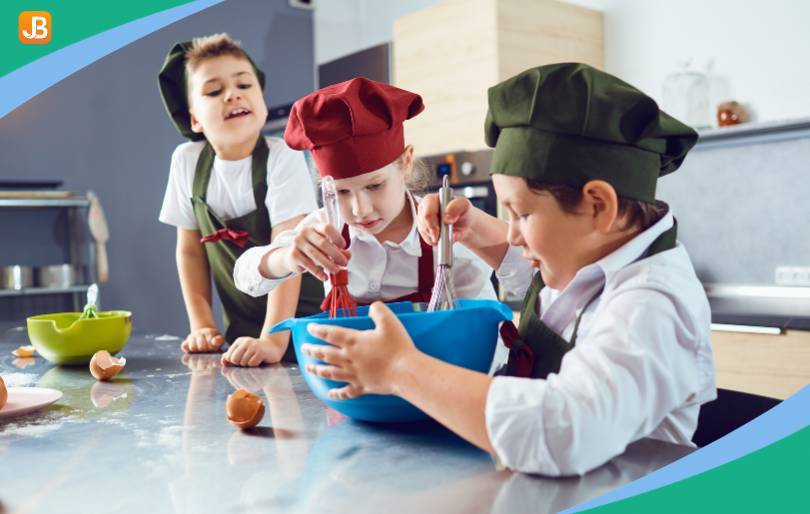
14. Pizza-Building Party
- The Setup: Use pre-made crusts or pita bread. Set up a topping bar with a variety of vegetables and cheeses.
- Operational Alignment: Use an online registration software to collect dietary restrictions, such as gluten-free or dairy-free meals, so no child is left out.
15. Fruit-Kabob Market
- The Activity: Give kids pretend money to buy different fruits from different stations. They then assemble their own kabobs. This teaches basic commerce and nutrition.
16. DIY Ice Cream in a Bag
- The Activity: Use cream, sugar, and vanilla in a small bag, then place it inside a larger bag of ice and salt. Shake for 10 minutes.
- The Result: Instant science you can eat.
Water and Sensory Splash Days (water play ideas for preschoolers)
When temperatures rise, water play ideas for preschoolers and older kids are a guaranteed hit. These events focus on sensory exploration and cooling off.
How to stay safe during water play?
Keep water play safe with constant adult supervision, clear boundaries, no-running rules, and a dry rest zone. Use non-slip surfaces and frequent headcounts.
17. DIY Splash-Zone
- The Setup: Use oscillating sprinklers, a slip-and-slide, and car wash stations made from PVC pipes and hanging sponges.
- Constraint: Make sure the ground is grass, not concrete, to prevent slips.
18. Ice-Cube Painting Booth
- The Setup: Freeze water with heavy food coloring in ice trays.
- The Activity: As the cubes melt on thick paper, they create vibrant, swirling watercolor art that changes as it thaws.
19. Water-Balloon Piñata
- The Setup: Hang 10–15 water balloons from a low tree branch.
- The Activity: Blindfold the child (optional) and let them swing a plastic bat. It’s much cleaner and more refreshing than a candy piñata.
20. Sponge Toss Relay
- The Activity: Two teams must move water from one bucket to another using only a single sponge. The team with the most water in the second bucket wins.
Group Games and Social Nights (group games for kids’ summer events)
Summer schedules are more flexible, making it the perfect time for group games for kids’ summer events. These gatherings help children build soft skills such as communication and resilience.
Who benefits most from cooperative games?
Cooperative games help shy kids join in and reduce behavior problems because the goal is shared success. Younger kids learn turn-taking; older kids practice leadership and problem-solving without “win/lose” pressure.
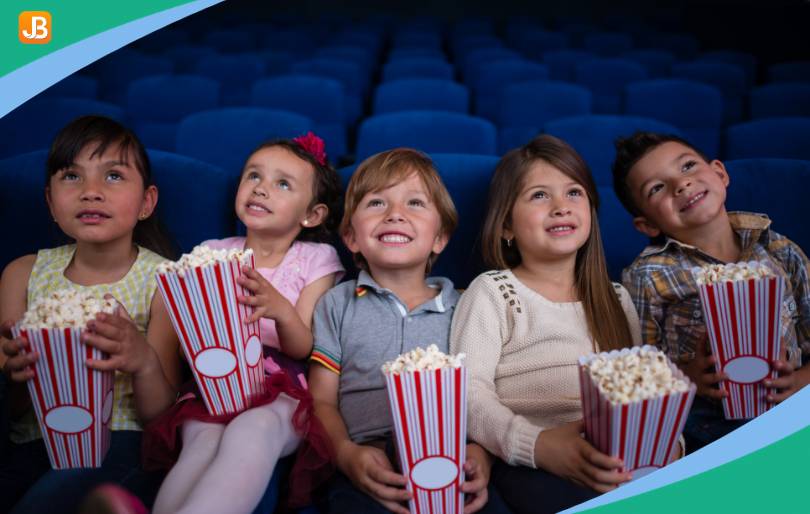
21. Backyard Movie Night
- The Setup: Use a white sheet and a portable projector.
- The Vibe: Have kids bring their own sleeping bags and pillows. You can serve popcorn in individual bags to keep it organized.
22. Campfire Talent Show
- The Activity: No talent is too small. From “the best bird call” to a choreographed dance, the goal is participation, not perfection.
23. Obstacle Course Olympics
- The Setup: Use pool noodles as hurdles, hula hoops as tires, and a balance beam made of a 2×4 board.
- The Goal: Give out superlative awards so every child feels like a winner (e.g., “Most Determined,” “Best Sportsmanship”).
24. Flashlight Tag (Evening Event)
- The Setup: Best for older kids ages 7 and up. Once the sun goes down, the “it” person uses a flashlight to tag others.
25. Giant Board Games
- The Activity: Create a life-sized Candyland or Checkers on the lawn using colored paper plates or spray paint. The kids act as the game pieces.
How to Plan a Children’s Summer Event in 5 Simple Steps
Organizing children’s summer events is much easier when you follow a repeatable framework:
| Step | Action Item | Pro Tip |
| 1. Theme | Choose a core hook (e.g., Science, Art, Water). | Keep it simple; one strong theme is better than three weak ones. |
| 2. Logistics | Set a date, a budget ($50 max for the backyard), and a location. | Always have a rain date or an indoor backup plan. |
| 3. Signups | Use digital forms to track numbers and allergies. | Jumbula’s platform can automate this so you do not have to chase emails. |
| 4. Supplies | Delegate! Ask parents to bring one item each (ice, napkins, etc.). | Check your inventory of household items before buying new. |
| 5. Execution | Focus on the kids, take photos, and stay flexible. | If a game isn’t working, move on. |
Final Thoughts
The best children’s summer events aren’t the most expensive, they’re the ones that are easy to run, inclusive, and planned with a simple backup. Pick one theme, keep stations short, and use a checklist to stay present with the kids.
Ready to level-up your neighborhood camp? Try Jumbula’s camp registration software to manage sign-ups in minutes.
FAQ
How much does a small backyard summer event cost?
Usually between $25–$50 for snacks and basic supplies if you repurpose household items.
What age range suits water-balloon games?
Best for ages 5 and up with adult supervision. For toddlers, try a sponge toss instead to avoid choking hazards from popped balloons.
How do I manage 20+ kids without losing control?
Use the “Station Method.” Break the kids into groups of 5 and rotate them through different activities every 15 minutes.
What is the best way to handle digital RSVPs?
Using a dedicated registration system ensures you have all emergency contacts and medical waivers in one place, which is much safer than a paper trail.
How do I keep costs low for a kids’ summer event?
Use recycled supplies, ask families to bring one item, and keep food simple. One strong activity station beats five expensive ones.
How do I handle allergies and medical info for a neighborhood event?
Collect allergy info during RSVP, label food clearly, and keep a basic first-aid kit on-site. For bigger groups, use a signup form that captures emergency contacts.