





Key Takeaways
- Camp names are nicknames counselors and staff use instead of their real names all summer — “Pickles,” “Otter,” “Kazoo.”
- Camps use them because a camp name sits between too formal and too familiar, builds rapport with campers, separates duplicate first names and unites the staff.
- A good camp name is short, easy for a six-year-old to shout, kind to the person wearing it, and checked for slang meanings before it goes on a name tag.
- The director owns two jobs: run a naming ceremony with a veto step during staff orientation, then keep one staff record that pairs every camp name with a legal name.
Last updated: October 2026
Who decided the new counselor should be called “Spork” — and does anyone in the office know his real name? Camp names are nicknames that camp counselors and staff use instead of their real names for the whole summer — names like “Pickles,” “Otter,” or “Kazoo” that campers learn on day one. Most camps treat them as a tradition rather than a process. That works until a name turns out to be slang, or a parent emails asking who “Taco” is.
Picture the opening campfire: every introduction is a nickname kids will shout across the field for eight weeks. Below are 77 original names in six categories, plus the director’s side — rules for picking a name, a naming ceremony for staff orientation, and a way to keep camp names straight on schedules, rosters and parent messages.
What Are Camp Names?
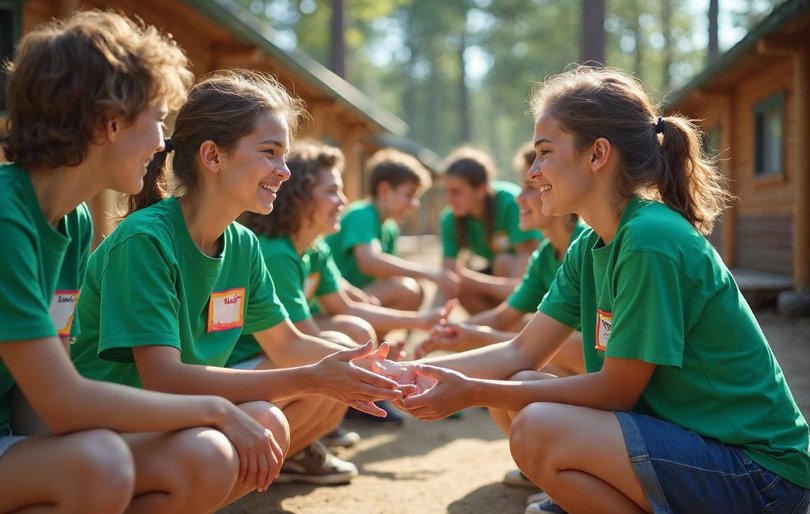
Camp names are nicknames counselors and staff use instead of their real names for the whole summer — “Pickles,” “Otter,” “Kazoo.” Campers learn them on day one, staff use them with each other whenever campers are around, and at many camps the name sticks with a counselor for every summer they return.
The tradition runs deepest at overnight and Girl Scout camps, but plenty of day camps use camp nicknames too. Some camps assign them. Others let counselors pick their own.
A returning counselor might have been “Thistle” since her first summer as a CIT — her campers have never heard her real name, and that’s the point.
Why Do Camps Use Camp Names for Counselors?
Camps use camp names because they sit between too formal and too familiar. Camp Potomac Woods, a Girl Scouts Nation’s Capital camp, explains it in its staff handbook: an honorific like “Mrs.” is too formal for camp, and a first name is too familiar. A camp name gives counselors a friendly, mentor-level identity instead.
Think about the pool deck at free swim. A camper yells “Kazoo!” and exactly one counselor turns around. Now try that with “Emily” when three Emilys are on staff.
Some camps have run the tradition for decades. Pine Cove has used camp counselor names since its founding in 1967, and its staff point to two reasons in particular: campers connect with counselors faster, and the shared names build staff unity — “unified, not uniform,” in Pine Cove’s words.
The four reasons camps give:
- The right distance. “Mrs. Thompson” feels like school; “Sarah” feels like a peer.
- Faster rapport. A silly name gives a shy or homesick camper an easy first thing to say to a counselor.
- No duplicate names. Two Jacks on staff become Puddle and Gecko — no last initials needed.
- Staff unity. New and returning staff share one tradition, and every name carries a story.
How Do You Choose a Good Camp Name?
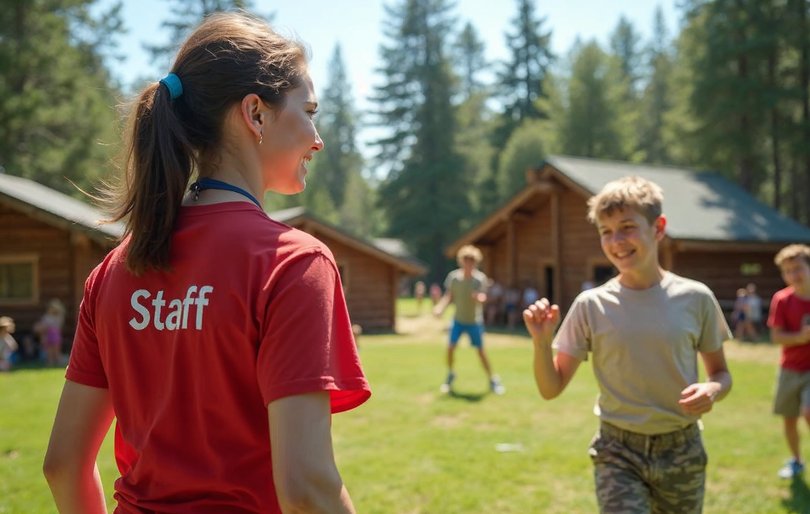
A good camp name — the nickname a counselor wears all summer — is short, easy for a six-year-old to say and shout across a field, and positive about the person who wears it. Skip inside jokes, anything that mocks a body, culture or accent, and real people or brands, and search the name for slang meanings before you commit.
Rules for choosing a camp name:
- Keep it to one or two syllables where you can.
- Make it pronounceable for your youngest camper.
- Skip inside jokes. If it needs a backstory to make sense, campers won’t get it.
- Never mock a person, body, culture or religion — even if the counselor laughs along at orientation.
- Check for slang or unfortunate meanings. Search it, then ask a teen CIT.
- Avoid real people, brands, alcohol or adult references.
- Keep it unique on this year’s staff.
- Give the counselor a veto. They have to like it — they’ll hear it a thousand times.
Rule 5 is the easiest one to skip. A name that’s harmless to you can be a meme to a 13-year-old. I’ve seen a name sail through orientation, only for a CIT to flag it the night before name tags printed. The director swapped it in five minutes. No reprints, no embarrassment. Ask your oldest CIT before any name goes on a tag.
What Are Some Good Camp Names for Counselors?
Good camp names for counselors usually come from six places: food, nature, animals, puns, everyday objects and silly sounds. Pick a category that matches your personality, then choose a name that is easy to shout and unique on staff. Here are 77 original options, all checked against the rules above.
| Category | Names | Best for |
|---|---|---|
| Food | Pickles, Waffles, Noodle, Biscuit, Taco, Pretzel, Meatball, Gumdrop, Nacho, Sprinkles, Turnip, Dumpling, Kiwi | Kitchen-adjacent staff, anyone with a famous snack habit |
| Nature | Acorn, Puddle, Thistle, Pebble, Fern, Sunny, Breeze, Moss, Clover, Maple, Drizzle, Willow, Comet | Nature, hiking and waterfront staff |
| Animals | Moose, Otter, Gecko, Llama, Puffin, Narwhal, Badger, Walrus, Hedgehog, Toucan, Platypus, Yak, Tadpole | Easy wins for younger campers |
| Puns and wordplay | Owlbert, Llamanade, Moosetache, Kale-idoscope, Sir Loin, Spaghetti Yeti, Pie-rate, Hula Hoopla, Duck Tape, Brie-zy, Toad-ally, Bearitone | Returning staff, older campers who get the joke |
| Everyday objects | Kazoo, Flip Flop, Compass, Lantern, Sneaker, Spork, Paperclip, Yo-Yo, Thermos, Scrunchie, Pinwheel, Teapot, Bandana | Arts and crafts, program staff |
| Silly sounds | Zoom, Boing, Kaboom, Squeak, Ziggy, Bloop, Whistle, Fizz, Kerplunk, Wobble, Doodle, Zippy, Hiccup | Song leaders, energy-setters, sports staff |
One caution on the animal row: “Moose” and “Walrus” should only ever be self-chosen, never assigned by peers. Handed to someone else, a big-animal name can read as a comment on their body — that’s rule 4 in action.
The silly camp names in the last row tend to stick fastest with kids under eight. Puns land better with teens.
How Do You Run a Camp Naming Tradition During Staff Orientation?
Run the naming tradition as a short ceremony on the first or second day of staff orientation. Collect names or stories in advance, give every counselor a veto, have leadership check each name against your rules, then reveal names together so the whole staff starts the summer using them.
- Before orientation: send a short form. Returning staff confirm their names; new staff send two or three ideas or a story about themselves.
- Vet the list: leadership checks every name against your rules and resolves duplicates.
- Hold the ceremony on day one or two, at a campfire or evening program. Returning staff introduce themselves by camp name; new staff tell a story or get named.
- Open a veto window: any counselor can quietly ask for a different name within 24 hours. No questions asked.
- Lock the list and send it to whoever builds schedules and name tags.
Timing matters. The first days of summer camp staff training fill up with policies and safety drills, so an evening naming campfire gives everyone a break — and leaves a full day for the veto window before name tags print.
Should peers pick or should counselors pick for themselves? Here’s how I’d decide:
- Let peers assign names if most of your staff returns and the culture is strong. The stories become part of camp lore. Pine Cove’s Name Game works this way — new staff tell stories during staff training, and the group assigns their names.
- Let counselors self-select from a vetted list if you have many first-year staff, international staff or a younger staff. It removes the risk of a name that stings.
I’d let returning staff name the rookies only when I trust the room. Unsure? Go with self-selection.
The ceremony also does double duty. Run it on the first night, and it becomes the first of your summer camp icebreaker ideas — new hires learn thirty names and thirty stories in an hour, and returning staff get to play host.
How Do You Keep Camp Names Consistent on Schedules, Rosters and Parent Messages?
Keep one staff record that pairs each counselor’s legal name with their camp name, and decide where each one appears. Campers see camp names on schedules and cabin signs; parents see both in messages; emergency forms, payroll and background checks use legal names only.
| Document | Name shown |
|---|---|
| Daily schedule | Camp name |
| Cabin or group list | Camp name |
| Parent newsletter | Camp name plus legal first and last name |
| Drop-off and pick-up desk | Both |
| Emergency contacts and incident reports | Legal name only |
| Payroll and background checks | Legal name only |
Parents need legal names for emergencies, authorized pick-up conversations and incident reports. And a parent who sees “Taco” in a newsletter with no context will email the office. Clean staff records are one of the unglamorous parts of knowing how to run a summer camp, and they spare your front desk the “who is Taco?” calls in week one.
Counselors need a script for this, too. Cover it in camp counselor training: at drop-off, a counselor introduces themselves to parents by camp name and real name; with campers, it’s the camp name only. Practice it once in a role-play and it sticks.
Add a camp-name field next to the legal name in the staff records inside your camp registration software, and rosters, schedules and parent messages all draw from one source instead of three spreadsheets that disagree by July.
FAQ
What are some creative names for a youth camp?
If you’re naming the camp itself, the best summer camp names tie to your place or program, and the domain should still be free. For staff camp names, start with the six categories above: food, nature, animals, puns, everyday objects and silly sounds.
What are some hilarious cabin names?
Use the same category logic and keep every cabin in one theme kids can chant — all animals or all foods. Try The Wild Waffles, Puffin Patrol, Cabin Kaboom, The Noodle Nation or Comet Crew.
What are good funny group names?
Pair alliteration with a mascot: Sneaky Sporks, Turbo Turnips, Hiccup Heroes. Funny camp names and group names follow the same rule — keep them positive so no group feels like the joke.
Do campers ever learn counselors’ real names?
It depends on the camp. Camp Potomac Woods lets staff reveal their first names on the last day of camp. Parents, though, should always be able to get a counselor’s real name through the office.
Can a counselor change their camp name?
Yes. Set a short window — the first 24 hours of orientation works — and a quiet way to ask. Once campers arrive, keep names fixed so kids aren’t confused mid-session.
Conclusion
Camp names give counselors the right distance from campers, build rapport on day one and turn a new staff into one team. Your job as director comes down to three things: set clear rules, run a naming ceremony with a veto, and pair every camp name with a legal name in your records. Get those right before summer 2027 staff orientation, and the only question about “Spork” will be how he got the name. Still juggling rosters and parent messages in separate spreadsheets? Book a Jumbula demo to see registration, rosters and parent communication in one place.