




Key Takeaways
How do I choose the right hunt format for different ages?
Tailor the challenge to their skill level: use picture-based lists for preschoolers, descriptive checklists for elementary kids, and riddles or photo challenges for teens to keep them mentally engaged.
How can I run a scavenger hunt without damaging the local ecosystem?
Implement “Observation-First” rules. Encourage kids to “find” items by pointing or taking photos rather than picking live plants, peeling bark, or disturbing wildlife.
How do I manage a hunt for a large group or a camp?
Use registration software to organize kids into balanced teams by age or cabin. This ensures staff can access digital waivers and emergency contact info on their mobile devices during the activity.
What is the best way to conclude the hunt?
Host a “Show and Tell Circle” where teams describe their favorite discovery. This reinforces environmental lessons and gives everyone a sense of pride, regardless of who found the most items.
A successful camping scavenger hunt for kids turns a standard outdoor stay into an organized exploration that requires no expensive equipment. By using a structured list of nature finds and campsite objects, you can keep a group of children engaged and within safe boundaries while you manage camp chores or lead a troop activity.
To run a great scavenger hunt for kids camping, simply choose a format that matches their reading level, from picture lists for toddlers to photo challenges for teens. This guide provides ready-to-use templates and safety rules to ensure your kids camping scavenger hunt is both lively and environmentally friendly.
This kids camping scavenger hunt guide includes checklists, photo hunts, riddles, and simple safety rules you can run with minimal prep.
What is a camping scavenger hunt for kids?
A camping scavenger hunt for kids is a guided outdoor game in which children search for specific natural items or campsite objects. Instead of just collecting physical things, many modern hunts focus on finding through observation or photography to protect the ecosystem. These hunts build teamwork and confidence while keeping kids within supervised boundaries.
What makes a scavenger hunt camping-friendly?
Not every backyard game works in the wilderness. To make a scavenger hunt for kids camping successful, it must respect the unique setting of a campground:
- Observation-First Rules: Use “look, point, or photograph” rules for wildlife and fragile plants to ensure the campsite remains pristine.
- Defined Boundaries: The hunt should take place within a clearly marked campsite or trail zone to prevent kids from wandering off.
- Weather Resilience: Always have a tent or cabin version ready in case a sudden storm moves in.
How do I choose the best scavenger hunt format for my group?
Choose the scavenger hunt format based on the participants’ reading level, the amount of supervision available, and the size of the search area. Generally, picture hunts work best for preschoolers, checklists for elementary ages, and riddle or photo challenges for older campers.
Scavenger Hunt Comparison: Format vs. Participant Maturity
| Format | Best For | Focus |
| Picture-Based | Preschoolers (Ages 3–5) | Visual recognition and colors. |
| Checklist Hunt | Elementary (Ages 6–10) | Reading, ticking off items, and basic facts. |
| Riddle/Clue Hunt | Older Kids (Ages 11+) | Problem-solving and critical thinking. |
| Photo Scavenger Hunt | Mixed Ages/Teens | Creativity, digital engagement, and “Leave No Trace.” |
| Sensory Hunt | All Ages | Smells, textures, and sounds of the forest. |
Camping Scavenger Hunt Checklist Ideas by Category
The easiest lists mix nature items with common campsite objects. This strategy allows kids to experience small wins immediately, since finding a tent is easy.
Nature-Based Scavenger Items (Observe-Only)
Encourage kids to use their eyes or cameras for these items to protect the habitat:
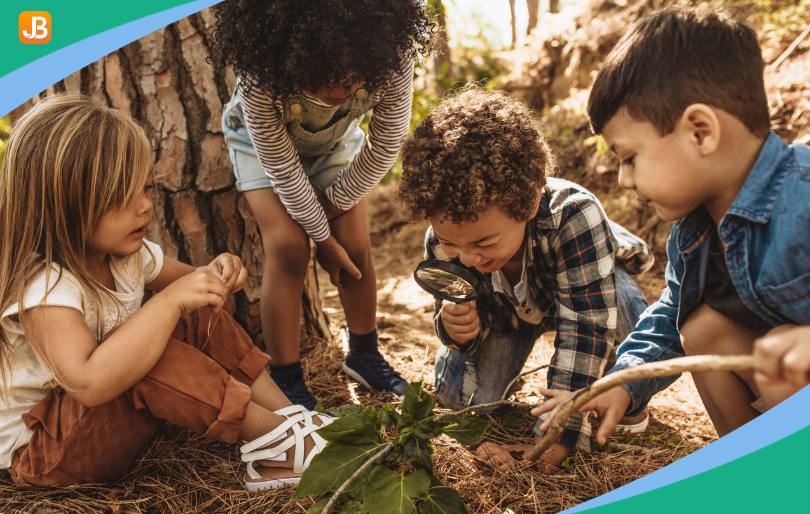
- Flora: A leaf with jagged edges, a pinecone, an acorn, moss on a north-facing tree, or a smooth river rock.
- Fauna: An animal track in the mud, a bird’s nest high up, a feather on the ground, or a spiderweb.
- The Sky: A cloud shaped like an animal, a patch of blue sky, or the first star of the evening.
Campsite and Outdoor Objects (Easy Wins)
These items help kids familiarize themselves with their environment and safety gear:
- Equipment: A tent, a sleeping bag, a lantern or flashlight, and a backpack.
- Camp Infrastructure: A trail marker, a picnic table, a fire pit (unlit), and a coil of rope.
What are the best camping scavenger hunt ideas for preschoolers?
For preschoolers, use a picture-based list with 8–12 items maximum, focusing on simple prompts such as colors, shapes, and basic textures. At this age, the hunt is more about sensory exploration than competition.
Preschool Nature Scavenger Template: The Rainbow Nature Hunt
Try asking for these specific items that are easy for small hands and eyes to identify:
- Colors: Something yellow (a dandelion or leaf), something red, and something green.
- Textures: Something “pokey” (a pine needle), something soft (a blade of grass), and something rough (bark).
- Shapes: A round rock, a straight stick, and a leaf bigger than your hand.
What are the best scavenger hunt ideas for kids camping for elementary students?
Elementary-aged kids thrive with lists of 12–20 items, simple clues, inclusion of the alphabet and numbers, and defined teamwork roles. At this stage, you can introduce experience tasks that require them to not only find an item but also perform an action related to it.
Elementary Scavenger Hunt Template Options
- The Explorer Checklist: A list of 15 items plus two action tasks, such as doing a leaf rubbing with a crayon or sketching a unique tree.
- The Simple Clue Hunt: Use rhyming couplets to lead them to specific checkpoints. Example: “I have a door but no house, I keep you warm while you sleep like a mouse.” (The Tent).
How do I make a scavenger hunt more challenging for older kids?
To challenge older kids, add riddles, strict time limits, and navigation elements, including map and compass basics. This transforms a simple game into a competition.
Variations for Older Campers
Older campers prefer challenges to games. You can design new challenges from scratch or redesign the existing scavenger hunt methods to fit their newly developed cognitive skills:
- Riddle-Only List: Instead of “Find a pinecone,” the list says, “Find the fruit of a tree that stays green all winter.”
- Photo Creativity Bonus: Award extra points for the most artistic photo of a sunset or the funniest photo of a team member near a trail sign.
- Mini-Orienteering: Give them coordinates or compass bearings to find specific caches or staffed checkpoints where they must answer a nature trivia question.
How do you run a camping scavenger hunt safely?
Safety in a camping scavenger hunt for kids comes from clear boundaries, consistent supervision, and “Look but don’t touch” guidelines. An efficient hunt is one where everyone returns to the campfire on time and unharmed.
Camp-Ready Safety and Environment Rules
- Set the “Zone”: Physically show kids the boundaries (e.g., “Don’t go past the creek”).
- The Buddy System: No child should ever hunt alone. Use pairs or small teams.
- Hard Stop Time: Use a loud signal, such as a whistle or a bell, to indicate that the hunt is over and everyone must return to base.
- Leave No Trace: Remind kids never to pick live wildflowers, peel bark off living trees, or chase wildlife.
- Hydration First: Make sure every child has a water bottle before they head out, even for a short 30-minute hunt.
What supplies do I need for a camping scavenger hunt?
You don’t need expensive gear to host a great hunt. A printed list and a writing utensil are the core requirements.
- Laminated Cards: This prevents the lists from being ruined by morning dew or dirt.
- Clipboards and Pencils: Make it easier for kids to check off items while walking.
- Regrouping Signal: A whistle or a handheld air horn for large camp settings.
- Smartphones or Cameras: Only if you are doing a photo-based hunt.
How do you end a scavenger hunt so kids feel proud?
The conclusion of the hunt is the best time to reinforce what the kids learned about nature. Use a short debrief where each team shares their discoveries.
Wrap-Up Ideas
- Show and Tell Circle: Let each group describe the most interesting thing they saw.
- Nature Journaling: Have kids sit down and draw one item from their list in detail.
- Recognition: Give out simple “Scavenger Hunt Finisher” stickers or badges. In a camp setting, this is a great time to award “Spirit Points” to a specific cabin.
The Unifying Camp Challenge: Why Organization Matters
A great camping scavenger hunt for kids requires more than just a good list; it requires organized groups and clear communication. Scavenger hunts often go off track when group rosters are messy or the staff does not have quick access to emergency contact information.
How Registration Software Simplifies the Hunt
Managing a camp involves a lot of moving parts that happen before the hunt even starts. This is where camp registration software becomes a must:
- Session Rosters: Easily group kids by age or cabin to ensure balanced, supervised teams.
- Digital Waivers: ensure all medical notes and allergy information are accessible to staff on their mobile devices during the hunt.
- Communication: Send quick updates to parents about schedule changes or share the group photo of the scavenger hunt winners instantly.
By using a centralized system such as Jumbula, camp directors can spend less time on paperwork and more time creating memorable activities such as these scavenger hunts.
FAQ
What is a kids camping scavenger hunt?
It is an outdoor activity where children follow a list of clues or images to find nature items and campsite objects. It is designed to teach observation skills and environmental stewardship in a fun, competitive format.
How long should a camping scavenger hunt for kids last?
For younger children (ages 3–6), 20–30 minutes is ideal. For older children and teens, a hunt can last 45–90 minutes, especially if it involves riddles or navigation.
What are easy camping scavenger hunt items that don’t damage nature?
Focus on “found” items, including fallen leaves, dry pinecones, and uniquely shaped rocks. To be even safer, use a “photo-only” rule where kids take pictures of things such as animal tracks, moss, and birds.
What scavenger hunt format works best for mixed ages?
A photo scavenger hunt is best for mixed groups. Younger kids can spot the items, while older kids handle the “technology” and the map reading, allowing everyone to contribute to the team’s success.
How do I adapt a scavenger hunt for rainy weather?
Create a list of things found inside a cabin or a large tent, such as a “yellow sleeping bag,” “a book about stars,” or “a pair of wool socks.”