



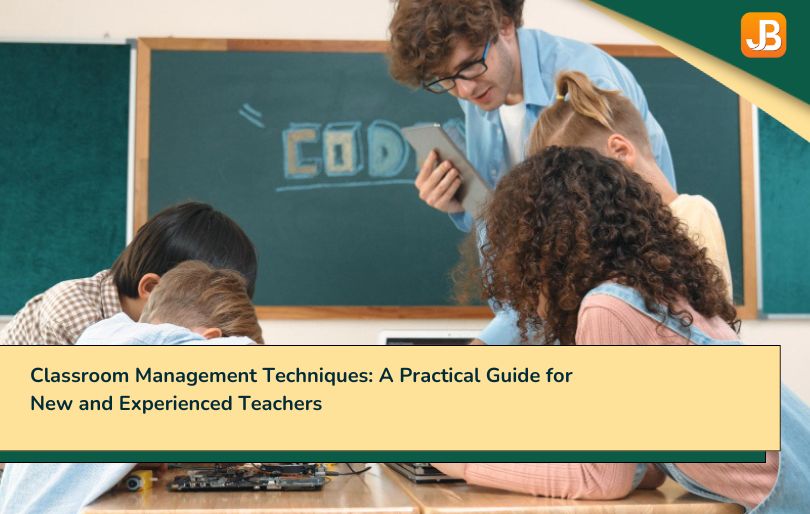


Key Takeaways
What are the most effective classroom management techniques?
The most effective classroom management approaches focus on prevention, clear routines, predictable structures, engaging instruction, and strong relationships that reduce disruptions before they start.
How can teachers create a calm, well-managed classroom?
Teachers create stability by setting clear expectations, modeling procedures, and using consistent routines that help students know exactly what to do without constant reminders.
What simple strategies help reduce misbehavior?
Non-verbal cues, positive reinforcement, and respectful interventions allow teachers to redirect behavior quietly and efficiently, keeping learning on track without escalating issues.
What role do relationships play in classroom management?
Positive teacher–student relationships foster trust and motivation, thereby increasing students’ cooperation, engagement, and willingness to adhere to classroom norms.
Classroom management techniques are inherently strategies that blend clear expectations, predictable routines, and active engagement.
For new teachers, especially, mastering these classroom management skills is vital.
Experienced teachers can refine their classroom management strategies by using digital tools, scheduling software, and efficient communication platforms.
To automate repetitive classroom processes, consider implementing a comprehensive platform, such as Jumbula’s class registration software, which handles tasks including attendance tracking, payment management, and automated communication with parents, thereby allowing you to focus on direct student engagement.
What Is Classroom Management?
In essence, classroom management is the comprehensive system involving strategies, routines, and relationships a teacher employs to create a structured learning environment.
It only works when the teacher follows the right strategies, builds a healthy relationship with learners, and creates a classroom where learning is the natural outcome.
8 Core Classroom Management Techniques That Work
The best classroom management techniques are those ones follow the prevention-first model. This means that you will not wait for disruptions to occur; instead, you will create a classroom in which trouble is naturally dismissed.
These effective classroom management strategies can be grouped into eight pillars:
1. Preparation and Predictability: Building the environment
2. Clear Expectations: Defining success
3. Positive Relationships: Connecting to motivate
4. Engaging Instruction: Minimizing boredom
5. Consistent Routines and Procedures: Automating the flow
6. Non-Verbal Cues and Signals: Controlling without yelling
7. Positive Reinforcement: Focusing on the good
8. Strategic Intervention: Addressing behavior respectfully

1. Clear expectations and co-created norms
Clear expectations are the bedrock of effective classroom management. This is how teachers can clarify best:
Establish Specific Behavioral Norms
Translate broad concepts (like “be respectful”) into concrete actions. These classroom management examples guide behavior immediately:
- In this class, we raise our hands before speaking.
Co-Create Rules for Ownership
Involve students in the process. Studies show that when students help define the norms, they are more likely to adhere.
Use age-appropriate language and frame it positively:
Instead of: “No running in the classroom.”
Try asking: “How do you want your friends to listen to you when it’s your turn to talk?”
Post and Visually Reference Expectations
Visual reminders are essential for effective classroom management. You can use charts, posters, or anchor visuals:
- “This tree is our class. If one of us jumps up and down, we will all shake up and lose focus.”
Reinforce Consistently with Positive Phrasing
Catching students doing the right thing is far more impactful than only correcting misbehavior. When you see a student meeting an expectation, acknowledge it:
- “Thank you for showing respect by letting your classmate finish their thought first!
This is how you set the foundations right to reduce the need for corrective measures.
2. Routines and Procedures That Reduce Chaos
When students know how to perform routine tasks without specific instruction, confusion is reduced.
Here are a few class management ideas that help you prevent chaos:
Predictable Entry and Exit Routines
Establish clear, consistent routines for students entering and exiting.
For example, students organize their supplies when it’s time to leave, complete a self-reflection (such as an exit ticket), and are dismissed by tables rather than by the bell.
Smooth Transitions (Using Cues)
Transitions between activities (lecture to group work, or math to reading) are prime opportunities for disruption. Use consistent, non-verbal cues to streamline movement:
- Use a timer or music cue. “Look, the owl clock went off! That means it’s time to put away your supplies and sit back down quietly.
Efficient Materials Management
Minimize the time students spend searching for, passing out, or returning supplies.
- The process of getting materials should take less than 30 seconds. “Okay, it’s time for our supply station managers to collect papers!”
Ask Three Before Me
This simple procedure teaches students problem-solving skills and reduces interruptions. Before asking the teacher a procedural question (like “What page are we on?”), The student must first quietly ask three peers. This is a great classroom management idea for fostering independence.
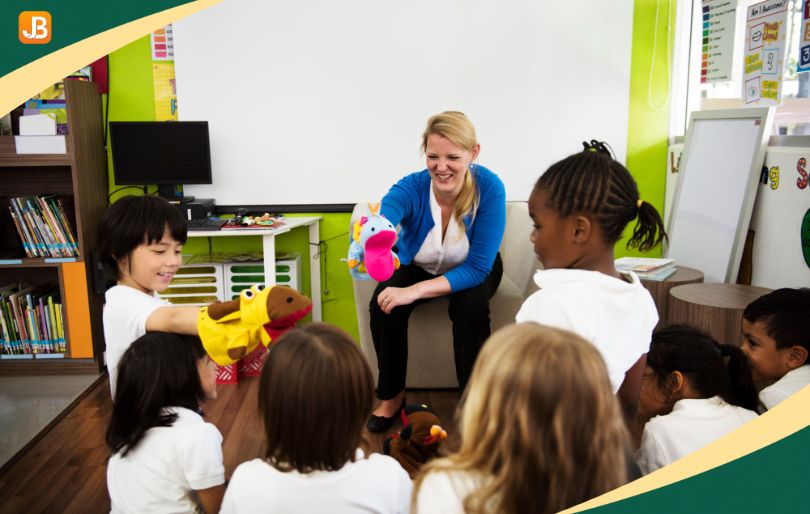
3. Positive Reinforcement and Recognition
When students are encouraged for their good behavior, they are more likely to internalize it.
This is how children continue to do the right actions on their own:
Use Specific, Behavior-Focused Praise
Vague praise like “Good job!” is less impactful than specific, targeted feedback such as:
- “I appreciate how quickly you transitioned to your seat when the music stopped. That helped us start our activity five minutes early!”
Implement Token/Point Systems
Visible systems of recognition provide tangible feedback and are strong class control tips for teachers.
- Give students a sticker or a point on a board when you see them following a specific norm.
- Award points to groups for cooperation, quick transitions, or helping a classmate. The group earns a reward (extra five minutes of free time, choosing the read-aloud book) when they hit a milestone.
Highlight Whole-Class Milestones and Growth-Mindset Language
Frame success and challenges in terms of effort, process, and collective achievement. This builds a resilient classroom community.
- “Wow, Class! For the entire morning, we remembered to ‘Ask Three Before Me’. That shows we are becoming independent learners.”
4. Proactive Classroom Environment Design
Thoughtful design is one of the most effective classroom management strategies and helps you establish good classroom management before students even arrive.
This is how to master this:
- Seating for Visibility and Proximity: The seating arrangement should allow you, the teacher, to easily see every student and quickly move to any area of the room. Avoid placing the most easily distracted students near high-traffic areas or windows.
- Clear Traffic Flow and Labeled Stations: Designate wide, clear lanes for movement between desks, the door, the pencil sharpener, and supply areas. Use clear labels, visuals, and colors to indicate where specific activities occur (e.g., a “Reading corner”).
- Calm-Down/Choice Areas and Sensory Supports: A calm down corner can be a cozy corner with soft seating or non-disruptive sensory tools. For older students, this might be a quiet area for independent work.
- Environmental factors heavily impact focus and mood. Be intentional about the classroom atmosphere. Avoid harsh fluorescent lights. Use lamps or natural light where possible to create a softer ambiance.
5. Engaging Instruction That Prevents Off-Task Behavior
A student busy with learning will have less time disrupting the class. But it is on you to make learning a pleasant experience for them:
Active Learning Techniques
Replace long lectures with activities that require students to actively use the material:
- Think-Pair-Share: Students privately think about a question, discuss it with a partner, and then share with the class.
- Jigsaw or Stations: Students become experts on one part of the lesson and teach it to their peers.
Choice Boards, Differentiation, and Scaffolding
Offer variety and make sure that tasks are appropriately challenging. Not too easy (which leads to boredom) or too difficult (which leads to frustration/shutdown). This is how to create variety:
- Choice Boards: Allow students to select how they demonstrate their learning (through presentation, essay, or infographic).
- Scaffolding: Provide supports (templates, sentence starters, graphic organizers) that allow all students to access complex tasks.
Gamification and Interactive Tech Tools
Integrate elements of play to boost motivation and focus. For instance, you can create low-stakes challenges where students can earn badges or points for academic effort.
Clear Objectives + Frequent Checks for Understanding (CFUs)
Students stay on track when they know the goal and when the teacher is constantly monitoring their progress.
- Always start the lesson by stating the learning objective and the relevance (What am I learning? Why am I learning it?).
- Use quick informal checks into your lesson every 5–10 minutes (show me 2 fingers if you’re okay, 1 finger if you have a question.)
These are a number of the best effective classroom management strategies that put learning at the top of our strategies.
6. Relationship Building and Classroom Community
The students are here to learn from you and their peers. You are the primary determinant of how students will feel about learning in your classroom.
This is why you need to build relationships with the correct strategies:
Greetings at the Door and Class Circles
Start every day or lesson with a simple, personal connection. This small investment prevents bigger issues.
Use morning meetings or closing circles to build empathy and allow students to share their voice in a structured, non-judgmental way.
Culturally Responsive Communication
Ensure your communication style, examples, and classroom materials are relevant and respectful of students’ backgrounds.
- “Can you help the class understand more about why that example is important to you and your community?”
Student Voice
Actively integrate student input regarding classroom operation. Hold regular “Classroom check-ins” where students can offer anonymous feedback on what is and isn’t working in the class environment.
Restorative Conversations After Conflict
Instead of relying solely on punishment, start conversations that focus on the harm done and how to repair it:
- I saw you throw your pencil when your group asked you to put your things away. What happened just now?”
Overall, creating a sense of belonging helps the students learn and perform better.

7. Monitoring and Feedback in Real Time
Effective classroom management skills rely heavily on a teacher’s ability to be everywhere at once or at least appear to be.
This is how you can do it:
- Circulate Often. Your physical movement is your primary non-verbal management tool. Make sure you visit every student’s area at least once during independent work time.
- Use non-verbal Cues to maintain flow and correct behavior without interrupting instruction. “Thumbs up if you are ready!”
- Monitor learning engagement and retention quickly and often. If students are confused or bored, behavior issues will follow. For example, have students quickly write and hold up their answer to a question. This gives you instant feedback on every student’s understanding.
- Keep a low-key, visible system for tracking positive and concerning behaviors. Use simple codes (e.g., a plus sign for participation or a small ‘R’ for a redirection needed) to track interactions as you circulate quickly.
When learners know that you’re there, they will focus more deeply and retain order.
8. Responsive Interventions for Disruption (PBIS-Aligned)
Even with the best strategies, disruptions will occur. This final pillar addresses how to control students in class and regain control.
De-escalation
When faced with a noisy or disruptive class, your most powerful tool is your calm demeanor. A raised voice only fuels the tension.
- “I notice we are getting loud. Please remember the noise level for independent work. Which expectation do we need to focus on right now?”
Give the student or class an opportunity to self-correct before imposing a consequence. This puts the ownership on them.
- “You can choose to put your phone away and rejoin the activity now, or you can choose to put it in the holding bin until the end of class, and we’ll discuss it privately later. What is your choice?”
Tiered Consequences Linked to Student Choices
Consequences should be predictable and directly related to the action. Avoid arbitrary or emotional punishment. Use this flow:
- Non-verbal cues (eye contact, proximity).
- Redirection: Private, brief verbal reminder of the expectation.
- Break: Brief removal to a calm-down space (Pillar 4) or a behavior reflection form.
- Parent/Admin:Contact home or referral for continued, severe behavior.
Behavior Reflection Forms/Think-Sheets
When a disruption occurs, use a reflection sheet to help students analyze their own behavior. This shifts the focus from punishment to accountability and repair (Pillar 6).
- Think-Sheet Questions: What rule did I break? Who did my behavior affect? What will I do next time to handle my frustration/boredom? How can I make things right?
Collaborate with Counselors and Use PBIS Frameworks
Don’t work in isolation; utilize school-wide systems to address chronic issues.
PBIS (Positive Behavioral Interventions and Supports) emphasizes explicitly teaching behavior and using data to guide disciplinary action, making your response evidence-based and fair.
You now have a complete framework of classroom management techniques spanning eight pillars, moving from proactive environmental design and relationship building to responsive interventions.
The 7 C’s and 5 R’s of Classroom Management (Explained)
To further organize and simplify the core principles, educators use mnemonic devices such as the “7 C’s” and the “5 R’s.” These frameworks summarize effective classroom management strategies and serve as excellent quick-reference tools for teachers.
Let’s learn more:
What are the 7 C’s of Classroom Management?
The 7 C’s focus on the essential qualities and actions a teacher must embody to maintain a positive and productive learning environment.
- Clarity: Ensuring all expectations, instructions, and learning objectives are explicit and easily understood by students.
- Consistency: Applying rules, routines, and consequences fairly and predictably across all students and all times. For example, if raising a hand is the rule, always wait for a raised hand before calling on a student.
- Care: Showing genuine interest in students’ well-being and life beyond the classroom, building strong relationships. You can greet every student at the door with a smile and a personal check-in.
- Community: Creating a sense of belonging and shared responsibility among classmates.
- Choice: Offering students controlled options regarding their learning, demonstrating respect for their agency.
- Consequences: Implementing proportional, respectful, and restorative follow-up actions when expectations are not met.
- Calm: Use a quiet, non-verbal signal to redirect a disruptive student before speaking to them.
What are the 5 R’s of Classroom Management?
The 5 R’s focus more on the systemic and behavioral components that establish order.
- Routines: Establishing predictable procedures for all transitions, supply distribution, and class flow.
- Relationships: Prioritizing positive, trust-based connections between the teacher and students, and among students.
- Respect: Modeling and explicitly teaching how to honor individual differences, property, and classroom norms.
- Responsibility: Teaching students to own their learning, actions, and consequences.
- Reflection: Encouraging students and the teacher to regularly assess what worked, what didn’t, and how to improve.

Final Tips
Effective classroom management techniques consistently apply a holistic system. As you move forward, remember these guiding principles to make sure your classroom remains a place of order and respect.
Successfully managing your classroom requires time and energy, which are often overlooked amid administrative burdens.
Jumbula’s class registration software has connected all the dots, from program definition to business marketing and beyond to insights. Streamline and automate administrative workflows, allowing you to focus solely on teaching.
FAQ
How to control a classroom without yelling?
To manage a classroom without yelling, circulate constantly throughout the class, establish clear routines, and use nonverbal cues (e.g., eye contact, hand signals) to privately and quickly correct minor misbehavior. Focus on positively reinforcing students who follow expectations to encourage desired behavior.
How Can a Teacher Control a Class?
A teacher controls a class by establishing clear, automated routines for daily tasks (like entry and transitions) and fostering high student engagement through active, meaningful instruction, thereby minimizing off-task behavior. For example, using a consistent Transition Slide instead of verbal instructions ensures smooth transitions, while activities such as Think-Pair-Share keep students mentally engaged.
What are the 7 C’s of Classroom Management?
The 7 C’s are essential qualities and actions for a managed classroom. They stand for clarity, consistency, care, community, choice, consequences, and calm.
What are the 5 R’s of Classroom Management?
The 5 R’s focus on the systemic components that establish order and positive student character. They stand for routines, relationships, respect, responsibility, and reflection.
How to Control a Disruptive or Noisy Class?
To manage a disruptive class, use a tiered de-escalation sequence, beginning with a quiet, nonverbal signal to cue students to return to work. If disruption persists, address the student privately, offering a private choice for immediate correction or a restorative follow-up after class to discuss the behavior’s impact and repair. This method keeps interventions subtle and focuses on repairing the classroom environment.
How to Regain Control of a Class?
To regain control when a class is spiraling, execute a quick, pre-taught reset routine to immediately stop all activity and achieve compliance before moving on. Once quiet, pivot immediately to a quick win activity, a very short, highly engaging task, to rebuild momentum and focus. Publicly and specifically praise the first students who complied, thereby setting a clear, positive expectation for the newly regained focus.
3 thoughts on “Classroom Management Techniques: A Practical Guide for New and Experienced Teachers”
Nice blog here! Also your site loads up fast!
What host are you using? Can I get your affiliate link to your host?
I wish my site loaded up as quickly as yours lol
i enjoy reading your articles.
This is an interesting article, i enjoy reading it.