




Key Takeaways
- Complete a visual playground check before children use the area and repeat checks when conditions change.
- Inspect debris, equipment condition, hardware, protective surfacing, fencing, access points, weather, and age suitability.
- A daily visual check does not replace scheduled, more detailed maintenance inspections or manufacturer instructions.
- Immediately restrict access to hazards, report and document them, and verify corrective action before reopening affected equipment.
- Keep active supervision in place throughout outdoor play; an inspection checklist is not a substitute for staff supervision.
- Apply relevant state and local licensing requirements alongside CPSC guidance and equipment manufacturer specifications.
A daycare playground safety checklist gives childcare staff a consistent way to look for hazards before children go outside. It can help a childcare center identify damaged equipment, displaced surfacing, debris, access problems, and weather-related concerns before play begins.
A checklist is only one part of a playground safety program. Centers also need active supervision, scheduled maintenance, manufacturer instructions, staff training, and a clear process for taking unsafe equipment out of service. The U.S. Consumer Product Safety Commission (CPSC) recommends a comprehensive maintenance program and systematic inspections of playground areas and equipment. Its 2025 Public Playground Safety Handbook is a useful technical reference.
This guide is written for childcare operators and staff. It complements a broader daycare risk management plan but focuses specifically on playground inspections and corrective action. It is not a certification, engineering assessment, or substitute for state and local licensing requirements.
Why Childcare Centers Need a Repeatable Playground Inspection Process
Outdoor play areas are exposed to weather, frequent use, and sometimes vandalism or damage between operating days. A condition that was acceptable at the end of yesterday’s session may have changed overnight. A repeatable inspection process helps staff notice and report those changes.
The center should distinguish between at least two types of checks:
- Routine pre-use checks: A visual review before children enter the play area, and additional checks when conditions or events warrant them.
- Scheduled maintenance inspections: More detailed reviews of equipment, moving parts, connections, surfacing, drainage, and wear, carried out by people with appropriate familiarity or qualifications.
The CPSC handbook is guidance rather than a nationwide regulation by itself, although states, local jurisdictions, insurers, or licensing agencies may impose additional requirements. The CPSC advises centers to follow manufacturers’ maintenance instructions and recommended inspection schedules. If those recommendations are unavailable, the center should develop a schedule based on actual or anticipated playground use. Frequently used playgrounds may need more frequent inspection and maintenance.
Assign a person to complete the routine check and identify who receives reports about hazards. Staff should know that completing the checklist does not itself authorize them to repair equipment or reopen an area.
The Daily Daycare Playground Safety Checklist
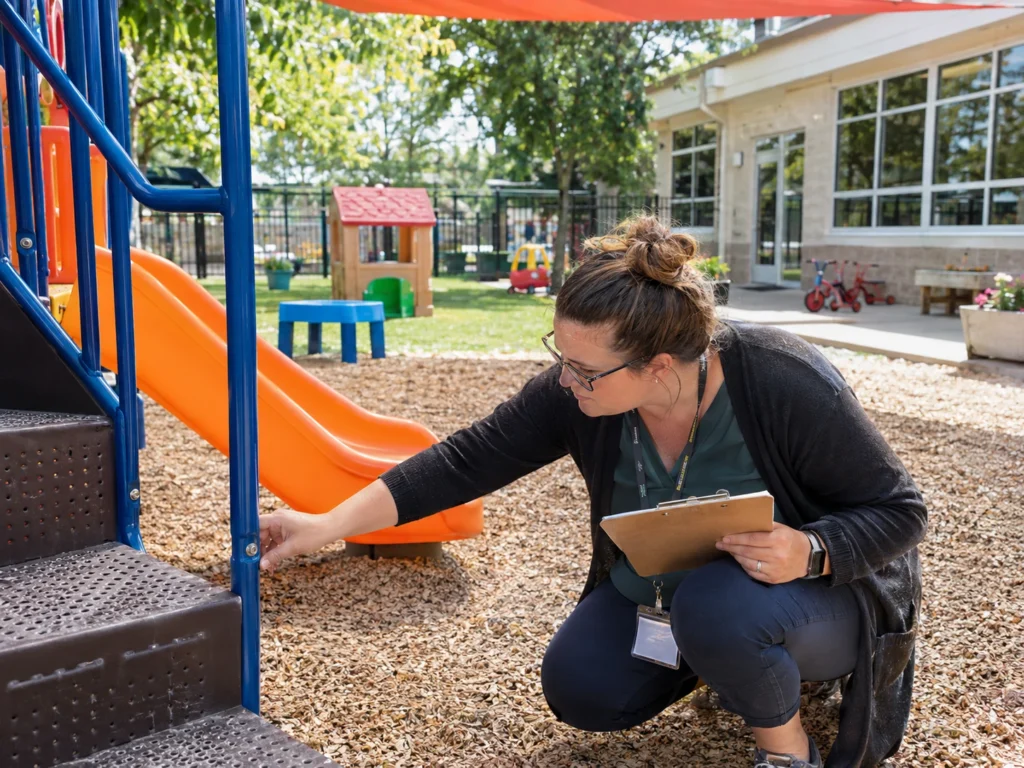
Complete a visual check before children use the playground. Adapt the checklist to the actual equipment and layout at your center, and add any items required by local licensing rules or the manufacturer.
1. Look for debris and environmental hazards
Check the play area for broken glass, sharp litter, animal waste, discarded objects, standing water, or other debris. Look for branches, rocks, roots, or objects that could create a trip or impact hazard.
Consider conditions that may have changed because of rain, wind, snow, ice, or nearby maintenance work. If a hazard cannot be removed safely by the staff member conducting the check, restrict access and notify the person responsible for maintenance.
2. Inspect visible equipment condition
Look for obvious signs of damage or deterioration, including:
- Loose, missing, or damaged bolts, fasteners, caps, or connectors.
- Cracks in plastic components.
- Splintered, split, or rotting wood.
- Rusted or corroded metal.
- Sharp points, edges, or protrusions.
- Damaged seats, platforms, steps, handrails, or guardrails.
- Unusual movement, instability, or visible anchoring problems.
- Ropes, cords, or objects added to equipment that were not part of its design.
Do not shake, climb, dismantle, or load-test equipment unless the inspection procedure and your training specifically call for it. Report suspected structural or mechanical issues for assessment by qualified personnel.
3. Check protective surfacing
Protective surfacing is a critical part of the play area. Check for visible displacement, compaction, deterioration, holes, buckling, or exposed hard surfaces. Pay particular attention to high-use areas such as beneath swings and at slide exits, where loose-fill material can become displaced.
The correct surfacing type, coverage, and depth depend on the equipment, fall height, material, and applicable standards. Do not assume that one depth or material is suitable for every playground. Use the equipment and surfacing manufacturer’s specifications and consult the CPSC handbook or a qualified playground professional when needed.
The CPSC’s Public Playground Safety Checklist highlights issues such as protective surfacing, hazardous hardware, sharp edges, and trip hazards. Use it as a reference, not as a substitute for a site-specific inspection.
4. Check gates, fences, and access points
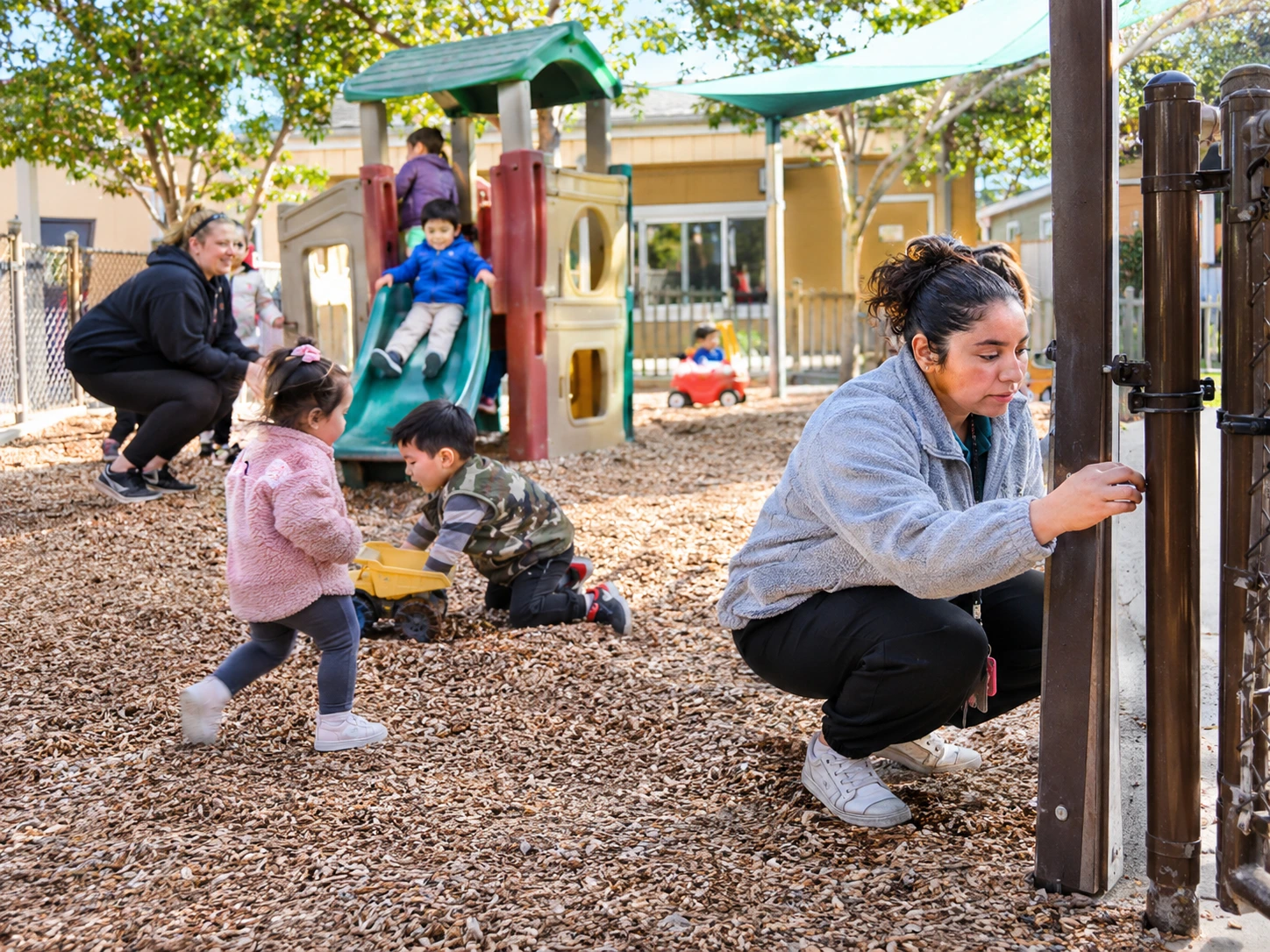
Look for damaged fencing, broken latches, gaps, or access points that no longer work as intended. Confirm that gates close and operate as designed. Check whether the play area is clear of obstacles that could block staff visibility or safe movement.
If a boundary or access problem could allow children to leave the supervised area or permit unauthorized entry, keep children out of the affected space until the issue is addressed.
5. Consider weather and surface conditions
Check whether rain, ice, snow, wind, heat, or recent storms have made the area unsuitable for use. Equipment and surfacing can become slippery, unstable, or uncomfortably hot. Follow your center’s weather and outdoor-play policy, and inspect again when conditions change.
Do not rely on a single temperature reading or a general rule for every material. Use the center’s procedures, manufacturer guidance, and applicable public-health or licensing recommendations.
6. Confirm equipment is appropriate for the children using it
Check that the play area and equipment are designated for the age group using them. Keep younger and older groups separated when required by the equipment design, licensing rules, or center policy. Staff should know which equipment children may use and any restrictions that apply.
What to Check During Weekly and Scheduled Inspections
A daily visual check is not a replacement for a more detailed maintenance program. Follow the manufacturer’s inspection and maintenance schedule, and use personnel with the right experience for the task.
Scheduled inspections may examine:
- Wear in moving parts, bearings, chains, swings, and connections.
- Fasteners, anchoring, structural stability, and protective caps.
- Drainage and the condition of protective surfacing.
- Cracks, corrosion, rot, splintering, and deterioration that may be less obvious during a quick walk-through.
- Changes to equipment or the play area, including unauthorized additions or modifications.
- Whether repairs have been completed correctly and whether the equipment is ready to return to service.
The CPSC handbook includes suggested general maintenance checklists and explains that inspections should be systematic. It also notes that inspections alone are not a complete maintenance program: problems identified need to be recorded and corrected. See the CPSC Public Playground Safety Handbook for the full guidance and the CPSC playground checklist for additional inspection prompts.
What to Do When You Find a Playground Hazard
A checklist is valuable only if staff know what action to take when an item fails.
- Stop access to the affected equipment or area. Use the center’s procedure to prevent children from reaching the hazard. If the risk affects the entire play area, close the area.
- Notify the responsible supervisor. Report the location, equipment, and nature of the concern as soon as possible.
- Record the issue. Note the date and time, person reporting it, specific hazard, immediate action, and who is responsible for follow-up.
- Arrange appropriate assessment and repair. Do not ask staff to undertake technical repairs beyond their training or authority. Follow manufacturer instructions and use qualified maintenance personnel where needed.
- Verify before reopening. The designated person should confirm that the problem has been addressed and that the equipment or area can return to use under the center’s procedures.
If a hazard cannot be corrected promptly, keep the affected equipment or area closed. A warning sign alone may not prevent children from accessing a dangerous item; use a physical restriction consistent with the center’s safety plan.
Playground Supervision During Outdoor Play
Inspection and supervision serve different purposes. A playground may pass a pre-use check and still require active supervision throughout the play period. Staff should position themselves to maintain appropriate sightlines, remain attentive, and respond to children’s needs and changing conditions.
The center’s supervision plan should specify:
- Which staff members are assigned to each group and area.
- How staff maintain required child counts and visibility.
- How children move between indoor and outdoor spaces.
- How staff handle bathroom visits, transitions, and breaks without leaving gaps in supervision.
- Which equipment or zones are restricted for particular age groups.
- How staff communicate when a hazard appears during play.
Staff should not become so focused on paperwork, phones, or equipment tasks that they stop supervising children. If a new hazard appears during play, staff should follow the center’s procedure to move children away and notify the responsible person.
How to Keep Playground Inspection Records
A simple, consistent record makes it easier to follow an issue from discovery through resolution. The center can use a paper log or an appropriate digital process, provided it meets applicable recordkeeping and privacy requirements.
A useful inspection record may include:
| Field | What to record |
| Date and time | When the check took place |
| Inspector | Name or staff identifier |
| Area or equipment | Exact location checked |
| Result | Pass, concern identified, or area closed |
| Hazard details | What was observed and where |
| Immediate action | Cleaning, isolation, notification, or closure |
| Follow-up owner | Person responsible for next steps |
| Resolution | Repair or corrective action taken |
| Verification | Who confirmed the area could reopen and when |
Keep records according to state licensing requirements, the center’s retention policy, and any relevant insurer or manufacturer requirements. Protect records that contain staff or child information.
For centers managing enrollment information, staff communication, and family administration, childcare registration software may support related administrative workflows. It does not inspect playground equipment, verify repairs, or certify that a play area is safe. Those responsibilities remain with the center and appropriately qualified personnel.
Daycare Playground Safety Checklist
Use this condensed list for a routine pre-use visual check. Customize it to the center’s equipment and applicable rules.
- [ ] Remove or report glass, sharp debris, animal waste, and other hazards.
- [ ] Check for visible cracks, splinters, rust, rot, and damaged components.
- [ ] Look for loose or missing hardware, caps, connectors, or other parts.
- [ ] Check protective surfacing for displacement, compaction, holes, or deterioration.
- [ ] Look for exposed footings, roots, rocks, and trip hazards.
- [ ] Check gates, fencing, latches, and access points.
- [ ] Consider weather, wet surfaces, ice, and hot equipment.
- [ ] Confirm that the equipment is appropriate for the children using the area.
- [ ] Record concerns and immediately restrict access to unsafe equipment or areas.
- [ ] Notify the responsible person and track corrective action before reopening.
Frequently Asked Questions
How often should a daycare playground be inspected?
Centers should complete routine checks before use and follow the equipment manufacturer’s recommended inspection and maintenance schedule. The frequency of more detailed inspections should reflect the manufacturer’s guidance, use, condition, and applicable licensing or local requirements. There is no single schedule that should be assumed to apply to every center.
What should be included in a playground safety checklist?
A checklist should cover debris, equipment condition, hardware, protective surfacing, drainage, fencing and gates, weather-related hazards, age suitability, and the process for reporting and correcting problems. Tailor it to the specific playground.
What should staff do if playground equipment is damaged?
They should prevent children from using the affected equipment or area, notify the responsible supervisor, and document the concern. Repairs should follow manufacturer instructions and be handled by qualified personnel when necessary. Reopen only after the designated person verifies that the issue has been addressed.
Who should complete playground inspections?
A center should assign trained staff to routine visual checks and identify qualified personnel for more detailed maintenance inspections. The manufacturer’s instructions, licensing rules, and the complexity of the equipment should guide who performs each task.
What playground surfacing is recommended for daycare centers?
The appropriate surfacing depends on equipment, fall height, material, installation, and maintenance. Use surfacing that meets applicable safety standards and the equipment or surfacing manufacturer’s specifications. Consult the CPSC handbook or a qualified playground professional rather than relying on a generic depth recommendation.
Make Playground Checks Part of Your Daily Routine
A daycare playground safety checklist helps staff identify visible problems, but it works best as part of a complete program: routine checks, scheduled maintenance, clear hazard reporting, appropriate repairs, documentation, and active supervision.
Review the checklist against your actual playground, manufacturer’s instructions, and local childcare rules. Assign responsibility, train staff on what to report, and make sure unsafe equipment stays out of use until it has been properly addressed.
To support the administrative side of running a childcare program, explore Jumbula’s childcare registration software. It can support registration and family-management workflows, while playground inspections and safety decisions remain the responsibility of the childcare center.