





Key Takeaways
What are the four rhythm phases of a well-run summer camp daily schedule, and why do they matter?
A well-run summer camp daily schedule follows four rhythm phases: high-energy morning, structured mid-morning, recovery post-lunch, and wind-down late afternoon. The rhythm stays constant even when activities change.
Why is the post-lunch time slot the most challenging part of a camp day to manage?
The post-lunch window is the hardest slot in any camp day — scheduling high-demand activities there is a setup for behavior problems and staff frustration.
Why is rest time essential in both overnight and day camps?
Transition time (10–15 minutes between blocks) is not wasted time — it’s the buffer that keeps the whole day from compressing into chaos.
How does a closing ritual help create a complete and meaningful end to the camp day?
Rest hour in overnight camps is non-negotiable; in day camps, even 20 minutes of quiet activity after lunch measurably improves afternoon outcomes.
How can I ensure staff give honest answers?
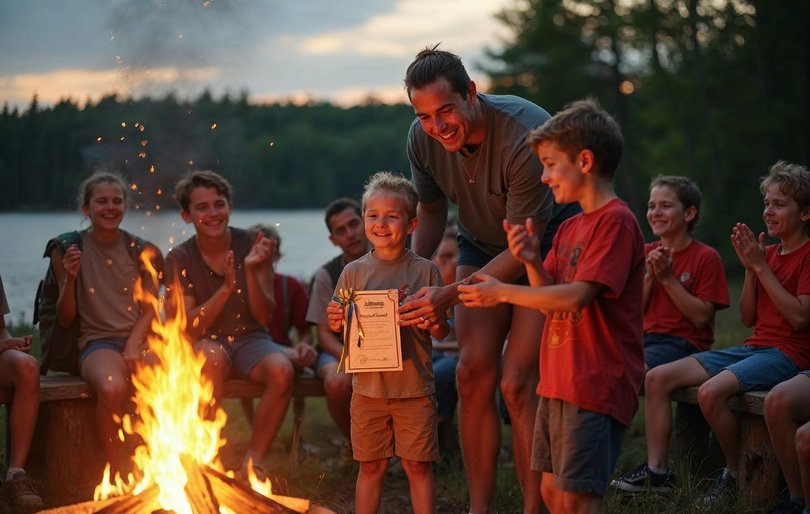
The closing ritual — circle, debrief, daily celebration — is what makes a day feel finished rather than just stopped.
Wednesday afternoon, week two. Your best counselor is visibly grinding. Three campers are in an argument that started at lunch and hasn’t resolved. The afternoon activity specialist is waiting for a group that’s still at the water station. And pickup is in 90 minutes.
None of this started Wednesday afternoon. It started Monday morning when you wrote a schedule that looked reasonable on paper but ignored how energy actually moves through a camp day. Too much activity stacked before noon. No transition buffer between the lake and the craft cabin. Lunch at 12:30 instead of 12:00, which pushed rest time into the hottest part of the afternoon, which killed any chance of a productive Block 3.
A well-built summer camp daily schedule doesn’t just list what happens when. It’s a system for managing energy — camper energy, staff energy, and the operational tempo that either keeps things smooth or lets them unravel.
What a Well-Run Summer Camp Day Actually Looks Like
A well-run summer camp daily schedule has four rhythm phases: high-energy morning, structured mid-morning, recovery post-lunch, and wind-down late afternoon. The specific activities change every day — and they should, to keep things fresh. The rhythm doesn’t change. Directors who lock in that rhythm in week one spend the rest of the summer running programs instead of running interference.
The daily schedule is also one of the first things parents want to see when they’re evaluating your camp during enrollment. A clear, structured day — communicated through your registration materials — tells parents exactly what their child’s experience will look like. Platforms used for summer camp registration software often include parent communication tools that let you share the daily schedule as part of the enrollment confirmation, which reduces “what does my kid actually do all day?” calls before camp even starts.
Think of the daily schedule as the smallest repeating unit of your program. You build it once, train your staff to execute it, then let it run. The weekly schedule — which sequences themes, special events, and field trips across days — sits on top of the daily structure. But the daily structure is the foundation.
How to Structure Your Camp Day Hour by Hour
The CDC recommends children aged 6–17 get at least 60 minutes of moderate-to-vigorous physical activity daily. A well-designed summer camp daily schedule builds that in across multiple blocks — not crammed into a single exhausting hour. The key is sequencing: matching activity intensity to where camper energy naturally sits at each point in the day.
Morning (Arrival Through Mid-Morning)
This is your highest-energy window. Use it. Schedule physically demanding activities — sports, swimming, challenge courses, high-energy group games — in the first major block of the day. Campers arrive fresh. Counselors are alert. The social energy of a new day is working in your favor.
Start with a brief whole-group gathering: 15–20 minutes for announcements, community-building, and energy-setting. Then move directly into Block 1. Don’t waste the morning window on passive, seated activities — that’s fighting the day’s natural momentum.
Mid-Morning to Lunch
Energy is still high but starting to taper. This is the best window for structured, skill-based activities that require focus without peak physical demand: STEM projects, art workshops, swimming with instruction components, nature exploration with observation tasks. The social bonds from the morning block make collaborative activities land better here than at any other point in the day.
Build in a snack break and a real transition between the morning block and this one — 10–15 minutes minimum. Rushing campers directly from high-intensity activity into focused skill work without a buffer gets you unfocused, wound-up kids who can’t settle.
Post-Lunch (The Hardest Window)
Lunch happens around noon. Then comes the slot that breaks poorly planned schedules. Blood goes to digestion. Heat peaks. The morning’s physical output has accumulated. This is not the time for demanding anything from campers.
A structured summer camp schedule accounts for this explicitly — and the daily schedule is where you execute on it. Schedule creative, choice-based, or low-intensity activities after lunch: art, music, journaling, free swim (calm, not competitive), cabin reading time. Better yet, build in 20 minutes of explicit quiet time before any afternoon activity resumes. Directors who moved rest to 1pm instead of 3pm consistently report fewer afternoon behavioral incidents. The biology doesn’t negotiate.
Late Afternoon (Wind-Down, Not Crash)
Energy returns by mid-afternoon — not to morning levels, but enough for a second active block. Team games, outdoor activities, or free-choice periods work well here. As pickup (or evening programming) approaches, shift toward lower-key activities: camp cleanup, group reflection, a daily celebration ritual. The closing circle or daily debrief isn’t optional — it’s what makes the day feel like a complete story rather than a list of events that just stopped.

Sample Summer Camp Daily Schedule Templates
These are starting frameworks. Adjust block lengths for your age groups and program type — but protect the transition times and the post-lunch recovery window.
Day Camp (8am–5pm)
| Time | Block | Activity Type |
|---|---|---|
| 8:00–8:30 | Arrival + check-in | Community, setup |
| 8:30–9:00 | Morning assembly | Announcements, group energy |
| 9:00–10:30 | Activity Block 1 | High-energy: sports, games, swim |
| 10:30–10:45 | Snack + transition | Rest, hydration |
| 10:45–12:15 | Activity Block 2 | Structured: STEM, arts, skill-building |
| 12:15–1:00 | Lunch + free play | Social, unstructured |
| 1:00–1:20 | Rest / quiet activity | Reading, journaling, low-key |
| 1:20–3:00 | Activity Block 3 | Moderate: creative, team projects |
| 3:00–3:15 | Snack + transition | Water, regrouping |
| 3:15–4:30 | Activity Block 4 | Outdoor, free choice |
| 4:30–5:00 | Closing circle + pickup | Reflection, parent handoff |
Overnight Camp (7am–9pm Lights Out)
| Time | Block | Activity Type |
|---|---|---|
| 7:00–8:00 | Wake-up + hygiene + cabin clean | Routine, responsibility |
| 8:00–9:00 | Breakfast + flag raising | Community, transition |
| 9:00–10:00 | Activity Period 1 | High-energy: waterfront, sports |
| 10:00–11:00 | Activity Period 2 | Skill or specialty |
| 11:00–12:00 | Activity Period 3 | Group challenge or free choice |
| 12:00–1:00 | Lunch | Community, social |
| 1:00–2:00 | Rest hour (mandatory quiet time) | Reading, letter writing, sleep |
| 2:00–3:30 | Afternoon Activity 1 | Pool, waterfront, outdoor |
| 3:30–5:00 | Afternoon Activity 2 | Specialty, electives, free choice |
| 5:00–6:00 | Pre-dinner / cabin time | Wind-down, free time |
| 6:00–7:00 | Dinner | Community |
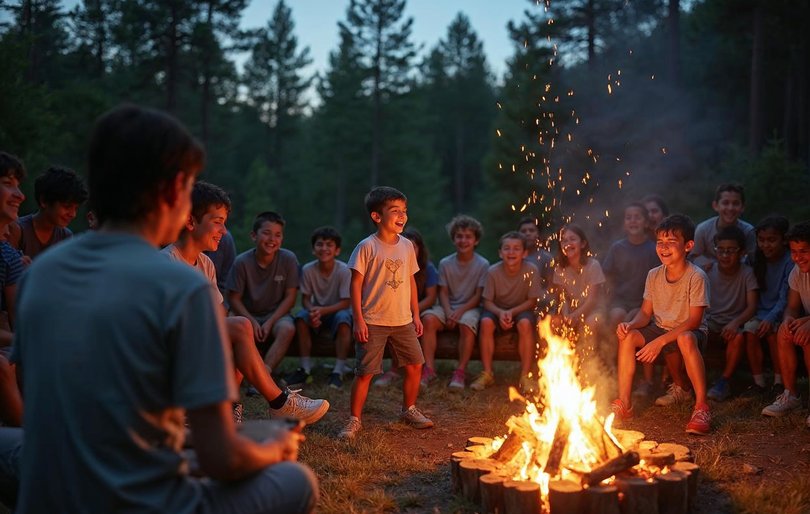
| 7:00–8:30 | Evening program | Campfire, talent show, cabin Olympics |
| 8:30–9:00 | Wind-down + hygiene | Quiet routines |
| 9:00 | Lights out |
The overnight camp rest hour deserves emphasis. The American Camp Association’s program standards treat structured rest periods as a welfare requirement, not a scheduling convenience. Campers who don’t get genuine downtime mid-day accumulate fatigue across a multi-day or multi-week session — and it shows by Thursday in behavioral incidents, homesickness spikes, and staff friction.
How to Manage Energy Across the Day
The post-lunch slump is real. Even at camp, even for kids who love every activity on the schedule. Three things make it worse: a heavy carbohydrate lunch, afternoon heat, and a morning of high physical output. You’re not going to eliminate these. You can design around them.
Tactic 1: Schedule rest before it becomes collapse. Don’t wait until 3pm to give campers a break. Build a 20-minute quiet window at 1pm — before Block 3 — and the quality of Block 3 improves noticeably. The director version of “I’ll sleep when I’m dead” applied to camp scheduling is: “we’ll push through.” It doesn’t work.
Tactic 2: Match activity type to recovery window. Post-lunch is the right window for activities that reward patience and focus over physical output: STEM challenges, art projects, cabin games, friendship bracelet making. These aren’t lesser activities — they’re strategically placed activities. Campers who’ve had a rest window actually engage with them.
Tactic 3: Save physical energy for the return. By 3:15–3:30pm, energy rebounds enough for another active block. Team games, outdoor exploration, free swim — these land better at 3pm than at 1pm. Working with the day’s natural rhythm instead of against it means your staff spend less time cajoling and more time facilitating.
Frequently Asked Questions
What is a typical day at summer camp? A typical summer camp daily schedule runs from around 8am–5pm for day camps and from wake-up at 7am to lights out at 9pm for overnight programs. Both follow a similar energy arc: high-intensity morning activities, structured mid-morning, recovery period after lunch, and a wind-down phase before the day closes. The specific activities change daily; the rhythm stays consistent.
How long should each activity block be at a day camp? Most camps use 60–90 minute activity blocks for the main program periods. Younger campers (ages 5–8) do better with 30–45 minute blocks and more frequent transitions. Older campers (12+) can sustain 75–90 minute blocks for skill-based or project activities. Transition time between blocks should always be at least 10–15 minutes, regardless of age group.
What should summer camps do after lunch when energy is low? A 20-minute quiet period immediately after lunch — before resuming activity — is the most effective single intervention for afternoon energy management. After that, schedule creative, low-intensity, or choice-based activities: art, music, STEM projects, cabin games. Save physically demanding activities for mid-afternoon (3pm+), when energy naturally rebounds.
Do overnight camps need a rest hour? Yes. The ACA treats structured rest periods as a program standard, not optional. Overnight campers accumulate physical and social fatigue across multi-day sessions in a way day campers don’t. Without a genuine rest hour mid-day, behavioral incidents and homesickness complaints increase measurably by the middle of the week. Place rest hour after lunch — 1–2pm is the standard window — and enforce it as a cabin-wide quiet period.
Conclusion
A summer camp daily schedule that works isn’t complicated — but it does require deliberate design. Four rhythm phases, protected transition time, a genuine post-lunch recovery window, and a closing ritual that gives the day a satisfying end.
Build the structure once, train your staff to execute it, and let it run. The best camp days aren’t the ones where something exciting happened every hour — they’re the ones where the structure was steady enough that the exciting things could actually land.
FAQ
What is a typical day at summer camp?
A typical summer camp daily schedule runs from around 8am–5pm for day camps and from wake-up at 7am to lights out at 9pm for overnight programs. Both follow a similar energy arc: high-intensity morning activities, structured mid-morning, recovery period after lunch, and a wind-down phase before the day closes. The specific activities change daily; the rhythm stays consistent.
How long should each activity block be at a day camp?
Most camps use 60–90 minute activity blocks for the main program periods. Younger campers (ages 5–8) do better with 30–45 minute blocks and more frequent transitions. Older campers (12+) can sustain 75–90 minute blocks for skill-based or project activities. Transition time between blocks should always be at least 10–15 minutes, regardless of age group.
What should summer camps do after lunch when energy is low?
A 20-minute quiet period immediately after lunch — before resuming activity — is the most effective single intervention for afternoon energy management. After that, schedule creative, low-intensity, or choice-based activities: art, music, STEM projects, cabin games. Save physically demanding activities for mid-afternoon (3pm+), when energy naturally rebounds.
Do overnight camps need a rest hour?
Yes. The ACA treats structured rest periods as a program standard, not optional. Overnight campers accumulate physical and social fatigue across multi-day sessions in a way day campers don’t. Without a genuine rest hour mid-day, behavioral incidents and homesickness complaints increase measurably by the middle of the week. Place rest hour after lunch — 1–2pm is the standard window — and enforce it as a cabin-wide quiet period.