





Key Takeaways
Why do summer camp theme weeks work better than random activity rotations?
Summer camp theme weeks give campers and staff a shared story to inhabit — they work because coherence is more engaging than a random activity rotation.
How should you choose summer camp themes based on camper age, activities, and available resources?
Choose themes based on your camper age range first, then availability of activities, supplies, and costumes.
Why does the sequence of camp themes matter across the summer schedule?
Sequence matters: open with a crowd-pleaser, pace creative themes mid-summer, and end with a high-energy send-off week.
When should staff briefings happen to ensure counselors are prepared and not improvising?
Staff briefing — done 5 days before each week — is the difference between counselors who are prepared and enthusiastic versus counselors who are winging it.
How do named camp themes support marketing and pre-enrollment promotion?
Named themes give your marketing team something concrete to promote before enrollment opens.
Week 3 of your summer, and you’re already out of ideas.
The first two weeks were fine — swimming, crafts, outdoor games. But now the kids who were here last year are bored, the counselors are going through the motions, and enrollment for Week 5 is suspiciously low because parents can’t answer their kid’s question: “But what are we doing that week?”
That’s the problem with building a summer around activities instead of themes. Activities are interchangeable. Themes give a week an identity — something campers remember, talk about, and look forward to. Summer camp theme weeks don’t just make the program more fun. They make your camp easier to run, easier to staff for, and easier to sell.
Here’s how to plan them well.
What Are Summer Camp Theme Weeks and Why Do They Work?
Summer camp theme weeks are structured 5-day programming periods where activities, decorations, snacks, and sometimes costumes all connect back to a central concept. Everything in the week points to the same idea — not loosely, but deliberately. Space week means the lunch tables have planet placemats, the afternoon challenge is “mission to Mars,” and the counselors have call signs.
They work because of coherence. When a week has a story — even a loose one — campers and staff inhabit it together. That shared experience is more engaging than a Tuesday arts-and-crafts session sitting next to a Wednesday archery block with no relationship between them.
The American Camp Association has consistently found that program variety and a sense of belonging are the top drivers of camper return rates. Theme weeks address both: they create variety across the summer while building belonging within each week’s community. Directors who make the switch from generic activity rotations to named theme weeks often hear it back from parents at re-enrollment: “She’s been talking about Ocean Week since August.”
For context on where theme weeks fit into the full picture of how to run a summer camp, they’re one layer of your programming calendar — not the whole thing, but the organizing logic that makes each week distinct.
How to Choose Theme Weeks That Your Campers Actually Love
Start with your camper age range and work backward. This part trips most directors up — they pick themes they find interesting or that look great on Instagram, then wonder why the kids aren’t engaged.
Themes that land with 6-year-olds (dinosaurs, fairy tales, under the sea) fall completely flat with 13-year-olds who want escape rooms, survival challenges, or color wars. The reverse is also true — a Mystery & Detective week with multi-day puzzle chains is too abstract for younger campers who need immediate, physical payoffs.
Three criteria for a theme that works:
- Wide enough to fill 5 days. A theme needs to support at least 4–5 distinct activity types: a physical challenge, a creative project, a team game, a group ritual, and a daily anchor activity. “Pirate Week” clears this. “Blue Week” doesn’t.
- Specific enough to feel distinct. “Outdoors Week” is too vague. “Wilderness Survival Week” has an identity. Specificity is what makes a theme marketable and memorable.
- Executable with your staff and budget. A Space Week that requires a $400 rocket-building kit per cabin isn’t sustainable across six weeks. The best themes have high visual impact with low supply cost — decorations, costumes, and energy carry more weight than expensive materials.
Also think about your returning campers. If you run the same Animal Week every summer, the kids who’ve been coming for three years are bored. Rotate your theme list on a two-year cycle minimum, and hold one or two perennial favorites (like Color Wars) that campers expect as traditions.
How to Sequence Themes Across the Season
Order matters more than most directors realize. A poorly sequenced summer — adventure week in week six when everyone’s tired, creative arts in week one before campers have bonded — can make even great themes land wrong.
Here’s a framework that works for a typical 8–10 week summer:
Week 1: High-energy crowd-pleaser. Something physical, competitive, and visually loud. Sports Olympics, Color Wars, or an Adventure Challenge week. Returning campers light up, new campers get swept into the energy immediately. Strong first impression.
Weeks 2–3: Mix of active and creative. One week with physical focus, one with a creative or skill-building theme. This is where STEM, Arts, or Around the World land well — there’s enough community now that collaborative projects actually work.
Week 4–5 (mid-summer): Quieter themes. Energy dips mid-summer, especially in hot climates. Wellness & Mindfulness, Nature & Ecology, or Culinary Camp work here — lower physical demand, more conversational, good for the community depth that’s built up by now.
Final 1–2 weeks: Big send-off. Save your loudest, most communal theme for the end. End-of-Summer Celebration, Talent Showcase, or a returning theme campers have been asking about all summer. The final week should feel like a payoff, not a wind-down.
One practical note: if your enrollment varies significantly by week — some weeks at capacity, others underbooked — look at which themes are pulling registrations before you finalize the sequence. Summer camp registration software lets you see enrollment by week before you lock your calendar, so you can move high-demand themes to your lower-enrolled slots and use them as a lever to fill the gaps.

20 Summer Camp Theme Week Ideas (With Activity Hooks)
| Theme | 2–3 Activity Hooks |
|---|---|
| Adventure & Outdoor Survival | Map navigation challenge, fire-starting safety demo, shelter building |
| Under the Sea | Ocean creature relay race, watercolor fish art, marine biology trivia |
| Space Exploration | “Mission to Mars” team challenge, planet-scale model building, constellation night |
| Science & STEM | Egg drop challenge, chemical reaction experiments, bridge-building competition |
| Olympics / Sports Week | Multi-sport tournament, opening ceremony parade, camp record-breaking day |
| Art & Creativity | Mural painting, sculpture workshop, camper gallery walk |
| Around the World | Passport passport activity (new country each day), cultural food tasting, geography games |
| Superheroes | Camper-designed superpower badges, obstacle course “training academy,” comic strip creation |
| Minecraft & Gaming | Pixelated craft projects, logic puzzle challenges, real-life “redstone” engineering |
| Nature & Ecology | Plant ID hike, composting workshop, wildlife tracking |
| Fantasy & Magic | Potion-making (chemistry), wand crafting, story-world map building |
| Culinary / Chef Camp | Camp iron chef challenge, recipe scaling math, food science experiments |
| Music & Performance | Songwriting workshop, lip sync battle, end-of-week mini concert |
| Beach & Water Week | Sandcastle competition (sand table version), water relay races, tie-dye |
| Animals & Wildlife | Animal behavior observation, wildlife photography walk, habitat diorama |
| Back in Time (History) | Historical figure presentations, era-specific games, “time capsule” letter writing |
| Mystery & Detective | Multi-day mystery game, fingerprinting science, logic puzzle relay |
| Color Wars | Full-camp team competition, points across all activities, epic finale event |
| Wellness & Mindfulness | Yoga morning sessions, gratitude journaling, breathing challenge games |
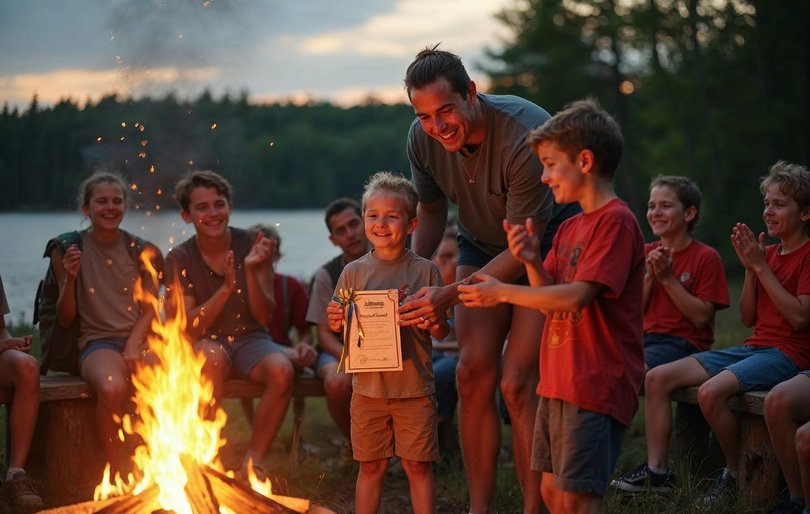
| End-of-Summer Celebration | Awards ceremony, favorite-week throwback activities, camp photo slideshow |
How to Brief Your Staff Before Each Theme Week
This is where most camps lose the benefit of their theme planning. The director has a vision; the counselors have a Monday morning with no prep.
Give every counselor a one-page theme brief exactly 5 days before the week starts — the Monday of the prior week is the right timing. Any earlier and they forget it. Any later and supply requests don’t get fulfilled in time.
What goes in the brief:
- Theme overview (3 sentences): What’s the week about? What’s the tone — competitive, creative, adventurous?
- Key activities by age group: Which activities are mandatory (whole-camp), which are cabin-choice, and which are specialty (requires a specific staff skill)?
- Costume and decoration notes: What are counselors expected to wear or build? What supplies are in the storage room?
- Supply request deadline: Any additional materials needed must be submitted by Wednesday of the prior week. No exceptions — otherwise the request doesn’t get filled.
- Theme anchor ritual: Every good theme week has one repeating element that bookends each day. A chant, a check-in question, a scoreboard update. Tell counselors what it is and who runs it.
Counselors who are prepared are counselors who are enthusiastic — and camper enthusiasm tracks staff enthusiasm almost exactly. A 15-minute briefing meeting with the theme brief as a handout turns a potentially chaotic Monday into a clean launch.
Conclusion
Summer camp theme weeks work because a week with a story is always more engaging than a week without one. The planning logic is straightforward: choose themes for your age range, sequence them to match the energy arc of the summer, brief your staff properly, and let the coherence do the work.
Build your theme calendar before enrollment opens. Name your weeks in your promotional materials. Give counselors the prep time they need. Done well, summer camp theme weeks become the thing parents mention when they re-enroll — and the thing campers spend the fall looking forward to.
FAQ
What are some unique summer camp theme week ideas?
Beyond the classics (Olympics, Color Wars), themes that tend to surprise campers include Mystery & Detective weeks (multi-day puzzle chains), Culinary Camp (real food science, not just decorating cookies), and Back in Time history weeks where each day covers a different era. The key to feeling “unique” is specificity — “Adventure Week” is generic, “Wilderness Survival Week” has an identity.
How many weeks is summer camp usually?
Most day camps run 8–12 weeks, typically from mid-June through mid-August. Shorter specialty camps run 1–4 weeks. Overnight camps vary more widely — from 1-week sessions to 8-week resident programs. Theme weeks work best in camps running 6 or more weeks, where the variety of themes keeps returning campers engaged across the full season.
How do I make sure counselors are prepared for each theme week?
Send a one-page theme brief 5 days before each week starts. Include the theme overview, key activities by age group, costume and decoration expectations, and supply request deadlines. A brief 15-minute team meeting at the start of each week to walk through the plan takes almost no time and dramatically increases execution quality.
Can I use theme weeks in my camp marketing?
Yes — and you should. Named themes give your marketing copy something concrete and specific to promote. “Join us for Wilderness Survival Week” outperforms “register for Week 5” every time. Highlight 3–4 upcoming theme weeks in your enrollment emails, and let past campers share what their favorite week was on social media. Theme weeks are your most promotable program asset.