




Key Takeaways
What is the biggest challenge of coaching one’s own child?
Balancing practices and roster management with parenting, which requires keeping clear boundaries between the two roles.
What is a simple practice structure that works for any sport?
A four-part session: a warm-up, a skill block, a scrimmage, and a cool-down.
How can you prevent parent conflicts over playing time?
Set clear expectations about roles and playing time before the season even starts.
Where can a first-time coach get fast training?
Free training programs from groups like the Positive Coaching Alliance and NAYS can build your confidence quickly.
How do you protect your relationship with your child while coaching them?
Separate “coach mode” from “parent mode” by keeping them strictly to different times and places.
So the sign-up sheet came around, nobody else raised a hand, and now you’re the coach. Maybe you wanted this. Maybe you got roped into it at pickup one afternoon and you’re still not sure how it happened. Either way, you’re standing in a parking lot with a bag of cones, a roster of eight-year-olds, and zero idea what you’re doing for the next hour. Learning to coach youth sports isn’t about knowing more X’s and O’s than the other team’s coach. It’s about showing up prepared, treating every kid on the roster like they matter, and figuring out how to be “Coach” without losing “Mom” or “Dad” in the process.
What Does It Mean to Coach Your Child’s Youth Sports Team?
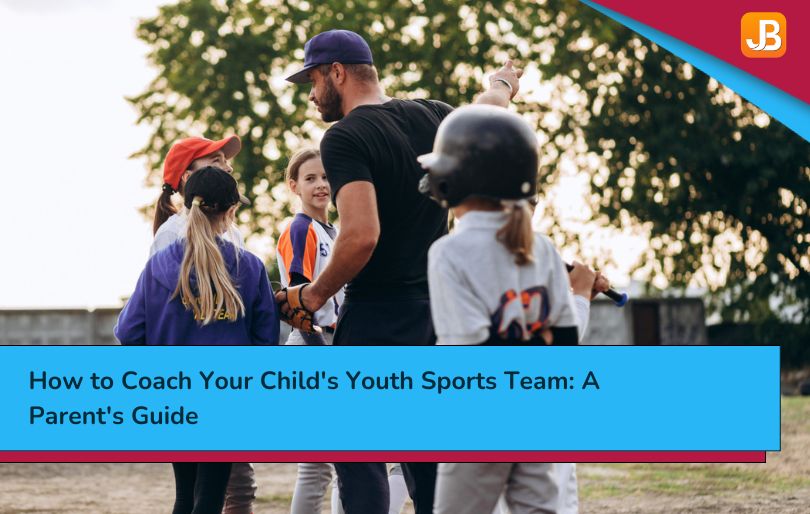
A parent-coach is a volunteer — usually with little or no formal coaching background — who runs practices and games for a team that includes their own child. The job has two parts that pull in different directions: developing every kid on the roster, and managing the logistics that keep a team of families running smoothly. You’re teaching a nine-year-old how to trap a soccer ball. You’re also texting twelve parents about a rained-out game. Both matter.
Most parent-coaches in 2026 land in this role through rec leagues, school programs, or a sports summer camp that needed extra hands for the season. Wherever you started, the fundamentals don’t change: plan your sessions, communicate clearly, and remember that every kid on your roster is someone else’s kid too — not just a body filling out the lineup.
Why Coach Youth Sports?
You coach youth sports because the person running practice shapes whether a kid falls in love with the game or quits it by middle school. That’s not an exaggeration — it’s closer to the biggest lever you have. The Aspen Institute’s Project Play has found coach quality to be one of the top factors tied to whether kids stay in sports or walk away from them entirely.
Think about that for a second. Not talent. Not the win-loss record. The coach.
I’ve watched two teams with nearly identical skill levels have completely different seasons because one coach made practice feel like a chore and the other made it feel like the best hour of the kid’s week. You don’t need a whistle-and-clipboard résumé to be the second kind. You need to show up, pay attention, and care whether the quietest kid on the bench is having fun. The Positive Coaching Alliance calls this being a “Double-Goal Coach” — coaching to win the game and to teach life lessons that outlast the scoreboard. Both goals, not one traded for the other.
How Do You Plan and Run an Effective Practice?
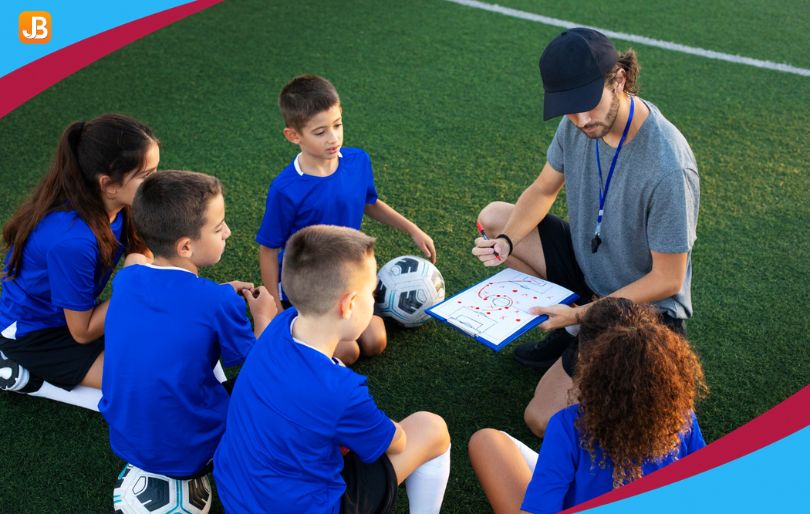
An effective practice follows a simple structure: warm-up, skill-building block, scrimmage or game-like activity, cool-down. Stick to that shape and you can’t go far wrong, no matter the sport.
Here’s a practice plan skeleton that works across soccer, basketball, and baseball alike:
- Warm-up (5-10 minutes) — light jogging, dynamic stretches, a fun tag-style game to get bodies moving and attention focused.
- Skill block (15-20 minutes) — one or two focused drills on a specific skill. Soccer: passing accuracy. Basketball: dribbling with the off-hand. Baseball: fielding ground balls.
- Scrimmage or applied activity (15-20 minutes) — let kids use the skill in a game-like setting. This is where the lesson sticks.
- Cool-down (5 minutes) — quick stretch, a huddle, one thing the team did well, one thing to work on next time.
Write the plan down before you get to the field. A sticky note in your pocket beats trying to remember four drills while twelve kids are asking you questions at once. And build in flexibility — if a drill isn’t landing, you’re allowed to scrap it and move to the scrimmage early. Nobody’s grading your practice plan except the eight-year-olds voting with their attention spans.
How Do You Teach Fundamentals Without Overwhelming Kids?
You teach fundamentals by picking one skill per practice and staying age-appropriate, rather than trying to fix everything you see wrong in a single session. A seven-year-old can absorb “keep your eye on the ball.” A seven-year-old cannot absorb “keep your eye on the ball, bend your knees, follow through, and watch your footwork” all at once.
Break it down by age band:
- Ages 5-7: One skill cue at a time. Keep instructions to a single sentence. Expect short attention spans and build in game breaks.
- Ages 8-10: Two-part cues are fine (“plant your foot, then follow through”). Start introducing basic strategy — where to stand, when to pass.
- Ages 11-13: Kids can handle real feedback and more complex plays. This is where you start layering in game strategy and position-specific coaching.
Resist the urge to correct every mistake you see. Pick the one thing that will help most right now, say it once, and let the kid keep playing. Overcoaching kills momentum faster than any bad drill.
How Do You Handle Parents, Playing Time, and Team Politics?
You handle parent friction by setting expectations before the season starts, not after the first complaint lands in your inbox. Send a short message before game one: here’s how playing time works, here’s the philosophy on positions, here’s how to reach me with questions.
Playing time is the single biggest flashpoint on any rec team. Most leagues have a minimum-play rule — use it as your anchor point and say so out loud. “Every kid gets at least a quarter of the game, and I rotate positions so everyone tries different spots.” That one sentence, said early, prevents half the sideline grumbling you’d otherwise field in week six.
When a parent does approach you upset, here’s a script that works: “I hear you — let’s talk after practice, not during the game.” Buys you time, keeps the conversation off the field in front of the kids, and signals you take it seriously without hashing it out live. Most complaints cool off by the time you actually sit down to talk.
And when another parent volunteers to help run drills or keep score, take them up on it. A second set of hands cuts your workload in half and gives you someone to talk strategy with at halftime.
How Do You Balance Being the Coach and the Parent?
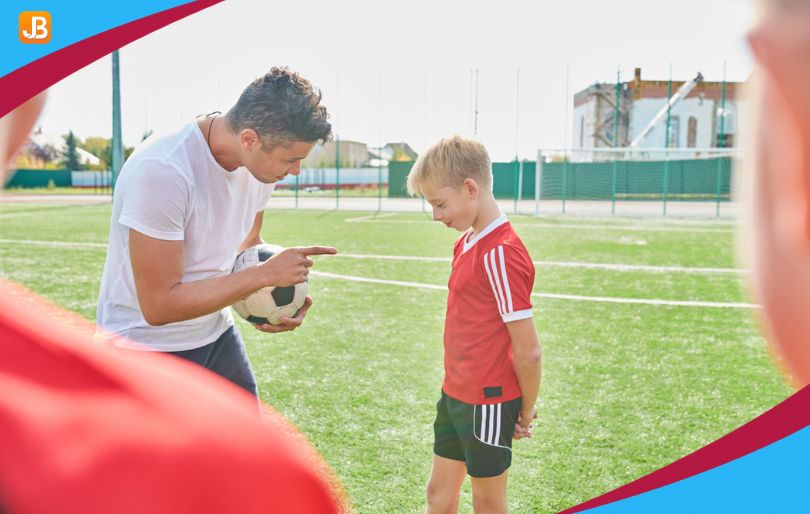
You balance the two roles by separating them clearly — by time, by language, by physical space when you can manage it. On the field, your kid is a player like any other. In the car afterward, they’re your kid again. Blurring that line is where most parent-coach friction with your own child comes from.
Here’s how it plays out in practice: say your son misses a fly ball in the outfield during a game. Coach-you corrects it the same way you would for any player — “shake it off, get ready for the next one.” Parent-you does not bring it up again at dinner. That’s the fix: one correction, delivered like you would to any kid on the roster, then done.
I’d also recommend avoiding favoritism in the other direction — some parent-coaches overcorrect by benching their own kid more than fair, just to avoid the appearance of favoritism. That’s unfair in its own way. Treat your kid like a player, not like a statement about your integrity as a coach.
The Positive Coaching Alliance’s Double-Goal Coach framework helps here too — it gives you a mental model where winning and life lessons both matter, which takes some pressure off making every call about your kid look perfectly neutral. Aim for fair, not performative.
Where Can You Get Training and Support as a New Coach?
You can get free, structured training to coach youth sports through national organizations built specifically for volunteer coaches — you don’t have to figure this out on your own. The National Alliance for Youth Sports has certified more than three million volunteer coaches through its National Youth Sports Coaches Association program, and the Positive Coaching Alliance offers free online courses built around the Double-Goal Coach model.
A few places to start:
- Positive Coaching Alliance — free online coaching courses, age-specific guidance, and downloadable practice tools.
- National Alliance for Youth Sports (NAYS) — certification programs and safety training for volunteer coaches.
- Your league or program director — ask directly for equipment, background-check requirements, and any local training sessions before the season starts.
Don’t skip that last one. Most leagues have more support available than they advertise — coaches don’t ask.
FAQ
How do I coach youth sports if I’ve never coached before?
Start with a free course from the Positive Coaching Alliance or NAYS — both are built for total beginners. Then build a simple practice plan (warm-up, skill block, scrimmage, cool-down) and lean on it every session until it feels natural.
How much playing time should my own kid get if I’m the coach?
The same as everyone else, following your league’s minimum-play rule. Announce the policy to all parents before the season so it applies visibly and equally, including to your own child.
How do I deal with other parents complaining about playing time?
Set the expectation before the season starts, and when a complaint comes up, redirect it to a conversation after practice rather than during the game. Most tension cools once parents know the rules and feel heard away from the sideline.
What do I need for my first practice as a volunteer coach?
A written practice plan, basic equipment (cones, balls, pinnies), a roster with emergency contacts, and a rough sense of the four-part structure: warm-up, skill block, scrimmage, cool-down.
How do I balance being a parent and a coach on the same team?
Separate the roles by time and place. Correct your kid the same way you’d correct any player during practice or a game, then let it go once you’re off the field.
Is volunteer coach training actually worth it if I’m only doing one season?
Yes — most courses take under two hours and cover exactly the situations that trip up first-time coaches: safety basics, age-appropriate drills, and handling difficult conversations with parents.
Conclusion
Learning to coach youth sports isn’t about becoming a tactics expert overnight. It’s a practice plan you can actually run, a few ground rules set before the season starts, and a clear line between who you are on the field and who you are in the car ride home. Lean on free resources from the Positive Coaching Alliance and NAYS, keep your fundamentals age-appropriate, and treat every kid on your roster — including your own — like they matter equally. Do that, and the season you were nervous about signing up for might turn into the one you volunteer for again next year.