


Key Takeaways
- Before the season: finish league training and the background check, pack the gear bag, and email parents.
- U.S. Soccer’s maximum formats grow with age: 4v4 at U7–U8, 7v7 at U9–U10, 9v9 at U11–U12.
- Run every practice as play-practice-play, with most of the hour spent playing.
- On game day, rotate positions, share minutes fairly, and keep halftime under three minutes.
- U.S. Soccer’s age-group guides list no heading in practice or games through U11.
Last updated: October 2026
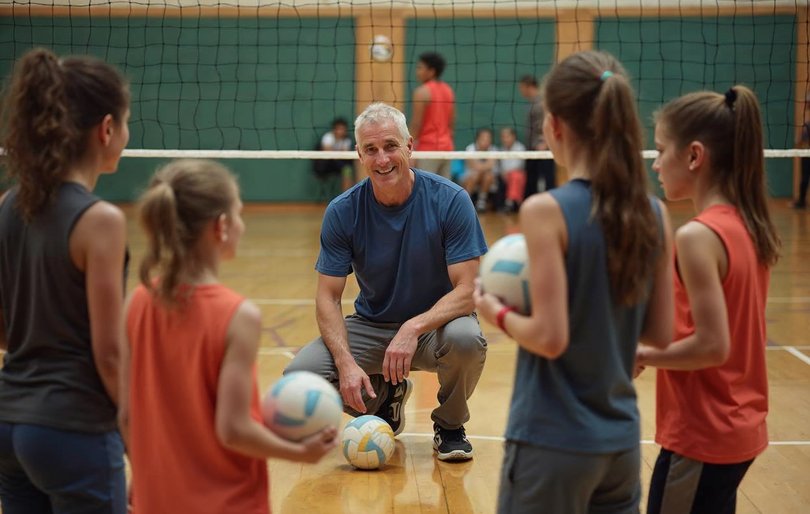
The league email says “Congratulations, Coach!” and lists twelve names. You’ve never played a minute of organized soccer, and the first practice is in nine days. Figuring out how to coach youth soccer feels like cramming for a test in a language you don’t speak. Good news: at U6 to U12, the job is mostly organizing kids, not knowing tactics. So where do you start?
Coaching youth soccer means running age-appropriate practices and games for kids, usually 4 to 12, where the goals are lots of ball touches, steady skill growth, and enough fun that every player wants to come back next season — not wins. Here’s your first season, in order.
How to Coach Youth Soccer: What Should You Do Before the First Practice?
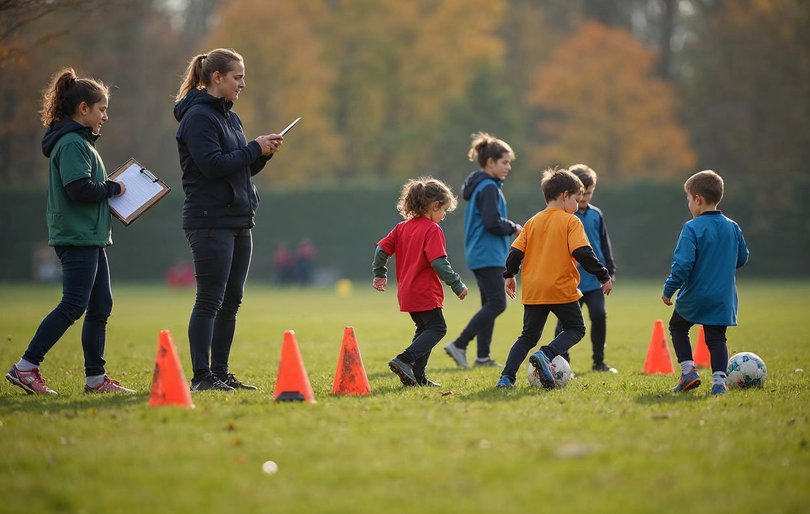
Before the first practice, finish your league’s required training and background check, pack a gear bag, and send parents a short welcome email. Those three jobs take about a week of evenings and head off most of the problems first-time coaches hit in September. Start with the paperwork, since many leagues won’t release a roster until it clears.
Most leagues that recruit volunteer coaches ask for a background check, a safety module, and an intro coaching course. U.S. Soccer’s 4v4 grassroots course, for coaches of 6- to 8-year-olds, was described in 2018 as about two hours online, and it introduces the play-practice-play model.
Gear bag checklist:
- One ball per player plus two spares (most leagues use size 3 through U8, size 4 for U9–U12)
- 20–30 disc cones, two colors of pinnies, and two to four pop-up goals
- A first-aid kit, an ice pack, and a printed parent contact list
Parent email: your phone number, practice time, what to bring (shin guards, water, a ball), your playing-time approach, and a request for an assistant coach. You’ll want one.
How to Coach Youth Soccer by Age: What Changes From U6 to U12?
The number of players on the field grows with age. U.S. Soccer’s game formats guidance sets the maximum at 4v4 for U7–U8, 7v7 for U9–U10, 9v9 for U11–U12, and 11v11 from U13. Smaller games are always fine. Fields get bigger at each step, so check your league’s dimensions.
| Age group | U.S. Soccer format | What to focus on |
|---|---|---|
| U6 | Small-sided games of 1v1, 2v1 and 2v2; no set positions | Dribbling, running with the ball, shooting |
| U7–U8 | Up to 4v4 | Skills with both feet, beating a defender |
| U9–U10 | Up to 7v7 | Passing, receiving, helping teammates |
| U11–U12 | Up to 9v9 | Combining with teammates, simple formations |
The U6 row comes from U.S. Soccer’s U6 age-group guide. Plenty of rec leagues still schedule U6 games at 3v3 or 4v4. Fewer players, more touches.
If your U8s keep bunching into one clump, split them into two 3v3 games on side-by-side fields.
What Does a 60-Minute Soccer Practice Plan Look Like for U8 to U10?
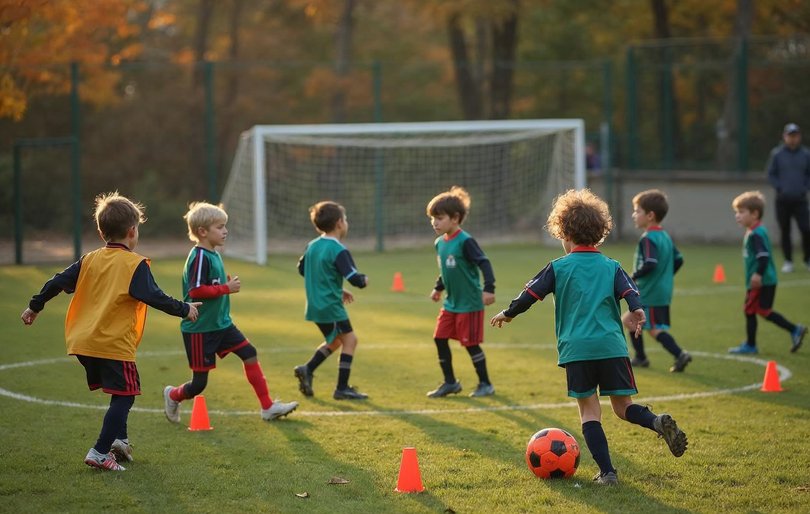
A 60-minute soccer practice plan for U8 to U10 follows play-practice-play: a game as kids arrive, two short skill activities in the middle, and a long game at the end. Players should spend about 45 of the 60 minutes with a ball at their feet, and each of your talks should stay under a minute.
| Minutes | Block | What happens | Coach cue |
|---|---|---|---|
| 0–10 | Play | 3v3 as players arrive | No instruction |
| 10–13 | Water and huddle | Name today’s one skill | Under 60 seconds |
| 13–23 | Practice 1 | Ball-each dribbling game | “Small touches, eyes up” |
| 23–33 | Practice 2 | Passing or 1v1 game | “Open up to the ball” |
| 33–36 | Water | Check shin guards and laces | Ask who’s sore |
| 36–55 | Play | 4v4 (U8) or up to 7v7 (U10) | Praise, don’t direct |
| 55–60 | Huddle | One thing each player did well | End on a high note |
The shape is U.S. Soccer’s; the minutes are my recommendation.
Here’s how it might go. Eleven U9s, topic: passing. They arrive to a 3v3, so nobody waits for the late kid. You demo one pass in fifteen seconds, run Gate Passing, then stay quiet through the scrimmage and watch who tries it.
Which Soccer Games Should First-Time Coaches Use?
The best games for first-time coaches give every player a ball or a role, need only cones, and look like real soccer. Seven games cover most of a rec season from U7 to U12. Run each for eight to ten minutes, and change one rule when it gets too easy or too hard.
| Game | Best for | Setup | Skill |
|---|---|---|---|
| Box Escape | U7–U10 | 20×20-yard square, ball each | Dribbling, turning |
| Sharks and Minnows | U7–U10 | 20×30 yards, ball each, one or two defenders | Dribbling under pressure |
| Gate Passing | U8–U12 | Pairs, one ball, 8–10 cone gates | Passing and receiving |
| 1v1 to the End Line | U8–U12 | 15×20 yards, two lines | Taking on a defender |
| Numbers Game | U8–U12 | Two small goals, teams on the sideline | Quick decisions |
| Keep-Away 4v1 | U10–U12 | 12×12-yard box, one ball | Support angles |
| End Scrimmage | All ages | Your league format | Everything, in a game |
In Box Escape, players dribble inside the square; on “out,” they leave by any side, turn, and come back. In the Numbers Game, you call a number and that many players per team rush in for a mini-game.
Coaching the little ones? For U6 and under, soccer drills for kindergarten work better: shorter, story-based games where every child has a ball.
My pick for week one? Sharks and Minnows.
How Should You Coach on Game Day?
On game day, share minutes fairly, rotate positions, keep the sideline calm, and give one short message at halftime. Let players make their own decisions. Shouting “pass! shoot! go left!” during play — often called joysticking — takes those decisions away and slows their learning.
- Share playing time. Aim for roughly equal minutes, and write the substitution plan before kickoff.
- Rotate positions. Every child plays forward, midfield, and defense across the season.
- Be the only voice. Agree with your assistant on who talks. Short, calm, positive.
- Keep halftime under three minutes. Water first, then one thing to keep doing and one thing to try.
If your own child is on the team, fair minutes get tricky. Learning how to coach your child’s sports team without favoring — or overcorrecting against — your kid is its own skill.
How Do You Keep Coaching Positive and Parents Calm?
Keep coaching positive by praising effort and specific actions rather than results, and keep parents calm by setting expectations before the first game. “Nice job” fades fast. “You looked up before you passed” tells a player exactly what to repeat.
The Positive Coaching Alliance’s 16 Tips for the First Time Coach, shared on U.S. Soccer’s resource hub in 2025, includes simple ideas: greet each player by name and watch your body language.
For parents, three rules cover most of it:
- Cheer for everyone, coach no one. Say it in the email and again at game one.
- Use a 24-hour rule. Playing-time concerns wait a day.
- Give them a job. Busy parents yell less.
Picture a dad shouting “Shoot!” every time his daughter gets the ball. Afterward, thank him for coming and ask him to cheer her effort instead — she’s learning to make that call herself. Most parents fix it right away.
How Do You Keep Young Soccer Players Safe?
Keep young players safe by following the heading rules, scheduling water breaks, and pulling any player with a possible concussion right away. U.S. Soccer’s U11–U12 age-group guide lists no heading in practice or games for U11; for U12, no more than 30 minutes of heading practice and 15–20 headers per player per week.
The U6 through U10 guides also state no heading in practice or games. For most rec coaches, heading simply isn’t part of practice.
Next, water: a break every 15 to 20 minutes, more often in heat.
Concussions are the one area where you never guess. The CDC’s HEADS UP guidance on responding to a sports concussion (2025) says to remove an athlete from play right away if you suspect one and keep them out that day until a healthcare provider clears them. CDC also offers an online HEADS UP training for youth sports coaches — take it before the season.
If a player takes a knock to the head and seems dazed or “off,” they’re done for the day. Even in the final.
Warm-ups, fitted shin guards, and a field check cover most of how to prevent youth sports injuries at this age.
What Goals Should You Set for Your First Season?
Set first-season goals around touches, skills, and enjoyment, not the standings. A good season ends with every player more comfortable on the ball, using both feet a bit more, and asking to sign up again. Write three or four goals down in week one and check them at midseason.
- Every player can dribble past a defender at least once.
- Every player tries every position.
- Every family wants to come back next season.
Winning is fine. It’s not on the list.
How Can Leagues Make a First Season Easier for Coaches?
Leagues make a first season easier by handing volunteer coaches a ready practice plan, a stocked gear bag, a preseason clinic, and one place to find rosters and schedules. Coaches who aren’t chasing paperwork every evening have more energy for the kids — and they say yes again in the spring.
Still working out how to start a youth sports league? Plan coach onboarding from season one.
Good sports management software keeps rosters, practice schedules, and coach-to-parent messages together, so a first-time coach isn’t sorting it all out in a group text.
FAQ
How do I become a youth soccer coach?
Volunteer with your local rec league, then complete its background check and required training.
Do I need a license to coach youth soccer?
Most rec leagues don’t require a formal license for U6–U12 volunteers, but many require an entry-level course, such as a U.S. Soccer online grassroots course.
How long should a soccer practice be for U8 to U10?
About 60 minutes, run as play-practice-play, with a long game at the end.
How do you improve youth soccer skills?
More touches. Use ball-each games, small-sided scrimmages, and short, specific feedback.
Can young soccer players head the ball?
U.S. Soccer’s age-group guides list no heading in practice or games through U11. At U12, heading practice is capped at 30 minutes and 15–20 headers per player per week.
Conclusion
Knowing how to coach youth soccer starts before practice one: training, gear, and a clear email to parents. From there, match your games to U.S. Soccer’s format for the age, run play-practice-play, share minutes fairly, and keep every player safe. You don’t need to have played. You need a plan, a bag of balls, and patience — and now you’ve got the plan.