




Key Takeaways
- Every child gets a ball, and nobody waits in line.
- U.S. Soccer’s U6 game format is 4v4, so finish with a small-sided scrimmage.
- Run each game for five to seven minutes, then switch.
- A 45-minute practice runs play, practice games, play.
- Talk less, show more: one ten-second instruction, then play.
Last updated: October 2026
Your first U6 practice starts at 5:30. By 5:34, twelve kids are chasing one ball in a single clump, somebody’s crying, and one player is lying in the grass naming clouds. Good soccer drills for kindergarten fix most of this — not with more rules, but with more balls. So what do you actually do with 45 minutes and a dozen five-year-olds?
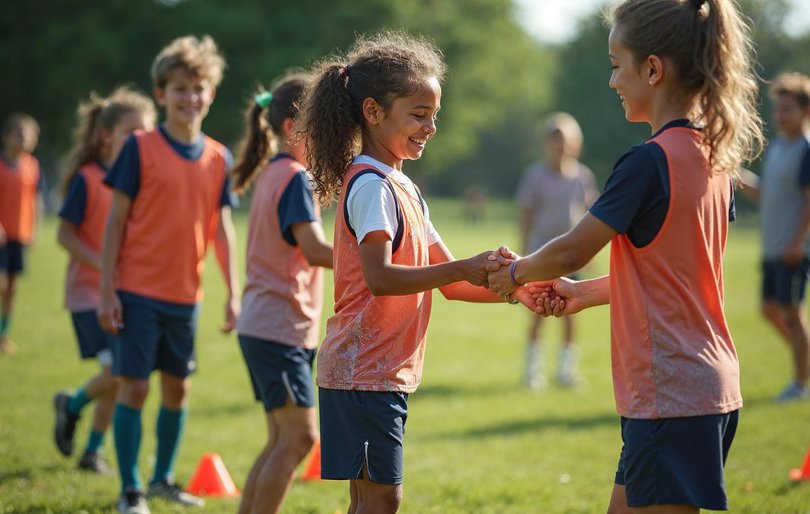
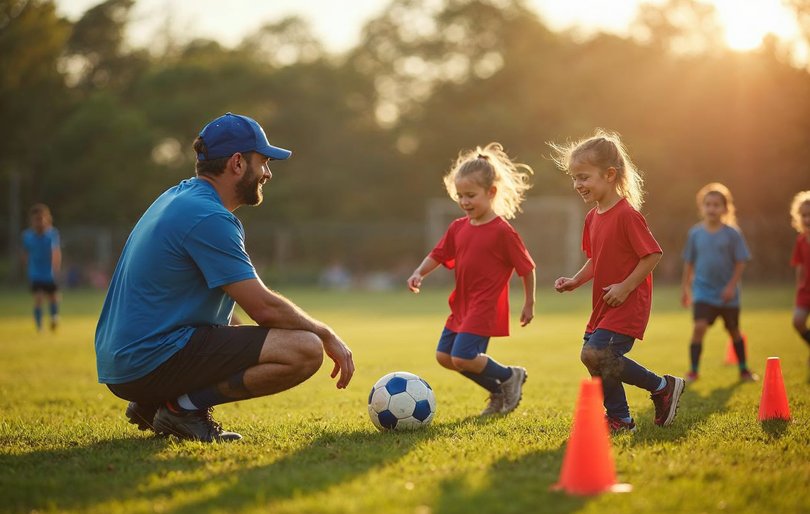
Soccer drills for kindergarten are short, story-driven games for 4- to 6-year-olds in which every child has a ball, nobody waits in line, and basic skills like dribbling, stopping, and kicking are learned through play instead of adult-style repetition. Below are seven of them, plus a timed plan for your next fall 2026 practice.
What Are the Best Soccer Drills for Kindergarten?
The best kindergarten soccer games are short, story-based, and give every child a ball so nobody waits in line. Red Light Green Light, Sharks and Minnows, Clean Your Room, Animal Dribbling, Gate Dribbling, Knock Down the Cones, and a 3v3 scrimmage cover dribbling, stopping, kicking, and shooting for 4- to 6-year-olds.
| Drill | Skill | Setup | Time |
|---|---|---|---|
| Red Light, Green Light Dribble | Close control, stopping | 20×20 yards, ball each | 5-7 min |
| Sharks and Minnows | Dribbling under pressure | 20×25 yards, ball each | 5-7 min |
| Clean Your Room | Inside-of-foot and laces kicks | Two halves, 2-3 balls per child | 5-6 min |
| Animal Dribbling | Foot surfaces, speed changes | 20×20 yards, ball each | 5-7 min |
| Gate Dribbling | Steering, finding space | 8-10 cone gates, 25×25 yards | 5-6 min |
| Knock Down the Cones | Shooting accuracy | Tall cones 5-6 yards out | 5-6 min |
| 3v3 Scrimmage | Playing a real game | Pop-up goals, 20×25 yards | 8 min |
Some coaches call these Clean the Room or Animal Soccer — same games. My pick for week one? Sharks and Minnows.
Why Do Soccer Drills for Kindergarten Work Best as Small-Sided Games?
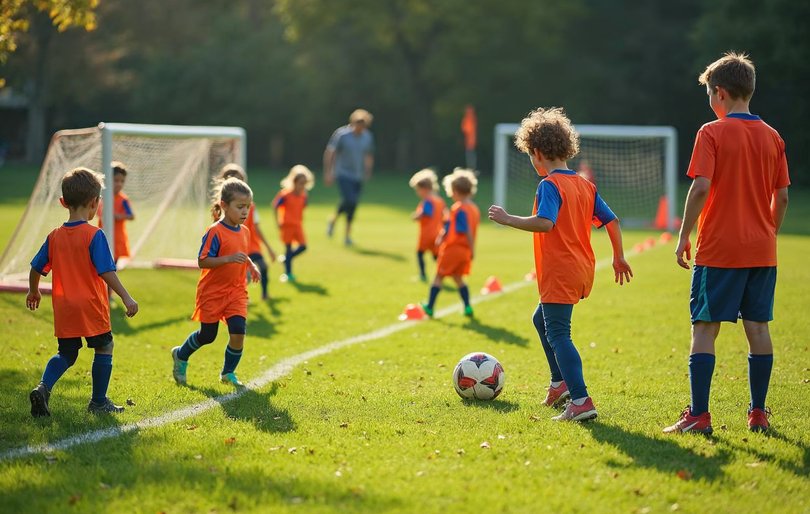
Small-sided games work best because five-year-olds learn by touching the ball, not by watching. U.S. Soccer’s U6 coaching guide sets 4v4 as the game format at this age and builds activities around a ball for every player. Fewer players means more touches, more decisions, and far less standing around.
Picture 7v7: three kids touch the ball, the rest pick dandelions. At 3v3, nobody can hide.
U.S. Soccer made the same case with its 2017 small-sided standards, noting in its player development initiatives overview that fewer players gives each child more involvement and “more opportunity for development.”
- Do: ball each, story games, short rounds.
- Skip: laps, lines, lectures, and full-field games.
If your players keep bunching around one ball, split them into two 3v3 games on side-by-side fields.
How Do You Set Up and Run Fun Soccer Drills for Kindergarteners?
Every drill needs four things: a grid sized to your group, a ball for each child, a one-sentence rule a five-year-old can repeat back, and a way to make it easier or harder on the spot. Run each game for five to seven minutes, then switch before attention fades.
Grid sizes below are my suggestions for eight to ten kids, not league rules. If you have fewer than six players, shrink to about 15×15 yards.
Red Light, Green Light Dribble
- Setup: 20×20-yard square, one ball per child.
- How to play: Green means dribble anywhere. Yellow means tiny taps. Red means freeze with the sole of your foot on the ball.
- Skill: Close control and stopping on command.
- Easier: Walk the ball, and hold up a colored cone as a visual cue.
- Harder: Add “purple light” — turn and go the other way.
It’s the red light green light soccer game from recess, with a ball.
Sharks and Minnows
- Setup: 20×25-yard grid, one ball per minnow. You start as the only shark.
- How to play: Minnows dribble end line to end line while the shark pokes balls away. Tagged minnows become seaweed — feet planted, arms waving, tagging anyone who passes. Nobody sits out.
- Skill: Dribbling under pressure, eyes up.
- Easier: The shark moves in slow motion.
- Harder: Two kid-sharks and a narrower grid.
If a child cries when tagged, make them seaweed instead of sending them out — they’re still in the game.
Clean Your Room
- Setup: Cones split a 20×20-yard area into two “bedrooms” with 2-3 balls per child scattered across both. Two teams.
- How to play: Kick balls out of your room into the other one. Whistle after 60-90 seconds and count which room is messier.
- Skill: Kicking with the inside of the foot and the laces.
- Easier: Allow rolling by hand in round one.
- Harder: Weaker foot only.
Animal Dribbling
- Setup: 20×20-yard square, one ball per child.
- How to play: Call an animal. Bunny: tiny taps. Snake: roll it with the sole. Cheetah: sprint. Turtle: slow and close. Elephant: stomp to stop.
- Skill: Different foot surfaces and speed changes.
- Easier: Demonstrate each animal first.
- Harder: Kids invent the next animal.
Gate Dribbling
- Setup: 8-10 two-cone gates, about 2 yards wide, in a 25×25-yard area. Ball each.
- How to play: Dribble through as many gates as you can in 60 seconds, counting out loud.
- Skill: Steering the ball and scanning for space.
- Easier: Fewer, wider gates.
- Harder: Pairs pass through the gates (Gate Passing).
Knock Down the Cones
- Setup: Tall cones with a ball balanced on top, 5-6 yards from a start line. One ball per child.
- How to play: Shoot to knock targets over while you reset them.
- Skill: Shooting accuracy and planting the standing foot.
- Easier: Move the cones closer.
- Harder: Dribble through a gate before each shot.
3v3 Scrimmage
- Setup: Pop-up goals on a 20×25-yard field, no goalkeepers. Two fields if you have ten or more kids.
- How to play: Let them play. When the ball goes out, roll a new one in right away.
- Skill: Using everything in a real game.
- Easier: You join as a neutral helper.
- Harder: Move to 4v4, U.S. Soccer’s U6 game format.
What Does a 45-Minute Soccer Practice for 5-Year-Olds Look Like?
A 45-minute soccer practice for 5-year-olds opens with free play, runs three or four short games, builds in two water breaks, and ends with a small-sided scrimmage. Keep every block under eight minutes. Kids should spend most of the session moving with a ball, not listening to you talk.
The shape follows U.S. Soccer’s play-practice-play idea. The minutes are my suggestion.
| Minutes | Activity | Coach cue |
|---|---|---|
| 0-5 | Free play, ball each | “Keep it close enough to touch” |
| 5-10 | Red Light, Green Light Dribble | “Sole on the ball at red” |
| 10-12 | Water break | Shin guards on, laces tied |
| 12-19 | Animal Dribbling | One animal per demo |
| 19-26 | Sharks and Minnows | “Eyes up, find the gaps” |
| 26-28 | Water break | Check for anyone limping |
| 28-34 | Clean Your Room or Knock Down the Cones | “Inside of the foot” |
| 34-42 | 3v3 or 4v4 scrimmage | Minimal stoppages |
| 42-45 | Huddle, high fives, team cheer | Praise each child by name |
At this age, how to prevent youth sports injuries mostly comes down to routine: a moving warm-up, regular water, and shin guards that fit.
What to pack: disc cones, four tall cones, a size 3 ball per child plus spares, pinnies, pop-up goals, and water.
How Do You Keep 5-Year-Olds Focused at Soccer Practice?
You keep 5-year-olds focused by talking less and playing more: give one instruction in ten seconds or less, show it instead of explaining it, and switch games before boredom sets in. The American Academy of Pediatrics advises that instruction at this age stay limited and follow a show-and-tell format.
- One instruction, ten seconds. Longer, and you’ve lost the back row.
- Show, don’t explain. Demo it with a ball, or let a player demo.
- Use names and stories. “Maya the cheetah” works. “Increase your tempo” doesn’t.
- Switch early. Three kids lying down means the game is over.
- Skip the scoreboard. At five, nobody needs a winner.
If half your team wanders off after five minutes, your games or talks run too long.
Here’s how it tends to play out: two weeks of one-ball scrimmages bring a clump and constant “can I get a drink?” requests. Switch to ball-each games and two 3v3 fields, and every child touches the ball.
If your own kid is on the roster, learning how to coach your child’s sports team without favoring them is its own skill.
How Can Leagues Help Volunteer Coaches Run Better Kindergarten Practices?
Leagues help first-time coaches most by handing them a ready practice plan, a stocked equipment bag, and a short preseason clinic before the first session. A volunteer who arrives with cones, balls, and a written plan runs a calmer practice and is far more likely to coach again next season.
A 2019 parent survey by the Aspen Institute’s Project Play and Utah State University found the average child quits a sport by age 11 after less than three years — and 36% of the time, it’s because they stopped enjoying it. Keeping kids starts with a fun first season.
Most leagues already have a process to recruit and train volunteer coaches. Add a one-page U6 plan and a 30-minute field walk-through, and a nervous parent knows exactly what happens at 5:30.
If you’re still working out how to start a youth sports league, plan the equipment bag and coach clinic from season one.
Good sports management software keeps rosters, practice schedules, and coach-to-parent messages in one place, so volunteers aren’t chasing them through group texts.
FAQ
How do I teach my 5 year old soccer?
Give your child their own ball, play story games like Red Light Green Light, show instead of explain, and stop while they still want more.
What are some fun soccer drills?
Sharks and Minnows, Red Light Green Light, Clean Your Room, and Animal Dribbling. Each turns a skill into a game.
What are some basic drills for soccer?
Dribbling with close control, stopping the ball with the sole, passing with the inside of the foot, and shooting at a target.
What does a 5 year old need to play soccer?
A size 3 ball, shin guards, cleats or sneakers, and a water bottle. Most leagues require shin guards at every practice and game.
What size soccer ball does a 5 year old need?
Most rec leagues use a size 3 ball for this age. It’s smaller and lighter than the adult size 5.
Can you do soccer drills for kindergarten at home?
Yes. Red Light Green Light and Knock Down the Cones both work in a backyard with one ball and a few plastic bottles as targets.
Conclusion
Soccer drills for kindergarten don’t need to be complicated. Give every child a ball, wrap each skill in a story, keep games to five to seven minutes, and finish with a small-sided scrimmage. Print the 45-minute plan, pack the bag, and run it this Saturday — the clump will thin out faster than you expect.