





Key Takeaways
What is the difference between running a youth sports league and a single event?
Starting a youth sports league means building a complete season-long organization, including a board of directors, a budget, a registration system, and coaches rather than just organizing a one-time event.
Why do most youth sports leagues choose 501(c)(3) nonprofit status?
Most leagues opt for 501(c)(3) nonprofit status to gain access to liability insurance, enable tax-deductible donations, and qualify for grants.
Why is investing in a dedicated registration system important?
A proper registration system handles waitlists and recurring seasons, saving your board from having to redo the exact same paperwork year after year.
What is the best way to recruit and manage volunteer coaches?
Volunteer coach recruiting works best when it is paired with mandatory background checks and a recognized training standard, such as the programs offered by NAYS.
You’ve got a group of parents, a handful of fields booked on weekends, and a spreadsheet that’s already falling apart. That’s usually where the idea of starting a youth sports league begins — not with a business plan, but with a need nobody else in town is meeting. Figuring out how to start a youth sports league means answering a string of unglamorous questions before a single whistle blows: Who’s on the board? Where does the money come from? Who’s checking that your coaches are safe around kids? Get those answers wrong in year one, and you’ll spend years two and three fixing them instead of growing.
What Is a Youth Sports League (and How Is It Different From a Camp)?
A youth sports league is an organized structure — usually nonprofit — that runs multiple teams through a full season of practices, games, and standings under one set of rules, insurance, and administration. That’s the key distinction: a league is a season-long commitment, not a single event.
Roughly 27 million U.S. kids ages 6 to 17 play team sports, and participation has been climbing back since the pandemic dip, according to the Aspen Institute’s Project Play State of Play research. That’s a lot of families looking for somewhere to play — and a lot of competition for your league’s attention if the experience isn’t organized well.
Here’s where new organizers trip up: they blur “league” with “camp.” A camp runs for a week or a summer, with one registration cycle and a defined end date. A league runs for months, with standings, playoffs, and repeat registration every season. If what you’re picturing is a single week-long program, the planning looks different — our guide on running a successful sports camp walks through that scope instead. But if you’re building something that comes back every fall and spring, you’re in league territory, and everything from budget to bylaws needs to account for that recurring cycle.
Why Do Most Youth Sports Leagues Choose Nonprofit Status?
Most youth sports leagues register as 501(c)(3) nonprofits because it gains them lower insurance rates, tax-deductible donations, and grant eligibility that a for-profit LLC can’t access as easily. That tradeoff matters more than most first-time organizers expect.
An LLC sets up faster and gives you more control. But it exposes you personally to more liability, and sponsors can’t write off their donations. Nonprofit status takes longer — expect a few months for IRS approval — and comes with paperwork: annual filings, a governing board, documented bylaws. In practice, most leagues that start as informal parent groups end up filing for nonprofit status within their first year anyway, once insurance carriers and city park departments ask for it before they’ll talk to you.
| Factor | Nonprofit (501c3) | LLC |
|---|---|---|
| Setup time | Months (IRS approval) | Days to weeks |
| Insurance access | Broader, often cheaper | Limited, pricier |
| Donations | Tax-deductible | Not deductible |
| Ongoing filings | Annual (Form 990, etc.) | State-dependent, lighter |
| Personal liability | Lower, board-shielded | Depends on structure |
How Do You Build a Board and Bylaws to Start a Youth Sports League?
You build a league board by recruiting 5 to 9 people to fill defined roles — commissioner, treasurer, registrar, volunteer coordinator — and writing bylaws that spell out how decisions get made before anyone disagrees about one.
Start with the roles, not the people. It’s tempting to just ask your three most enthusiastic parent friends to run everything, but that’s how leagues end up with three people doing the work of nine and burning out by October. A workable starter board looks like this:
- League commissioner — final decision-maker, represents the league publicly
- Treasurer — manages the budget, sponsorships, and reimbursements
- Registrar — owns the registration system, rosters, and waitlists
- Volunteer/coach coordinator — recruits and vets coaches
- Facilities/scheduling lead — books fields, sets the game calendar
Your bylaws don’t need to be a legal masterpiece. They need to cover board terms, voting rules, how age divisions are set, and what happens if a coach or parent needs to be removed. Write them down before your first season, not after your first conflict — retrofitting bylaws mid-dispute never goes smoothly.

How Much Does It Cost to Start a Youth Sports League?
Starting a youth sports league typically costs anywhere from a few thousand dollars for a small single-sport rec league to tens of thousands for a multi-division league with owned equipment and paid officials. The range depends almost entirely on facilities and staffing.
Budget for these categories before you set registration fees:
- Insurance — general liability and accident coverage, often your single biggest line item
- Facility rental — fields, gyms, or courts, unless your municipality donates space
- Officiating — refs or umpires, paid per game in most leagues
- Equipment — uniforms, balls, nets, first-aid kits
- Registration platform — a system to collect fees, forms, and waivers
- Background checks — screening for every coach and volunteer with regular player contact
A small rec league renting municipal fields runs lean; a competitive travel league with owned uniforms and paid refs climbs fast. Price registration fees only after mapping these costs — budgeting second is how leagues end up mid-season, quietly asking parents for “one more fundraiser.”
How Do You Set Up Registration and Season Operations?
You set up registration by choosing a system that handles online sign-ups, waitlists, and payment collection in one place, then building your season schedule around it. This is the operational backbone that keeps your board from re-doing manual work every single season.
Here’s the sequence that works for most new leagues:
- Open registration 6-8 weeks before the season starts, with a clear deadline and late-fee policy
- Collect waivers, medical info, and payment in the same form — don’t split it across emails and paper
- Set up a waitlist so overflow interest doesn’t just disappear when a division fills up
- Assign teams and post the schedule at least two weeks before opening day
- Keep a running roster that syncs with attendance and communication tools
I’ve seen leagues run this entire process on paper sign-up sheets and a shared spreadsheet, and it works — until 200 kids sign up and three parents email asking why their kid isn’t on a team. That’s usually the point where boards look at sports management software with subscription-based enrollment, since it lets returning families re-enroll each season automatically instead of the registrar rebuilding rosters from scratch every fall and spring.
How Do You Recruit and Vet Volunteer Coaches?
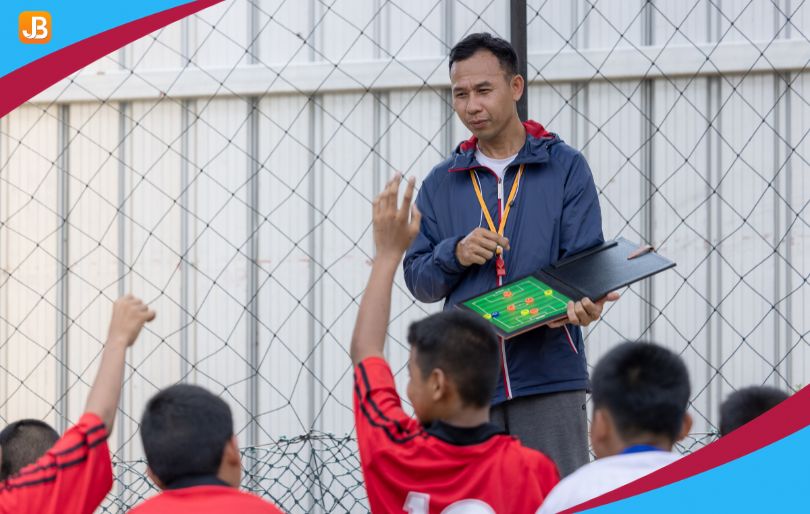
You recruit volunteer coaches by asking current parents first, then screening every candidate with a background check and a basic training standard before they’re near a team. Skipping the screening step is the single riskiest shortcut a new league can take.
Parent networks are your best recruiting channel — most leagues fill 60-80% of coaching slots from people already registering their own kids. Recruiting is only half the job, though. The National Alliance for Youth Sports maintains training and certification standards that many community leagues adopt as their baseline for volunteer coaches. Pair that training with a formal background check for anyone with regular, unsupervised player contact, and document both in your volunteer files. A league without documented screening isn’t just risking player safety — it’s also harder to insure, since carriers ask for proof of a vetting process before writing a policy.
How Do You Grow a League Once It’s Launched?
You grow a league by fixing retention before you chase new sign-ups — because a league that leaks players every season never gets ahead, no matter how much marketing it does. Growth and retention are the same problem viewed from two angles.
Nearly 70% of kids quit organized sports by age 13, often citing a lack of fun or poor organization rather than losing interest in the sport itself, according to Aspen Institute research — a trend the National Council of Youth Sports also tracks across its member leagues. That statistic should shape your second season, not just your first. If practices feel chaotic or parent communication is inconsistent, families won’t come back even if the games went fine.
Once operations are steady, a few areas tend to drive real growth: sponsorship and fundraising to offset rising costs, tighter insurance and liability coverage as you add divisions, and a more structured volunteer coach recruiting pipeline as demand outpaces your parent network. We’re covering each in dedicated guides as your league scales past its first season — for now, treat this stage as the point where you stop firefighting and start building repeatable systems.
FAQ
How much does it cost to start a youth sports league?
Costs range from a few thousand dollars for a small single-sport rec league to tens of thousands for a multi-division league with paid officials and owned equipment. Insurance and facility rental are usually the biggest line items.
What do you need to start a youth sports league?
You need a board with defined roles, written bylaws, a decision on legal structure (nonprofit or LLC), a budget, a registration system, and enough coaches and fields to run a full season. Insurance comes before any of it — most facilities won’t let you book without proof of coverage.
How many players do you need to start a league?
Most rec leagues aim for at least 4-6 teams per age division to make a real schedule work, which usually means 40-70 players minimum per division. Fewer than that, and you’re better off joining an existing league or running a single-season camp instead.
Should a youth sports league be a nonprofit?
Most should. Nonprofit status opens up lower insurance rates, tax-deductible sponsorships, and grants eligibility that a for-profit structure doesn’t offer as easily, even though it takes longer to set up.
How do you get insurance for a youth sports league?
Work with an insurer that specializes in youth sports or recreational organizations, and expect to show your bylaws, coach screening process, and estimated participant numbers. Many carriers also look for training standards like those from the National Alliance for Youth Sports before quoting a policy.
How is starting a league different from running a single sports camp?
A league runs for a full season with standings, playoffs, and repeat registration cycles; a camp runs once, for a defined window, with a single registration push and a clear end date. The legal, budget, and staffing decisions for a league carry across multiple seasons instead of resetting after one event.
Conclusion
Learning how to start a youth sports league comes down to sequencing: define your mission, build a board with real bylaws, decide on nonprofit status, budget before you set fees, and put a registration system in place that won’t collapse the moment more than fifty families sign up. It’s not complicated — just a lot of pieces that need to happen in the right order. Get your board and budget right in the first season, and the operational stuff — registration, scheduling, coach recruiting — gets easier every year after. Start with the board meeting, not the uniform order, and the rest tends to follow.