


Key Takeaways
- What a trophy praises matters more than whether every kid gets one.
- Research favors praising effort and specific behavior over talent or results.
- Under about age 8, give every child the same keepsake. From 10 up, add earned awards.
- Middle-ground options work: medals for young divisions, sportsmanship and most-improved awards for older ones.
- Decide once as a board, write it down, and tell families at registration.
Last updated: October 2026
The trophy order is due Friday. Your inbox holds two parent emails: one insists every kid should get participation trophies, the other says handing them out teaches kids that showing up is enough. Both parents coach. Both have a point. And the board meeting is Thursday. So how does a volunteer league settle a question that adults have argued about for thirty years?
A participation trophy is an award given to every player on a team or in a league for taking part in the season, regardless of wins, standings, or individual performance. Here’s both arguments, the praise research, age guidance, and a policy process your league can live with.
What Are Participation Trophies, and Where Did the Debate Start?
Participation trophies reward the season, not the scoreboard: every player on the roster gets the same award. The idea is older than most people think. Writing for Slate in 2019, Stefan Fatsis traced the earliest print use of the phrase to a 1922 Ohio high school basketball tournament.
What changed was the reaction.
Military bases, youth programs, and soap box derbies handed them out for decades without much fuss. Criticism grew in the 1990s, alongside the rise of pay-to-play youth sports, and by the 2010s “participation trophy generation” had become a political insult.
That history matters for your board. The fight isn’t really about a plastic figure on a base — it’s about what adults think kids should learn from sports.
What Are the Pros and Cons of Participation Trophies?
Both sides have a real point. Supporters say participation trophies keep young kids engaged and reward commitment. Critics say an award everyone gets loses its meaning and can shield kids from the useful sting of losing.
| Argument for | Argument against |
|---|---|
| Rewards commitment: showing up to every practice is a real accomplishment for a 6-year-old | An award everyone gets can lose value, especially for older kids who know who played well |
| Keeps young kids engaged and wanting to come back | Can blur the link between effort, improvement and recognition |
| Builds belonging: every kid is part of the team photo and the ceremony | May protect kids from losing, which is where a lot of resilience gets built |
| Removes the sting for kids who sat the bench on a winning team | Older players often see through it and find it patronizing |
| Low-stakes recognition fits rec leagues whose goal is fun and skill | Shifts attention to the object instead of the coach’s feedback |
Neither side wants kids to quit or feel entitled. They disagree about which risk is bigger.
The retention argument deserves weight. A 2019 national parent survey by the Aspen Institute’s Project Play and Utah State University found kids quit most sports by age 11, after less than three years — and 36% of the time it’s because they stopped enjoying it. Anything that keeps a 7-year-old excited about next season helps them stay long enough to collect the real benefits of youth sports.
But a trophy isn’t what keeps them. The experience is.
What Does Research on Praise and Motivation Say?
Research says the message attached to recognition matters more than the object. In Mueller and Dweck’s well-known 1998 study, summarized in a Lumen Learning psychology text, children praised for being smart more often picked easy tasks and did worse after a hard set. Children praised for effort took on harder problems and improved.
I haven’t seen a trophy-specific trial I’d hang a policy on. The praise research points one way, though: praise effort, strategy and specific behavior, not talent or results. Apply that to a trophy table:
- “You’re a winner” praises an outcome the child didn’t fully control.
- “You came to every practice and learned to throw in” praises something the child did.
- “MVP” praises ability, which is fine for older kids but risky as the only message.
Kids seem to know this already. A George Washington University study of youth soccer players, reported in 2019, mapped 81 things that make sports fun. Winning ranked No. 40. Trying your best, working hard, staying active and playing well together as a team mattered most to girls and boys alike.
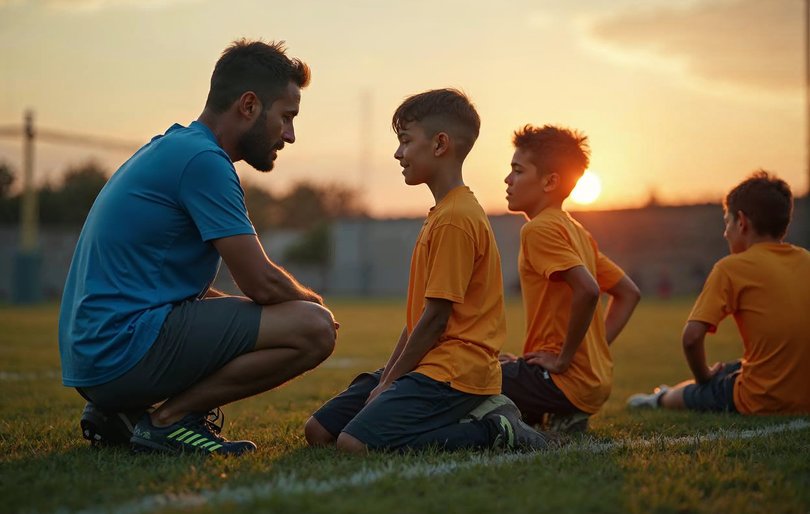
My take? A trophy handed out in silence teaches little either way. A medal handed over with two sentences about what that child did all season teaches a lot.
The words a coach uses at practice — “nice hustle back on defense” instead of “you’re a natural” — shape motivation far more than anything on a shelf. If you coach your child’s sports team, watch that your praise for your own kid follows the same rule as everyone else’s.
Should Every Kid Get a Participation Trophy at Every Age?
No. The right policy changes with age. The American Academy of Pediatrics says sports for ages 6 to 9 should “focus on learning new skills rather than winning,” and that even at 10 to 12, most experts favor skill development, fun and participation over competition.
That gives a board a defensible way to split the question by division:
| Division | What kids understand | Recommended awards |
|---|---|---|
| Ages 4-7 (rec) | Effort and belonging; little sense of standings | Same keepsake for every player, handed out with a personal word from the coach |
| Ages 8-9 (rec) | Starting to compare themselves to teammates | Same keepsake for all, plus one effort-based award per player (named by the coach) |
| Ages 10-12 | Know exactly who’s winning; ready for some competition | No blanket trophy; sportsmanship, most-improved and team awards |
| Ages 13+ / competitive | Competition is the point | Earned awards only: champions, all-stars, coach’s award |
If your youngest division plays without standings, a participation trophy fits what the season actually is. If your 12U travel team keeps standings and plays for a title, a blanket trophy contradicts the season you sold them.
Treat the table as a default. A beginner 11U rec division might need more encouragement than a 9U team of veterans, so let division coordinators flag exceptions to the board — not individual coaches.
What Are Good Alternatives to a Participation Trophy?
The best alternatives keep recognition but change the message: give something to everyone that marks the season, and make any individual award about effort or character.
Options that work:
- Participation medals for young divisions. Same idea as a trophy, smaller, and easier to standardize across teams.
- Team photo or keepsake instead of a trophy. A framed team photo or a ball signed by teammates says “you were part of this” without implying an achievement.
- A sportsmanship award. Voted by coaches or teammates, it rewards how a player treats others. Kids take it seriously.
- Most-improved award. Pure effort recognition, and it often goes to a kid who never gets noticed otherwise.
- Effort-specific awards for every player. “Best hustle on defense.” “Never missed a practice.” “Loudest bench cheer.” Each child gets one, and each one is true.
- Earned achievement awards for older divisions. Champions and all-star selections, kept separate from anything everyone receives.
The effort-specific option is my favorite for ages 8 to 11: every child is recognized, but nobody gets a generic award. It’s the same thinking behind good camp awards, moved to a ball field. The catch: coaches have to write them, so give them a deadline and a list of examples.
One option I’d skip: no recognition at all for the youngest kids. A 5-year-old watching an older sibling’s ceremony doesn’t need a lesson on meritocracy.
How Do You Set and Communicate a League Awards Policy?
Set it once at the board level, write it down, apply it to every division the same way, and tell families before they register. Most awards fights come from inconsistency — one U8 coach hands out trophies, the team on the next field gets nothing — not from the policy itself.
Here’s a process that works:
- Put it on the board agenda before the season. Not in the last week, when trophies are already ordered.
- Vote on a policy by age band. Start with four bands: 4-7, 8-9, 10-12 and 13+.
- Write a one-paragraph policy. Say what each division receives and why, in plain language.
- Publish it at registration. Families who disagree hear it before they pay, not at the banquet.
- Brief coaches. Give them the policy, the effort-award examples, and a due date for nominations.
- Review after the season. Collect feedback, adjust for next year, and record the decision in your board minutes.
If you’re still working out how to start a youth sports league, add the awards policy to your founding documents alongside your playing-time and refund rules — decisions you only want to make once.
In practice, picture a hypothetical league that lets each coach decide. One U8 team gets trophies, the other gets pizza, and by Monday the board president has six emails. Next season the board votes one rule — every U8 player gets a medal and a coach-written effort award — and posts it at registration. Complaints don’t vanish. They arrive in August as questions, not in November as grievances.
Getting the policy in front of every family is the step most leagues skip. Good sports management software lets you add the policy to the registration page and send it to each division’s parents, so coaches aren’t the ones defending it at the field.
FAQ
Are participation trophies still a thing?
Yes. Many rec leagues still give them to younger divisions, often as medals or keepsakes. Older and competitive divisions more often use earned or effort-based awards instead.
What generation gave out participation trophies?
No single generation. The phrase appears in print as early as 1922. The “participation trophy generation” label for millennials came much later and reflects criticism, not origin.
Are participation trophies a good idea?
For young recreational players, usually yes, especially paired with specific praise from the coach. For kids about 10 and older in competitive play, earned and effort-based awards fit better.
At what age should kids stop getting participation trophies?
Most leagues phase them out around ages 9 to 10, when kids understand standings. AAP guidance supports keeping the focus on skills and fun through age 12.
What can we give instead of a participation trophy?
Team photos, medals, season patches, sportsmanship and most-improved awards, or a short effort-specific award for every player written by the coach.
Conclusion
The debate over participation trophies doesn’t have a single right answer, but your league needs one consistent answer. Match awards to age, praise what kids did rather than what they are, mix in sportsmanship and effort recognition as players get older, and publish the policy before registration opens. Put it on your next board agenda — and the parking-lot arguments get much shorter.