




Key Takeaways
What does research say about sports and long-term health?
According to the Aspen Institute’s Project Play research, participating in youth sports helps kids meet physical activity guidelines and leads to better health outcomes later in life.
How do team sports teach kids communication and conflict resolution?
Kids learn these vital skills through repeated, real-world practice on the field rather than through lectures.
What do competitive sports offer that casual play doesn’t?
Competitive sports introduce goal-setting and direct feedback loops, though remember that more isn’t automatically better.
What are the risks of kids being overcommitted to sports?
Early specialization and overcommitment raise the genuine risks of burnout and injury, meaning balance is just as important as participation.
Your kid begs to skip Saturday practice because they’re tired, and you’re standing in the kitchen wondering if this whole sports thing is worth the drive time, the gear costs, and the arguing. Why sports are important for youth, beyond “it’s good for them” and “everyone does it,” is worth answering honestly before you sign another 2026 registration form. Sports build physical health, social skills, discipline, and resilience in one package, and no single after-school activity replicates all four as reliably. But that doesn’t mean more sports is always better, and a clear-eyed parent should know both sides before committing to a full season.
Why Are Sports Important for Youth?
Sports matter because they build physical health, social skills, discipline, and resilience together — no single activity combines all four as consistently. The American Academy of Pediatrics identifies organized sports as a key contributor to motor skill development and healthy weight management in kids, and that’s just the physical layer.
Broken into categories, the payoff looks like this:
- Physical health — motor skills, cardiovascular fitness, and activity habits that carry into adulthood
- Social skills — communication, cooperation, and conflict resolution built through repeated teamwork
- Discipline — showing up for practice and following through on a commitment, week after week
- Resilience — recovering from a loss or a bad game and getting back on the field
Strip away the trophies and the travel-team stress, and what’s left is a structured environment where a kid shows up, works with other kids toward a shared goal, and gets immediate feedback on effort and performance. Free play does some of this. A dance class does some of this. But organized sports — with practices, positions, and a scoreboard — compress all of it into a weekly rhythm most kids can’t get anywhere else.
That’s not a knock on other activities. It’s just why sports keep showing up at the top of pediatricians’ recommendation lists.
What Physical Benefits Do Kids Get From Youth Sports?
Regular sports participation helps kids meet physical activity guidelines, build motor skills, and establish habits that carry into adulthood. Aspen Institute’s Project Play research ties youth sports participation to higher rates of meeting recommended activity levels and to better long-term health outcomes overall.
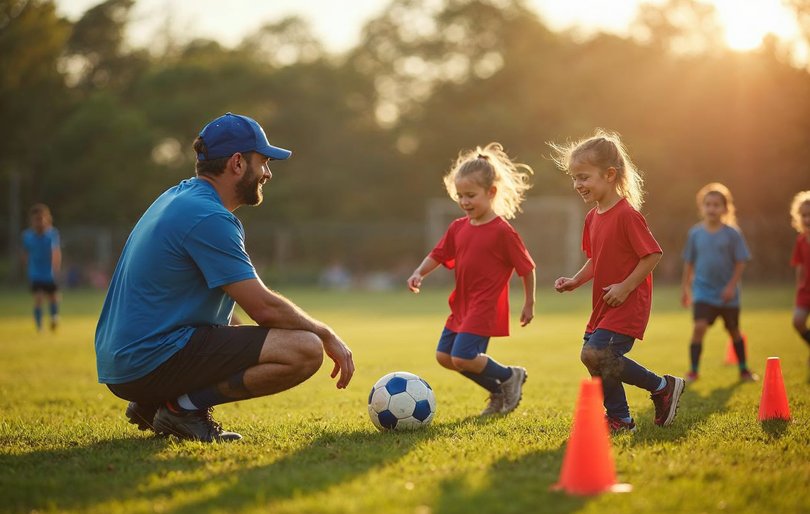
Think about what a season of soccer actually asks of a kid’s body: sprinting, cutting, jumping, recovering, repeating. That’s a broader movement vocabulary than most kids get from screen time and gym class combined. A nine-year-old who plays two seasons a year is quietly building coordination, cardiovascular endurance, and bone density — none of which shows up on a scoreboard, but all of which shows up later.
There’s a compounding effect, too. Kids who stay active in structured sports through elementary and middle school are more likely to keep exercising as teenagers and adults, simply because movement feels normal rather than like a chore. I’ve watched reluctant six-year-olds who dreaded practice turn into fourteen-year-olds who ask to run before school. The habit sticks because it started early and felt like play, not punishment.
Why Do Team Sports Build Better Social Skills?
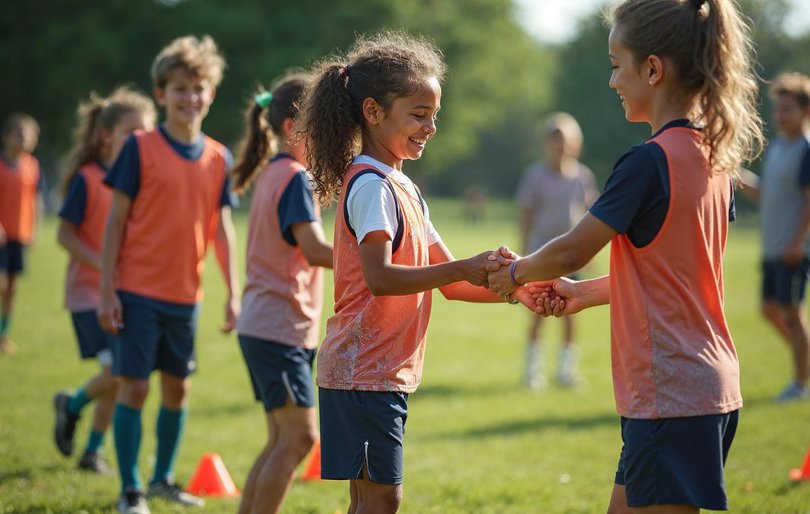
Team sports put kids in repeated situations that require communication, cooperation, and conflict resolution with peers — situations that don’t come up as naturally in solo activities. A kid who wants the ball has to call for it. A kid who disagrees with a teammate’s read on the field has to work it out mid-play, not later.
This is where sports quietly outperform a lot of well-intentioned parenting advice about “using your words.” On a team, using your words has an immediate, visible consequence — the play works or it doesn’t. Women’s Sports Foundation research connects youth sports participation to higher self-confidence and stronger academic engagement, and it’s not hard to see the mechanism: a kid who learns to speak up in a huddle carries that same voice into a classroom discussion.
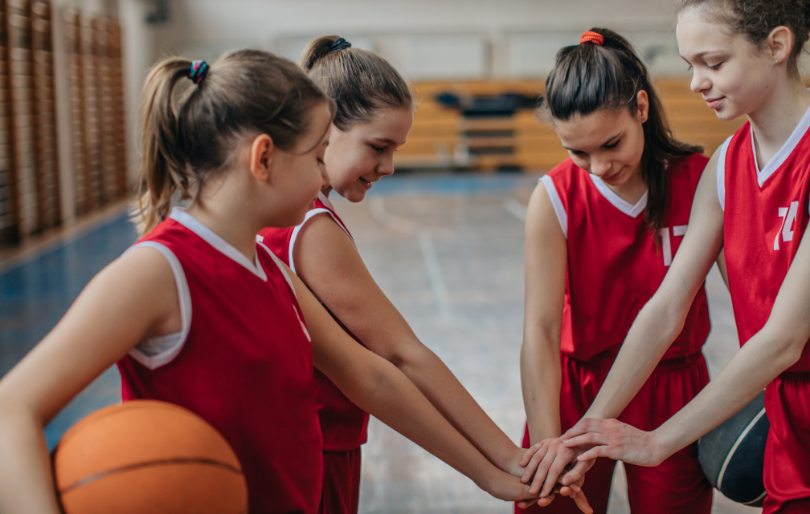
Friendships built through sports also tend to be sturdier than the kind that form in a classroom seat assignment. Shared struggle — a losing streak, a brutal August practice — bonds kids in a way that shared homework rarely does.
How Do Sports Teach Kids Discipline and Resilience?
Practice schedules, coaching feedback, and competitive losses teach kids to show up consistently and recover from setbacks. That’s a skill set no worksheet can teach, because it requires actual stakes.
Here’s a scene most sports parents recognize: your kid’s team loses a game they should have won, the car ride home is silent, and by Tuesday’s practice they’re back on the field trying again. That gap — between the loss and the return — is where resilience gets built. Nobody hands a kid resilience. They practice it, one bad game and one better one at a time.
Contrast that with a kid who never faces structured setbacks at all. Without some version of “you didn’t make the shot, now what,” it’s harder to develop the muscle for handling disappointment later — a tough grade, a rejection, a hard conversation. Sports aren’t the only path to that muscle, but they’re one of the most reliable ones, because the setbacks are frequent, low-stakes in the long run, and followed almost immediately by another chance to try.
Why Are Competitive Sports Important for Youth Specifically?
Competitive sports add structured goal-setting and performance feedback that recreational play alone doesn’t provide. A rec-league kid enjoys the game; a competitive kid also learns to set a target, train toward it, and measure progress against something outside their own mood that day.
That structure isn’t just about winning. A competitive swim season, for example, gives a kid concrete numbers — a personal best, a split time — to chase that have nothing to do with beating another team. That kind of internal benchmark teaches goal-setting in a way “just have fun out there” doesn’t.
The catch: competitive sports only deliver these benefits when the pressure comes from the goal, not from the sideline. A kid chasing their own best time is learning discipline. A kid terrified of disappointing a parent after every meet is learning something else entirely — and that’s worth watching for.
Can Too Much Youth Sports Backfire?
Yes — overcommitment and early specialization raise burnout and injury risk, so balance matters as much as participation itself. This is the part the inspirational listicles tend to skip, and it deserves equal airtime with the benefits above.
Kids who specialize in one sport too early, playing it nearly year-round before their bodies and interests have had a chance to develop, face higher rates of overuse injury and are more likely to quit the sport entirely by their teens. The warning signs are usually visible before a parent wants to admit them: a kid who used to ask about practice now needs to be nagged into the car, or complains of the same nagging ache every week that never fully resolves.
None of this means competitive sports are bad — it means dosage matters. A season off, a second sport for cross-training, or simply protecting a few weeks of true downtime a year can be the difference between a kid who plays through high school and one who’s burned out by eighth grade. If your kid dreads practice more weeks than they enjoy it, that’s data, not defiance.
Where Should Parents Start?
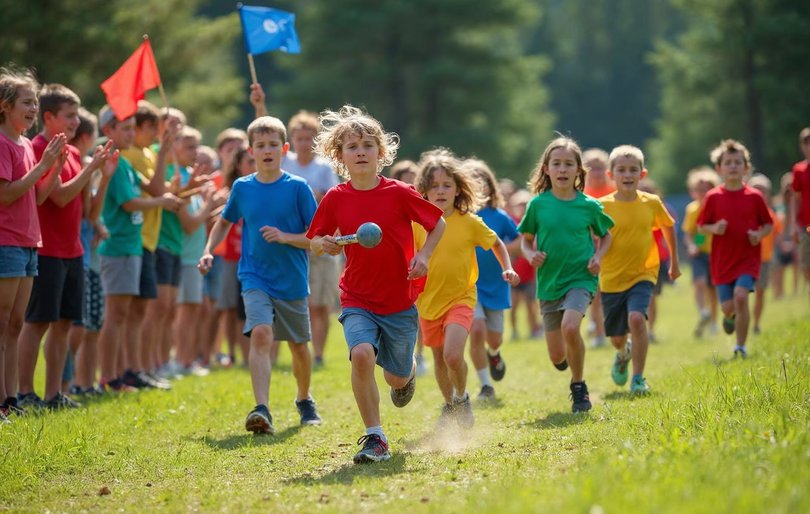
If your kid hasn’t played organized sports before, or you’re looking to strike a healthier balance after a season that ran too hot, a sports summer camp is a low-stakes way to test the waters. Camps compress the good parts — coaching, teamwork, structured practice — into a shorter window, without the year-round commitment that leads to burnout. It’s a chance to see whether a kid actually loves a sport before building a whole season, or a whole identity, around it.
FAQ
What are the benefits of youth sports?
The core benefits are physical fitness, social skill-building, discipline, and resilience — developed together through practice, teamwork, and the ups and downs of competition.
Why are sports good for youth mental health?
Sports give kids a structured outlet for stress, regular physical activity linked to better mood regulation, and a built-in support system of teammates and coaches who notice when something’s off.
What skills do kids learn from playing sports?
Communication, cooperation, time management, goal-setting, and how to handle a loss without falling apart — skills that transfer directly to school and, later, work.
Is competitive sports good for kids?
Yes, when the pressure comes from the kid’s own goals rather than a parent’s expectations. Competitive structure teaches goal-setting and feedback that casual play doesn’t, but it should still leave room for enjoyment.
What is the downside of youth sports?
The main risks are overuse injury and burnout, especially when a child specializes in one sport too early or plays it year-round without breaks.
How much sports is too much for a child?
There’s no single number, but persistent dread of practice, recurring minor injuries, or a total loss of interest in the sport are signs it’s time to scale back.
Conclusion
Why sports are important for youth isn’t a mystery — the research from Aspen Institute’s Project Play, the American Academy of Pediatrics, and the Women’s Sports Foundation all points the same direction: physical health, social skills, and resilience, built together, season after season. But the same research is honest about the flip side. Push too hard, specialize too early, or ignore the warning signs of burnout, and the same activity that builds a confident kid can wear one down instead. The goal isn’t maximum sports. It’s the right amount, in the right program, for your kid. That’s a conversation worth having before the next season starts — and a good sports summer camp is often the easiest place to start it.