





Key Takeaways
- Team cheers are short chants a team says together to break a huddle, back up teammates, reset after a mistake, or honor the other team.
- Sort cheers by game moment: huddle, dugout or sideline, call-and-response, after a mistake, and post-game.
- Keep every cheer positive. If it targets the opponent, an official, or someone’s mistake, drop it.
- Match the cheer to age, and build your best one from the team’s own name.
Last updated: October 2026
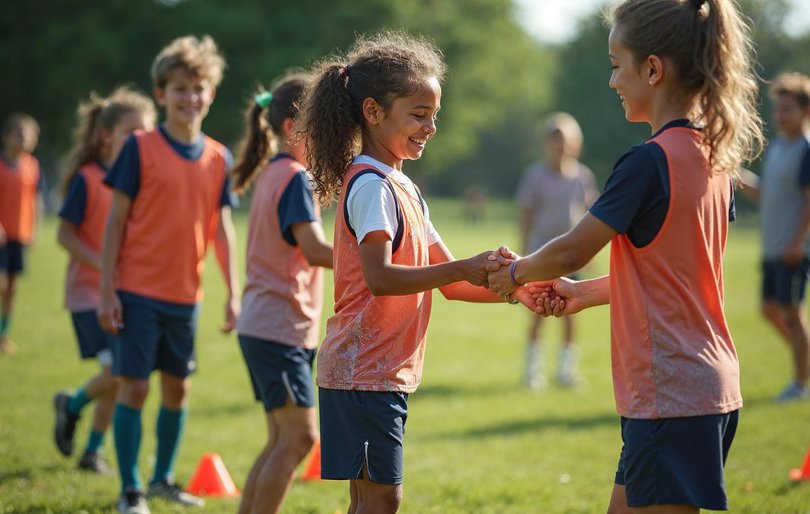
It’s Saturday, 8:55 a.m. Twelve seven-year-olds are packed into a huddle, hands stacked, staring up at you. The ref is waiting. And nobody — you included — knows how to break the huddle. So what do you actually say? That moment is why most youth coaches end up hunting for team cheers the night before the first game. This guide is for coaches and players, not a cheerleading squad.
What Are Team Cheers, and Why Do They Matter in Youth Sports?
Team cheers are short chants a team says together — to break a huddle, back up teammates from the bench, reset after a mistake, or honor the other team after the final whistle. For kids, they turn a group of players into a team with its own sound. Keep them short, positive, and easy enough that every player can join in.
“Team chants” is a near-synonym that leans more rhythmic. Neither is a cheerleading routine; players do them for each other.
According to the Aspen Institute Project Play 2026 national survey of youth ages 10–17, “having fun” (48%) and “playing with friends” (47%) are the top two reasons kids play sports.
A cheer is fun you can schedule. It gives every kid on the roster, including the one who hasn’t touched the ball yet, the same job. That belonging is one of the core benefits of youth sports for kids, and a good cheer shows it off every game.
| Situation | Purpose | Example cheer | Best ages |
|---|---|---|---|
| Huddle break | Start together | “Team on three — one, two, three, TEAM!” | All |
| Dugout or sideline | Back up a teammate | “Let’s go, Maya!” + clap pattern | 7+ |
| Call-and-response | Build energy | “Who’s got heart?” / “We’ve got heart!” | 6+ |
| After a mistake | Reset | “Shake it off — next play!” | All |
| Post-game | Respect the opponent | “Two, four, six, eight, who do we appreciate?” | All |
What Team Cheers Work Best for a Pre-Game Huddle Break?
The best huddle-break cheers are one count and one word: hands in, “Team on three,” and everyone shouts together. Huddle cheers should last under five seconds, use the team name or a value word like “Heart,” and end with a clap or hands up so players jog onto the field together.
- “Team” on three: “One, two, three — TEAM!” The traditional version.
- Value word on three: “Heart on three — one, two, three, HEART!” Swap in “Hustle” or “Together.”
- Coach-led question: Coach: “Who are we?” Team: “[Team name]!” Coach: “What do we do?” Team: “Play hard, play fair, have fun!”
My pick for a brand-new team is the first one. Let a different player do the count each game — seven-year-olds take that job seriously.
What Are Good Dugout and Sideline Cheers for Teams?
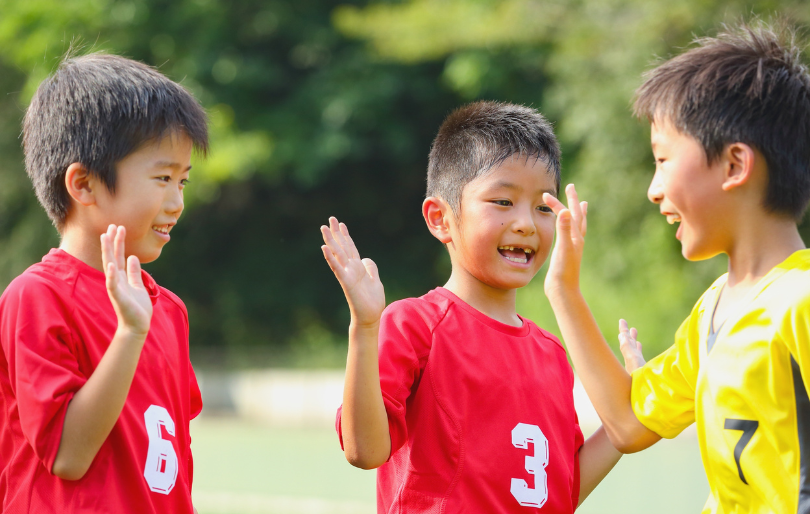
Good dugout and sideline cheers for teams name your own players and back them up — “Let’s go, Maya!” followed by a clap pattern works in almost every sport. Keep the bench focused on your team, keep volume steady rather than constant, and stop chanting when the coach or an official is talking.
Baseball and softball dugout cheers
- “Let’s go, [player]!” + clap, clap, clap-clap-clap
- “Eye on the ball — [player], you can hit it to the wall!”
- “Bring it home, [player], bring it home!” (for a baserunner)
Soccer and basketball sideline cheers
- “Defense, defense — hold that line!”
- “Pass it, move it, we can do it!”
Pick moments — a new batter, two strikes, a corner kick — instead of chanting nonstop.
What Are Some Catchy Call-and-Response Team Chants?
Catchy team chants almost always use call-and-response: one leader calls a line, the team answers. The pattern works because kids only have to remember the answer, and the leader role can rotate. “Who’s got heart?” / “We’ve got heart!” is a simple starter any age can learn in one practice.
| Leader calls | Team answers |
|---|---|
| “When I say [Team], you say Go!” | “Go!” |
| “Who’s got hustle?” | “We’ve got hustle!” |
| “Are you ready?” | “Yes, we are!” (louder each time) |
| “Hey, hey! Here we go!” | “Hey, hey! Here we go!” (echo) |
That last row is an echo cheer, where the team repeats the leader word for word. Rotate the leader each game — a shy kid hearing fifteen teammates answer beats any pep talk.
What Should Your Team Chant After a Mistake?
After a mistake, your team should use a quick reset cheer — a short phrase plus a gesture, like “Shake it off, next play!” — that tells the player the error is over. Reset cheers work best when the whole team uses the same one every time, so nobody has to think about what to say.
- “Shake it off — next play!”
- “Reset!” plus two claps
- A “flush it” hand gesture that sends the mistake away
Here’s how it plays out in practice. Picture a U9 softball team where every error ends with the fielder staring at the dirt. The coach picks one phrase, “Shake it off — next play!”, and the dugout shouts it the moment a ball gets through. Within a few games, heads come up faster.
Use one reset. Only one. A menu makes kids hesitate.
How Do You Cheer for the Other Team After a Game?
Cheer for the other team by lining up after the final whistle, giving the traditional “Two, four, six, eight, who do we appreciate?” with the opponent’s name, then walking the handshake line saying “Good game.” Do it win or lose — it’s the one cheer every youth league expects.
- Gather your players as soon as the game ends.
- Give the cheer loud enough for the other team to hear, or swap in “Hip, hip, hooray!”
- Walk the handshake line, then thank the officials and the other coach.
Respect doesn’t have to wait for the final whistle, either. The Positive Coaching Alliance’s parent guidelines, published by Little League University, tell families to “Cheer good plays by both teams.”
What Makes a Team Cheer Positive, and What Crosses the Line?
A team cheer is positive when it supports your own players; it crosses the line when it targets the opponent, an official, or a person’s mistakes or looks. One test settles most cases: if you’d be upset hearing the chant aimed at your own team, don’t use it.
| Do | Don’t |
|---|---|
| Name your own players | Name or mock an opposing player |
| Cheer effort and hustle | Cheer the other team’s errors |
| Thank officials after the game | Chant at the ref about a call |
| Go quiet when a coach or official talks | Chant to distract a batter or shooter |
Writing for the National Federation of State High School Associations (NFHS), athletic administrator Dr. David Hoch says fans “should encourage their team to do well, but never root for the opponent to fail.” His test: picture yourself on the receiving end. If a cheer names the other team in a negative way, drop it.
Which Team Cheers Fit Each Age Group?
Match team cheers to age: kids 4–6 need one-word echo cheers with a motion, 7–9-year-olds handle call-and-response with rhymes, 10–12-year-olds like clap patterns they help write, and teens want captain-led cheers that don’t sound babyish. If a cheer takes more than one practice to learn, it’s too long.
| Age band | What works | Example | Skip |
|---|---|---|---|
| 4–6 | One-word echo plus a motion | “Hey, hey!” + hands up | Long rhymes |
| 7–9 | Call-and-response, short rhymes | “Who’s got heart?” / “We’ve got heart!” | Complex clap patterns |
| 10–12 | Clap or stomp patterns they help write | “Let’s go, [player]!” + clap pattern | Coach-only inventions |
| 13+ | Captain-led huddle breaks | “Team on three” | Anything that sounds little-kid |
If your players are under 7, use one-word echo cheers with a motion. With teens, hand the cheer to the captains. A cheer a 14-year-old chose gets yelled; one an adult assigned gets mumbled.
How Do You Create Your Own Team Cheer?
Create your own team cheer in five steps: pick a sound or word from your team name, choose a pattern (count-in, echo, or call-and-response), add one value word, attach a motion, and test it — under ten seconds, everyone can say it, and nobody else is the target.
- Pick a sound from your team name. Sharks get “Chomp.” Comets get “Whoosh.”
- Choose a pattern. Count-in, echo, or call-and-response.
- Add a value word. Heart, hustle, together.
- Attach a motion. A clap, a stomp, a chomp.
- Test it. Time it and have every player say it.
Template: “Who are we?” / “[Team name]!” — “What do we bring?” / “[Value word]!” — “[Sound] on three — one, two, three, [SOUND]!” + [motion]
Example: “Who are we?” / “Sharks!” — “What do we bring?” / “Hustle!” — “Chomp on three — one, two, three, CHOMP!” with arms snapping shut like jaws.
Build it with your players, not for them. In the same Aspen Institute Project Play survey, 84% of current players said their social connectedness improves through sports, and writing a cheer together builds exactly that. If you’re getting ready to coach your child’s sports team, make it a first-practice task.
How Do Team Cheers Fit Into Your League’s Code of Conduct?
Team cheers belong in your league’s code of conduct the same way sideline behavior does: one line stating that players and families cheer for their own team, never against the opponent or officials. Put it in writing when families sign up so every coach can point to the rule.
If you’re working out how to start a youth sports league, write the sportsmanship line into the conduct code when the league is first organized. A sample:
Players, coaches, and families cheer for their own team and for good plays by both teams. Chants aimed at opponents, officials, or individual players are not allowed.
Then hand coaches a short list of approved cheers at the preseason meeting.
FAQ
What is a good team chant?
A short call-and-response built on the team name: “Who are we?” / “[Team name]!” Under ten seconds, positive, learnable in one practice.
What to say to cheer for a team?
Name your players and back them up: “Let’s go, [name]!”, “Next play!”, “Nice hustle!” Cheer for your team, never against the other one.
What are some ideas for team cheers?
A huddle break (“Team on three”), a dugout cheer (“Bring it home”), a call-and-response (“Who’s got heart?”), a mistake reset (“Shake it off”), and a post-game cheer for the opponent.
What are some fun cheer chants?
Echo cheers and chants with a motion, like a stomp-clap or a sound effect players invent from the team name.
Are any team chants not allowed in youth sports?
Many youth league codes of conduct rule out chants aimed at opponents, officials, or individual players.
Conclusion
Good team cheers come down to timing and tone. Break the huddle on three, back up teammates from the bench, keep one reset for mistakes, and honor the other team win or lose. Next time twelve kids stack their hands and look up at you, you’ll know what to say. If you’re running the league behind those teams, Jumbula handles registration, scheduling, and volunteer coach management.