



Key Takeaways
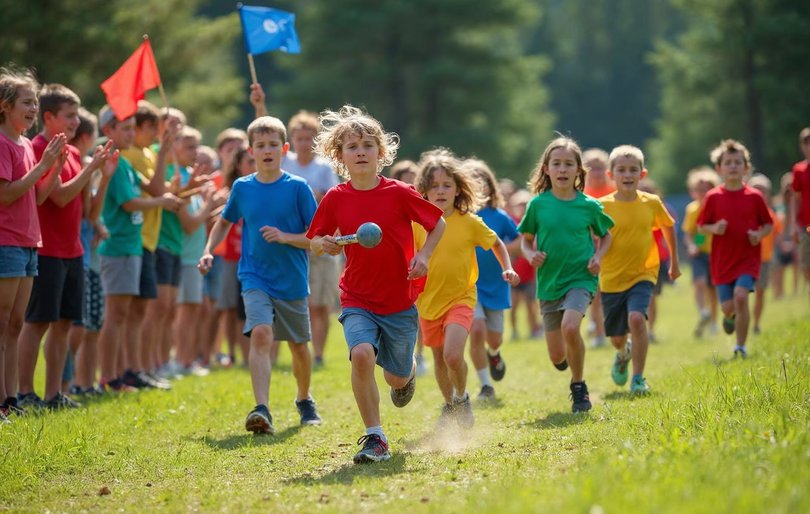
- Camp olympics pits mixed-age teams, or “countries,” against each other between an opening and a closing medal ceremony.
- Build teams as vertical slices of camp, youngest to oldest.
- Score by age-bracket heats plus participation and spirit points.
- Mix athletic, water, and non-athletic events so everyone can score.
- Make heat and rain calls before the day, not during it.
Last updated: October 2026
It’s 10:40 a.m. on olympics day. The 12-year-olds have won four events straight, the 6-year-olds are picking clover, and two stations have lines ten deep. Sound familiar? The problem isn’t the events. It’s the plan behind them. So how do you run a camp olympics where every camper has a real shot at a medal?
Here’s my five-part plan for 2027: split, score, schedule, ceremonies, safety.
What Is a Camp Olympics?
Camp olympics is a camp-wide competition — usually one day or a full theme week — in which campers are split into mixed-age teams or “countries” that earn points across athletic and non-athletic events, bookended by an opening ceremony and a closing medal ceremony. It works best when scoring gives every age group a real shot at winning.
Color wars usually runs two rival sides over several days; field day is one afternoon of games. The olympics sits between them.
Should You Run an Olympics Day or a Full Olympics Week?
Run a single day if you have fewer than about 100 campers or a short session — it’s easier to staff and keeps energy high. Choose a full week when you want daily events, a running medal count, and a closing ceremony as the finale. Overnight camps get the most from the week format.
| Olympics Day | Olympics Week | |
|---|---|---|
| Prep time | 2–3 weeks | 4–6 weeks |
| Staff load | Heavy for one day | Moderate, spread over five days |
| Best for | Day camps, short sessions, first-year runs | Overnight camps, established traditions |
If you already run summer camp theme weeks, an olympics week slots straight into the rotation. My take? Start with one day your first year.
How Do You Divide Campers Into Teams Across Age Groups?
Split campers into four to eight teams, each with a vertical slice of every age group — so each “country” has youngest, middle, and oldest campers in roughly equal numbers. Sort the roster by age, then deal campers across teams like cards, keeping siblings together or apart per your camp policy.
- Pull the roster from your camp registration software — ages, grades, cabins, and sibling requests are already there.
- Sort by age or grade, youngest to oldest.
- Deal in snake order (A to D, then D to A) so no team stacks up older kids.
- Balance by cabin and counselor.
- Assign a country and a color.
- Announce teams the day before so campers arrive in color.
In practice, give each country two captains — a counselor and a CIT — who carry the flag, herd the little ones, and turn your oldest campers into the ones making sure everyone scores.
How Do You Score Camp Olympics So Every Age Group Can Win?
Run events in age-bracket heats — youngest compete against youngest — and pool every heat’s points into the mixed-age team’s total. Add participation points for every camper who competes and spirit points for cheers, flags, and sportsmanship, so a team’s youngest campers contribute as much to the final score as its fastest runners.
| Point type | How it’s earned | Sample value |
|---|---|---|
| Heat placement | 1st, 2nd, 3rd in each age-bracket heat | 5 / 3 / 2 |
| Participation | Every camper who competes | 1 per camper |
| Spirit | Cheers, flags, team chant | Up to 10 per day |
| Sportsmanship bonus | Helping an opponent, good losing | 5, awarded by station leaders |
If your camp spans more than four years of age, never run open heats. I’d skip them entirely — even the finale works better as a mixed-age relay with one leg per bracket.
Open heats let the oldest campers sweep the morning; bracket heats keep scores close until the closing relay. Tip: freeze the public scoreboard before the final event.
What Events Work Best for Camp Olympics?
The best camp olympics events mix three types: athletic (relays, throws, obstacle courses), water (only if lifeguards are staffed), and non-athletic (trivia, art, cheers) — so campers who don’t love sports can still score. Aim for 8–12 events, each runnable in 20–30 minutes by two staff with simple equipment.
| Event | Type | Best ages | Setup | Scores on |
|---|---|---|---|---|
| Sponge-and-bucket relay | Athletic / water | All | Two buckets, sponges, 15-meter course | Water moved in 3 minutes |
| Paper-plate discus | Athletic | 6–10 | Plates, chalk line, tape measure | Best of three throws |
| Pool-noodle javelin | Athletic | All | Noodles, cones every 2 meters | Distance |
| Blindfolded obstacle course | Teamwork | 9+ | Cones, hoops, blindfolds, one caller | Time, minus cone touches |
| Bracket tug-of-war | Athletic | All, by bracket | Rope, soft grass | Best two of three |
| Flag design | Creative | All | Poster board, markers | Judged on color and symbol |
| Team anthem | Performance | All | Voices only | Volume, lyrics, participation |
| Camp trivia bowl | Knowledge | 8+ | Question cards, whiteboards | Correct answers |
| Dry-land synchronized swimming | Performance | 7+ | Speaker, two-minute song | Judges’ score |
| Lifeguarded pool or lake relay | Water | Swim-tested campers | Buoys, kickboards | Time per bracket |
So what are popular camping Olympic games? Relays, tug-of-war, and throwing events top the list. Most of these olympic themed games are adapted summer camp games your staff already knows.
The strongest camp olympics ideas score every participant, reset in under two minutes, and work for a 6-year-old with one rule change.
What Does an Olympics Day Schedule Look Like?
A camp olympics day runs on a station rotation: an opening ceremony, two rotation blocks of 25-minute events with water breaks between, lunch and a shaded or indoor non-athletic block during the hottest hours, relay finals, then the closing medal ceremony. Build it around your normal drop-off and pickup times.
Your regular summer camp daily schedule moves cabins through activity periods; olympics day moves teams through fixed stations.
| Time | Block |
|---|---|
| 9:00 | Check-in in team colors |
| 9:20 | Opening ceremony and parade of nations |
| 9:45–11:45 | Rotation A: 4 stations × 25 minutes, water break at every switch |
| 11:45 | Lunch |
| 12:30–1:45 | Shade or indoor block: trivia, flag design, anthems |
| 1:45–2:30 | Rotation B (swap to water events if it’s hot) |
| 2:30 | Mixed-age relay finals |
| 3:00 | Closing and medal ceremony |
| 3:30 | Pickup |
Overnight camps can spread it over two or three days, opening with an evening torch lighting.
How Many Staff Do You Need per Station?
Plan on two per station, plus floaters:
- Station leader — runs the event
- Scorekeeper and safety spotter — records results by bracket
- Scoreboard runner — collects score cards
- Health staff at a shaded check-in point
- Lifeguards at your normal waterfront ratios
How Do You Plan the Opening and Closing Ceremonies?
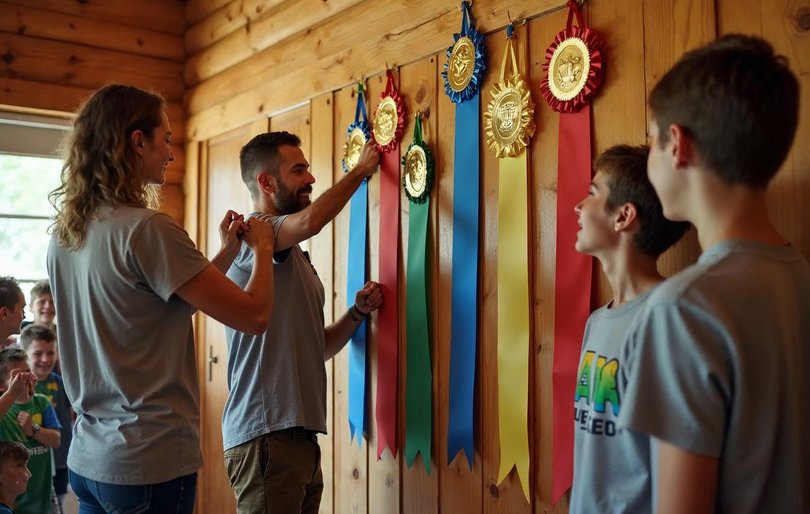
Keep the opening ceremony to 20–25 minutes: a parade of nations with team flags, a torch lighting, a short oath, and one rules reminder. The closing ceremony mirrors it — final scores, medals for every team in a set order, and recognition awards so no group leaves empty-handed.
Need a date? The International Olympic Committee celebrates Olympic Day every June 23, marking the 1894 founding of the modern Olympic Games.
Opening ceremony
- Parade of nations behind each team’s flag.
- A cardboard-and-tissue torch carried in (no open flame unless your fire policy allows it).
- Torch “lit” at a painted-bucket cauldron.
- Camper oath: play fair, cheer loud, help anyone who falls.
- One rules reminder.
Closing ceremony
- Teams march back in, flags up.
- Spirit and sportsmanship awards first.
- Handmade medals for every team, last place to first.
- Scoreboard reveal and a victory lap.
- Torch out and a group photo.
How Do You Keep Everyone Safe in Heat and Rain?
Decide your heat and rain calls before the day, not during it. The CDC advises scheduling activity earlier or later in the day when it’s cooler and drinking more water than usual without waiting for thirst (2024). So put hard events early, shade at midday, and keep an indoor version ready.
So water breaks are scheduled, not optional — captains walk the team to the cooler at every switch.
Younger campers need closer watching still. The American Academy of Pediatrics warns that kids who skip breaks to hydrate, cool off, and rest can develop cramps, dizziness, nausea, and confusion — and young children may not remember to drink (2026).
- Heat trigger: name who makes the call. If the heat index forecast crosses your camp’s threshold, move athletic events before 11 a.m.
- Hydration station in every rotation zone
- Shade tents at any station running past 11
- Sunscreen reapplication after lunch
- Rain-day swap list: gym relays, dining-hall trivia, tug-of-war on mats
On a 95-degree morning, Rotation B becomes water events and trivia moves indoors — no scramble. Keep this plan inside your broader summer camp safety plan.
How Do You Make Olympics Day a Yearly Tradition?
Treat it like any other signature program. Keep a camp records book, reuse team names and flags, debrief staff the same week, and tell families the date before the season starts so returning campers count down to it. Traditions stick when kids know what’s coming.
Save this year’s team lists as next year’s template. Message parents each child’s team color the day before. Share photos after the closing ceremony. Signature events like this are part of how to run a summer camp season after season.
FAQ
What are some popular camping Olympic Games?
Relays, tug-of-war, and throwing events like paper-plate discus are the most common, because they need little equipment and run fast. Add trivia, flag design, or a team anthem so every camper can score.
How long should camp olympics last?
One day works for most day camps and short sessions. Overnight camps often run a full week, with two to four events a day and a finals day. Start with one day in your first year.
How do you make camp olympics fair for younger campers?
Build mixed-age teams, then run every event in age-bracket heats so 6-year-olds only race 6- and 7-year-olds. Pool heat points to the team and add participation and spirit points, so younger campers score real points.
What if it rains on olympics day?
Write a rain-day swap list before the day. Move relays to the gym, trivia and flag design to the dining hall, and tug-of-war onto indoor mats. Keep the same teams, scoring, and ceremonies so it still feels like the olympics.
What prizes work for camp olympics?
Handmade medals for every team, presented from last place to first, plus spirit and sportsmanship awards. Campers care more about the ceremony than the prize, and a line in the camp records book lasts longer than candy.
Conclusion
A great camp olympics comes down to five decisions made before the first whistle. Split campers into mixed-age countries. Score by age bracket, with participation and spirit points. Schedule stations around the heat. Plan ceremonies that give every team a moment. And put your heat and rain calls on paper early.
Get those right and the 6-year-olds keep running at 10:40 a.m., because their points count. This week, pick your date and pull your roster from registration.