



Key Takeaways
- Camp awards give every camper one short, specific award from the counselor who knows them.
- Use five types: personality, growth, skill, cabin, and staff awards.
- Check every name against the roster, and skip awards about looks or embarrassing moments.
- Write each blurb in three parts: a moment, a strength, a wish.
- Keep the ceremony to 30–40 minutes, then send awards home with a note to parents.
Last updated: October 2026
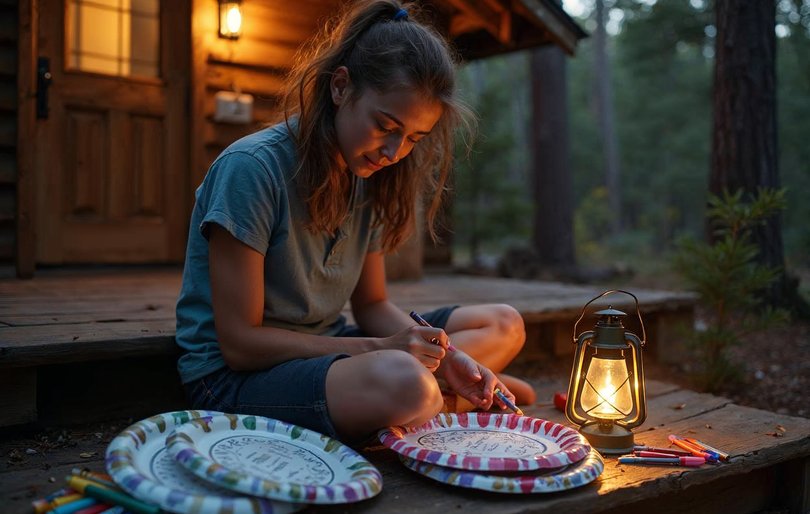
It’s the last night of session. A counselor sits on the cabin steps with a stack of paper plates, a box of markers, and twelve names. Ten awards come fast. Two don’t — the quiet kid who never caused trouble and the one who cried the first three nights. Both plates will get read at a kitchen table this weekend. So how do you build camp awards that give every camper something true to take home?
Here’s the system I’d hand every counselor for summer 2027: choose, write, make, present, send home.
What Are Camp Awards?
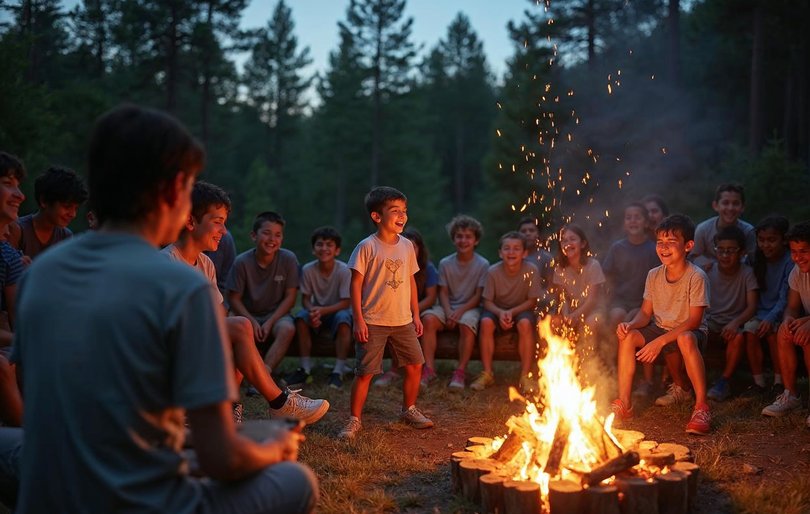
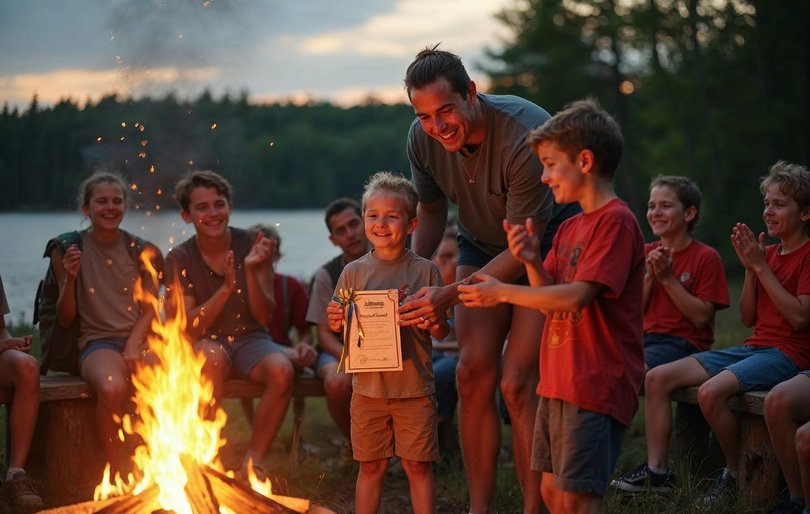
Camp awards are end-of-session recognitions that counselors give each camper — usually a certificate, paper plate, bead, or patch with a short written blurb — naming a specific strength, effort, or moment from that camper’s time at camp. Most camps present them at a closing campfire or final assembly, cabin by cabin.
They’re not the ACA Awards, which the American Camp Association gives to camp professionals.
Awards belong with the closing campfire and goodbyes as an end-of-session ritual in how to run a summer camp. Plan them like the rest of your program, not the night before.
Why Do Camp Awards Matter to Campers?
Camp awards turn a counselor’s attention into something a kid can keep. In the American Camp Association’s Youth Impact Study (2018), run by University of Utah researchers, former campers named the people at camp — staff and peers — as the most powerful source of lasting learning. An award is that relationship, written down.
That’s why generic ones fall flat. A camper knows the difference between “Great Camper” and “the kid who taught our whole cabin to tie a bowline.”
A good award does three things:
- Shows campers they were seen, by name
- Gives parents a window into a week they missed
- Brings campers back for the counselor who noticed them
What Types of Camp Awards Should You Give?
Give five types of camp awards: personality awards (camp superlatives), growth and effort awards, skill and achievement awards, cabin or team awards, and staff awards. Every camper gets one individual award from the first three types. Cabin and staff awards come on top, never instead.
- Personality awards (superlatives): the joker, the helper, the early riser. Fun, but they need guardrails.
- Growth and effort awards: something the camper worked at, like the deep end or a first night away. My favorite type — and the one shy campers need most.
- Skill and achievement awards: a real milestone, such as a swim level or archery level.
- Cabin or team awards: one for the whole group — loudest cheer, best skit.
- Staff awards: counselors vote for each other on the last staff night. Same rules apply.
What Are Good Camp Award Ideas by Age?
Good camp award ideas match the camper’s age. Younger campers (6–8) love silly-sounding names tied to something they did, while older campers (12 and up) want awards that sound like respect — leadership, humor, grit. Pick from the table, then rename to fit your camp.
| Award | Type | Best ages | Recognizes |
|---|---|---|---|
| Bug Whisperer | Personality | 6–9 | Caught (and released) every critter |
| Bunk Bed Comedian | Personality | 8–12 | Kind laughs at lights-out |
| Sunrise Squad Captain | Personality | All | First up, cheerful about it |
| Friendship Bridge | Personality | All | Pulled new campers into games |
| Campfire Narrator | Personality | 9+ | Best storyteller at the fire |
| Calm in the Storm | Personality | 11+ | Steady when plans fell apart |
| Deep End Brave | Growth | 6–10 | Tried the deep end or swim test |
| First Night Champion | Growth | 6–9 | Worked through homesickness |
| Try-Anything Trophy | Growth | All | Said yes to new activities |
| Voice at Campfire | Growth | 8+ | Spoke or sang in front of the group |
| Comeback Kid | Growth | All | Kept going after a tough day |
| Bullseye Builder | Skill | 8+ | Moved up an archery level |
| Knot Boss | Skill | 9+ | Mastered the camp knots |
| Lake Graduate | Skill | All | Passed a swim level |
| Trail Finder | Skill | 10+ | Read the map on the hike |
| Master Maker | Skill | All | Finished an ambitious craft |
| Fire Builder | Skill | 11+ | Built a campfire with staff supervision |
| Rising Leader | Skill | 13+ | Ran an activity for younger campers |
| Spotless Streak | Cabin | All | Most inspection wins |
| Skit Night Stars | Cabin | All | Best cabin skit |
| Kindness Crew | Cabin | All | Most helping moments logged |
| Teamwork Trophy | Cabin | 8+ | Best at group challenges |
| Unshakable Award | Staff | Staff | Calm through every crisis |
| Song Leader Supreme | Staff | Staff | Led the dining hall in song |
| Walking First Aid Kit | Staff | Staff | Always had a bandage and a calm word |
| Homesick Healer | Staff | Staff | Comforted the most homesick campers |
Notice what’s missing: nothing about looks, size, eating, or bathroom moments. Those get a laugh in the cabin and a different one at home.
How Do You Make Sure Every Camper Gets a Meaningful Award?
Make it a rule: every camper gets one individual award that names a specific, positive moment, and someone checks the list against the roster before anything gets printed. If a counselor can’t name a moment, the award isn’t ready — it goes back for another conversation, not a generic title.
- Pull each cabin’s list from your camp registration software two days before the ceremony, including late adds and mid-session transfers.
- Counselors draft an award and a one-line reason for every name.
- Unit heads review for duplicates and anything that could sting.
- Check off names against the roster. Every name, every cabin.
- Make or print only after the list is complete.
In practice, a counselor has nothing for a quiet 9-year-old — until the unit head asks who refilled the water jugs. It was him. Every day, unprompted. His mom posted his Water Jug Guardian award that night.
Which Funny Camp Awards Should You Skip?
Funny camp awards work when the camper would laugh hardest. Skip any award that:
- Comments on looks, size, clothes, or hair
- Points at an embarrassing moment — a wet bed, crying, getting sick, falling
- Mocks food habits, an accent, or a disability
- Labels a kid “Most Likely to Get in Trouble,” even as a joke
Quick test: would this camper want it read aloud and taped to the fridge? If not, rewrite it.
How Should Counselors Write Award Blurbs?
Counselors should write short blurbs — two or three sentences — that name what the camper did, not who they are. Children’s National Hospital psychologist Eleanor Mackey (2022) puts it plainly: make praise specific, and praise behavior rather than a trait, because behavior is something a child can change.
Use this three-part template:
[Award name] goes to [camper], who [specific moment]. That showed us [strength, written as an action]. Next summer, we hope you [wish].
For example: Deep End Brave goes to Maya, who swam to the floating dock on Thursday after three days of practice in the shallow end. That showed us real stick-with-it. Next summer, we hope you jump off it.
Short is fine. Specific is the whole point.
The template shifts an award from “you’re amazing” to “you did this.” That shift lasts. A study summarized by Harvard Health Publishing (2013) followed 53 toddlers for five years and linked praise for effort (“You really worked hard on that”) with more motivation later than praise for talent.
My take? Ban “best” and “most talented” from blurbs unless a clear milestone backs it up.
What Format Works Best for Summer Camp Awards?
The best format for summer camp awards is the one your counselors can finish well in the time they have. Paper plates feel quick and handmade, certificates make a polished keepsake, and beads or patches suit camps that track progress all session. Many camps pair a certificate with a handmade extra.
| Format | Best for | Prep time | Keepsake value |
|---|---|---|---|
| Paper plate awards | Day camps, younger campers | Low — one evening | Medium |
| Camp award certificates | Formal ceremonies, parents | Medium — template plus printing | High |
| Beads on a lanyard | Multi-week sessions | Ongoing all session | High |
| Patches | Overnight camps, skill levels | Order before the season | High |
| Painted rocks or wood slices | Small cabins, older campers | High | High |
Tie the format to the week. Camps running summer camp theme weeks can match award names and designs to the theme — gold medals for olympics week, star maps for space week.
How Do You Run a Camp Awards Ceremony?
Run your camp awards ceremony on the last full evening or the final morning, keep it to 30–40 minutes, and go cabin by cabin with each counselor presenting their own campers. Read every name and blurb out loud. Hearing it in front of friends is half the award.
- Opening (3 minutes): director welcome, one line on what awards are for.
- Cabin awards (5 minutes): group cheers warm up the crowd.
- Individual awards (20–25 minutes): counselor reads, camper walks up, cabin cheers. Youngest cabins first, before they fade.
- Staff awards (5 minutes), or move them to staff night.
- Closing (3 minutes): a camp song, then photos.
Do the math first: at 10 seconds per camper, 120 campers take 20 minutes. Past 150, I’d split into two unit ceremonies.
How Do You Share Camp Awards With Parents?
Share camp awards with parents two ways: send the physical award home with the camper on the last day, then follow up with a short end-of-session email that includes the award text and a ceremony photo. Parents keep the blurb long after the paper plate is gone.
Save every blurb in one spreadsheet as counselors write them; it becomes your email copy. The best camp email examples mention a child by name and moment, and an award line does exactly that.
Add “awards sent and logged” to your summer camp checklist for closing week. Returning campers will remember their award. So will their parents, come re-enrollment.
FAQ
What are good camp award ideas?
Good camp award ideas name a specific action: Deep End Brave for trying the swim test, Friendship Bridge for welcoming new kids, Knot Boss for a skill milestone. Mix personality, growth, and skill awards.
Should every camper get an award?
Yes, one individual, specific award each. Check every name against the cabin roster before printing so late arrivals aren’t missed.
Are funny camp awards okay?
Yes, when the camper would laugh hardest. Skip anything about looks, size, food, accidents, or crying.
How long should an end of camp awards ceremony be?
Aim for 30–40 minutes. At about 10 seconds per camper, 120 campers take 20 minutes of reading. Split larger camps into two ceremonies.
What are camp superlatives?
Camp superlatives are personality awards, like Campfire Narrator, that celebrate how a camper showed up at camp. Pair each one with a specific, kind blurb.
Conclusion
Good camp awards come from a system, not a last-night scramble. Choose one specific award per camper and check it against the roster. Write each blurb as a moment, a strength, and a wish. Pick a format counselors can finish well. Read every name, then send the words home.
Get that right and the quiet camper reads something true about himself. This week, share the blurb template with your staff.