




Key Takeaways
- Camp chants are short call-and-response lines that get attention, move groups, and build spirit.
- Pick each chant for a job: attention, line-up, mealtime, spirit, or cabin identity.
- Teach any chant in three steps: model it, echo it in chunks, use it live the same day.
- Cabin cheers cheer for your group, never against another one.
- Set volume rules and a silent quiet signal so staff voices last the summer.
Last updated: October 2026
It’s 12:05 in the dining hall. A hundred and forty campers, metal trays, one counselor trying to announce the afternoon swim change over all of it. She shouts twice. Nothing. Then the program lead calls one line, the whole room answers it, and the hall goes quiet in about four seconds. That’s what good camp chants do — they turn noise into attention without anyone yelling. So how do you pick the right chant for each moment, teach it fast, and keep it kind?
What Are Camp Chants and Camp Cheers?
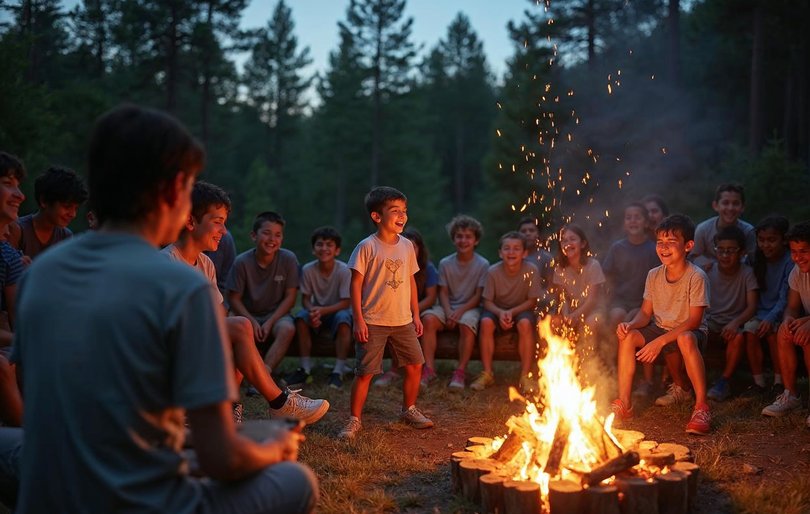
Camp chants are short, rhythmic lines that a leader calls and a group answers — by echoing, repeating, or giving a set response — used at camp to get attention, move groups between activities, and build cabin and camp spirit. Camp cheers are the louder, team-focused version, usually performed by a cabin or team.
Camp songs are longer and melodic. Chants take seconds — which is why they work as a management tool.
Why Do Camp Chants Work So Well With Groups?
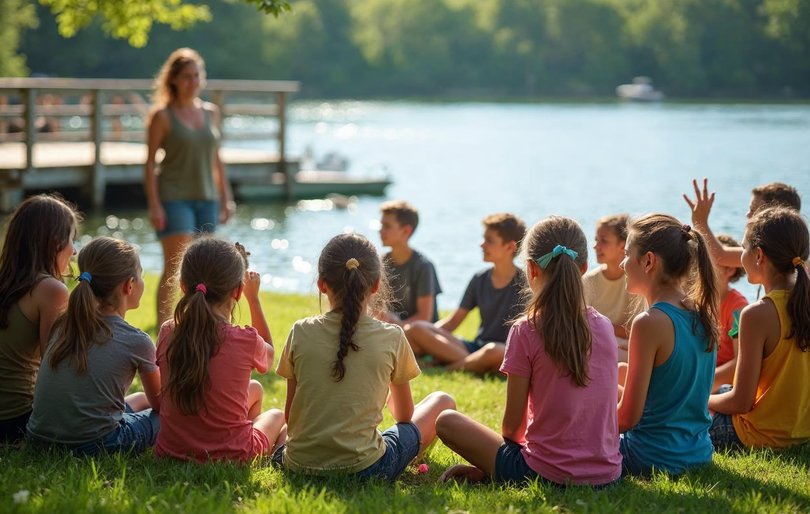
Camp chants work because they ask the group to answer, and nobody can answer while they’re still talking. Edutopia’s 2022 guide to attention-getters makes the same point about classrooms: with call-and-response, students have to listen to join in and stop side conversations to give the right reply. A chant recruits the group instead of competing with it.
That matters more at camp, where your “room” is a field, a lakefront, or a dining hall with a tin roof.
- The group does the work. Forty kids answering pulls the stragglers in.
- Staff voices last. A two-second call beats a minute of “Excuse me, everyone.”
- It feels like fun, not discipline. Kids who’d ignore “Quiet, please” will happily yell a response back.
My take? Every counselor should carry three chants they can call without thinking.

What Are the Main Types of Camp Chants?
Most camp chants fall into six types: call-and-response, repeat-after-me, echo, attention-getters, mealtime cheers, and cabin or team cheers. They differ in who speaks, how long they run, and what job they do. Knowing the type tells your staff when to reach for it.
| Type | How it works | Best for |
|---|---|---|
| Call-and-response | Leader calls one line; group gives a fixed answer | Getting attention fast |
| Repeat-after-me | Leader says a line; group repeats it word for word | Teaching new chants, campfire |
| Echo | Group copies the leader’s rhythm, tone, or volume | Walking, waiting in line |
| Attention-getter | Short call with an action (hands on knees, eyes up) | Before announcements |
| Mealtime cheer | Short thank-you or table cheer | Opening or closing meals |
| Cabin or team cheer | Group-owned cheer, performed together | Spirit events, identity |
Traditional favorites like “Boom Chicka Boom” (repeat-after-me) and “Everywhere We Go” (echo) still fill campfires every summer. Use them. But don’t let them be the only chants your staff knows.
Which Camp Chants Fit Each Part of the Day?
Match each chant to a moment: attention-getters before announcements, line-up chants at transitions, mealtime cheers to open and close meals, spirit chants at all-camp events, and cabin cheers when groups gather. Short and predictable beats clever. These are original call and response chants you can use this summer.
Chants do their best work at the seams of your summer camp daily schedule, like the five minutes between swim and lunch.
| Use | Leader calls | Group answers |
|---|---|---|
| Attention-getter | “Bear paws!” | “On my knees!” (hands on knees, eyes up) |
| Attention-getter | “Owl eyes!” | “Wide open, looking at you!” |
| Attention-getter | “Campfire!” | “Crackle… and settle.” (drop to a seat) |
| Line-up | “Line it up!” | “Toes on the line, we’re right on time!” |
| Line-up | “Count off, Cabin 4!” | Each camper says a number, then all: “All here, all clear!” |
| Line-up (walking echo) | “Trail feet!” | “Quiet feet!” |
| Mealtime | “Who’s hungry?” | “We are — and we wait!” |
| Mealtime | “Thank the cooks!” | “Clap, clap — thank you, kitchen crew!” |
| Mealtime | “Clean-up check!” | “Scrape it, stack it, done!” |
| Spirit | “Dial it up!” | Camp name, loud. “Dial it down!” Camp name, soft. |
| Cabin | “Otters, otters!” | “Splash all day, lift each other on the way!” |
| Cabin | “Foxes on three — one, two, three!” | “Quick, kind, free!” |
Keep them short. If a chant needs more than two tries to land, it’s too long.
How Do You Teach a New Chant in Three Steps?
Teach any new chant in three steps: model the whole thing with a second staff member, have the group echo it in short chunks, then use it for real within the hour. Repeat it at the same moment for three days and it sticks.
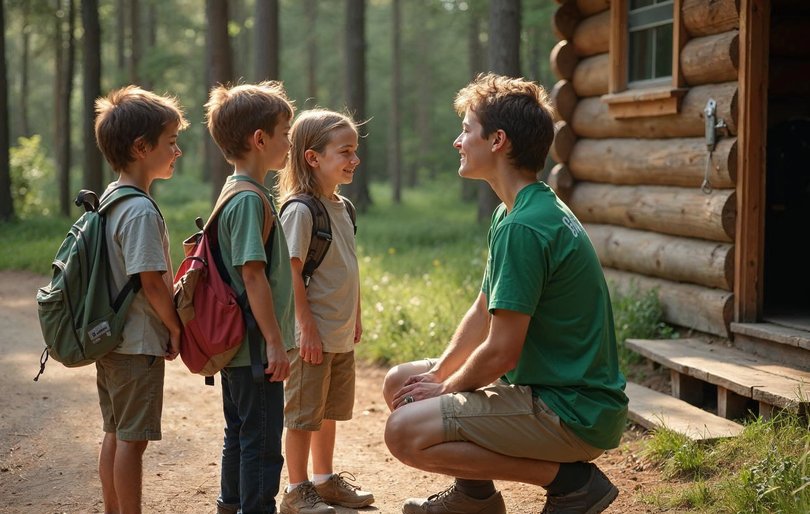
- Model it. Two staff perform the call and the answer together, once, at full energy. Kids learn the shape before the words.
- Echo in chunks. Break the answer into two-to-four-word pieces. Campers repeat each piece, then the whole line. Two rounds, no more.
- Use it live. Call it at the next real transition — not as practice. Then call it at the same moment tomorrow and the next day.
In practice: a day camp introduces “Line it up!” at Monday’s morning circle. The first post-swim line-up takes two calls. By Wednesday, campers answer before the counselor finishes. Want buy-in? Let campers help write the calls — a good rainy-afternoon cabin job.
How Do You Write Your Own Cabin Cheer?
A good cabin cheer is four lines, under 15 seconds, and names the cabin, a value, and an action everyone can do. Write it in the first two days so the cabin performs it all session. Use this template:
- Line 1 — Name and sound: “[Cabin name], [cabin name], [animal sound or clap]!”
- Line 2 — Value: a rhyme about what the group stands for (kind, brave, loud, helpful).
- Line 3 — Action: a motion every camper can do seated or standing.
- Line 4 — Closer: a short shout everyone ends on together.
Example: “Herons, herons, flap, flap, flap! / Stand up tall and give a clap! / Wings out wide, now wings in tight — / Herons, herons, take flight!” Short, and every kid gets a motion.
Cabin cheers work because the group is real. Campers know their cabin from day one, set on the roster your camp registration software built from ages, grades, and friend requests. The cheer turns that list of names into a team.
Rules for every cabin cheer:
- Every camper in the cabin gets a word or motion
- The cheer names your cabin, never another one
- No rhyme about food, bodies, or how someone talks
Running a summer camp theme each week? Have cabins rewrite line two to fit it — pirate week turns “kind” into “brave on the waves.”
How Do You Keep Camp Chants Inclusive?
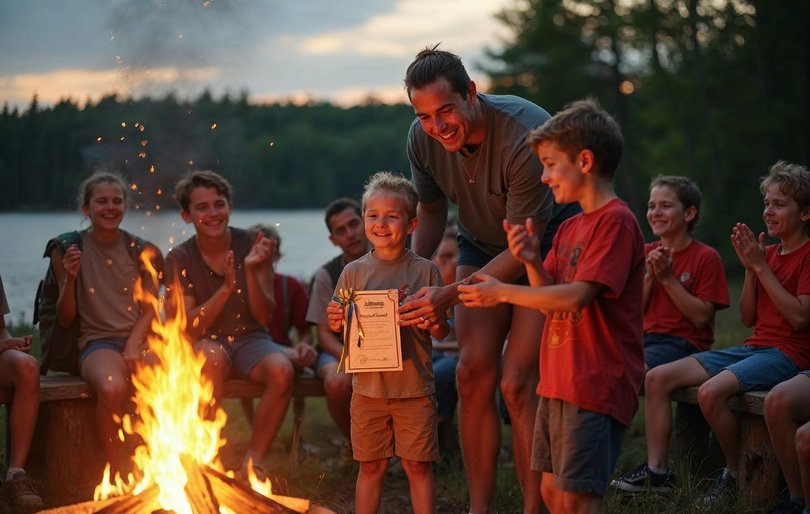
Inclusive camp chants cheer for a group, never against one. Ban lines that mock another cabin, a body, an accent, or a culture, and give every camper a way to join — voice, motion, or a sign to hold. Kids notice who a cheer leaves out faster than adults do.
Rivalry is fine. Taunting isn’t. “Cabin 6 is number one” works. “Cabin 5 can’t swim” doesn’t — not even as a joke.
Audit your camp cheers and chants every spring:
- Retire anything that borrows mock “Native” words, fake accents, or stereotypes. If a chant needs an apology or an explanation, it’s done.
- Offer a motion-only part for campers who are noise-sensitive or nonverbal.
- Keep headphones or ear defenders nearby for all-camp spirit events.
- Let shy campers lead with a partner, not solo.
I’d also skip chants that single out one camper by name — unless it’s their birthday and they want it.
How Loud Is Too Loud for Chants and Cheers?
Too loud is any chant that needs shouting to work. The American Speech-Language-Hearing Association (ASHA) warns that overusing or misusing the voice can lead to nodules and polyps on the vocal folds, and its 2025 guidance tells staff to avoid talking during busy, noisy transitions. Chants should save voices, not burn them.
Counselors run chants all day for weeks. Without rules, everyone’s hoarse by the second Friday.
- Use a silent quiet signal first. A raised hand that everyone copies costs no voice.
- Teach the volume dial. “Dial it up” and “Dial it down” teach kids to control volume, not only crank it.
- Cap dining-hall cheers. One per table per meal, called by staff.
- Mark quiet zones and times. No cheers near the health center, after the evening cutoff, or by sleeping younger cabins.
- Watch for hoarseness. ASHA advises seeing an ear, nose, and throat doctor if it lasts more than two weeks.
Don’t swap shouting for whispering, either. ASHA notes whispering strains the voice too.
How Do You Make Chants Part of Camp Culture?
Make chants part of your culture by writing them down, training staff on them, and using the same ones at the same moments every day. A one-page chant list per use, taught in staff week, turns them from random noise into a shared camp language.
Build a camp chant book: 3 attention-getters, 3 line-up chants, 2 mealtime cheers, every cabin’s cheer. Teach it in 2027 staff training. Share a few summer camp chants with families before day one so returning campers teach new ones on the bus. Small habits like this are part of how to run a summer camp that feels organized from the first morning.
FAQ
What are some short chants for camp?
Two-part call-and-response chants work best. Try “Bear paws!” / “On my knees!” for attention, “Line it up!” / “Toes on the line, we’re right on time!” for transitions, and “Thank the cooks!” / “Clap, clap — thank you, kitchen crew!” at meals.
What are some good cheer chants for camp?
The best cheers for camp name your group, stay under 15 seconds, and include a motion. Classics still work, but a cabin cheer the campers wrote themselves gets more energy.
How do you teach camp chants for kids quickly?
Model the full chant with another staff member, have campers echo it in short chunks, then use it at the next real transition. Call it at the same moment for three days.
How do you stop cabin cheers from becoming mean?
Set one rule: cheer for your cabin, never against another. Review new cheers before they’re performed, retire anything mocking a group, body, accent, or culture, and give every camper a word or motion.
How do counselors avoid losing their voice from chants?
Use a silent quiet signal first, keep calls short and at a moderate volume, avoid talking over noisy transitions, and rest the voice between activities. ASHA recommends seeing a doctor for hoarseness lasting more than two weeks.
Conclusion
Good camp chants are tools with jobs. Pick one for attention, one for line-ups, one for meals, and let every cabin write its own cheer. Teach each one in three steps, keep every cheer for a group and never against one, and set volume rules before the first camper arrives.
Get that right and 12:05 in the dining hall sounds different. This week, draft your camp’s one-page chant list and add it to staff training.