




Key takeaways
- Review the full camper experience, not only building entrances. Consider registration, transportation, activities, meals, restrooms, sleeping areas, and emergency plans.
- Talk with families early and respectfully about the supports a camper may need.
- Offer different ways to participate while preserving the purpose and fun of each activity.
- Prepare staff with clear, camper-specific information and a route for asking questions.
- Check applicable accessibility and disability laws with qualified advisers; a general checklist is not a substitute for legal advice.
What does summer camp accessibility mean?
Summer camp accessibility means planning the site, communication, activities, and daily routines so campers with different abilities can participate as fully as possible. It includes physical access, sensory needs, communication, equipment, staff preparation, and the way a program responds to individual requests.
Accessibility is not a single ramp or a special activity on the schedule. A camper may be able to enter the building but still be unable to use the restroom, join a game, understand instructions, or take part in an emergency evacuation. Directors need to look at the whole experience.
Start by treating accessibility as part of program design. Include it when you choose facilities, plan activities, communicate with families, train staff, and prepare emergency procedures. I recommend a site walkthrough with someone who understands accessibility needs, not only the people who already know the property.
How can directors assess summer camp accessibility before the season?
Walk through the camp as a camper and family would experience it. Start at arrival and follow the day from check-in to departure. Look for barriers that may be easy to miss when you already know the site. Record each barrier, who owns the next step, and whether the fix must be completed before registration or opening day.
| Area | Questions to ask |
| Arrival and parking | Is there an accessible route from drop-off to check-in? |
| Buildings | Are entrances, paths, doors, and common areas usable? |
| Restrooms | Are accessible facilities available and practical to reach? |
| Activity spaces | Can campers reach the area and use the equipment? |
| Dining | Can campers access the serving area and seating? |
| Communication | Are instructions and essential information available in usable formats? |
| Transportation | Can the camp arrange appropriate transport when needed? |
| Emergency plans | Can each camper receive alerts and evacuate or shelter safely? |
Do not rely on a quick visual inspection alone. Ask people with relevant lived experience or professional expertise to review the site where possible. Record barriers, assign an owner, and decide what can be fixed before opening day.
Separate immediate safety concerns from improvements that need longer-term planning. If a facility or activity cannot be made accessible in the required way, seek qualified advice about your obligations and possible alternatives. Do not promise a family something the camp has not confirmed it can provide.
How should camps discuss accommodations with families?
Start the conversation early, preferably during registration or before the session begins. Explain why you are asking, who will see the information, and how it will be used. Keep questions relevant to participation and safety. Do not ask families to share more personal or medical information than the camp needs.
Useful questions include:
- What helps your child take part comfortably in group activities?
- Are there access, communication, sensory, or mobility supports we should plan for?
- Are there situations that may make the camp day harder?
- What has worked well in similar settings?
- What should staff know if your child becomes overwhelmed or needs a break?
- Who should the camp contact if a plan needs to be reviewed?
Listen before proposing a solution. Families know their child, but they should not be expected to design the camp’s entire support plan. The camp must assess its own facilities, staffing, policies, and legal responsibilities.
Store accommodation information securely. Share it only with staff who need it to support the camper. Give those staff clear instructions rather than forwarding an entire registration record.
How can you adapt activities for different abilities?
An inclusive activity gives campers more than one way to participate. The goal is not to create a separate, lesser version of the program. It is to remove unnecessary barriers while keeping the activity’s purpose. Ask the camper what works when appropriate, and make sure the adaptation preserves a meaningful role in the shared activity.
| Activity | Possible adaptation |
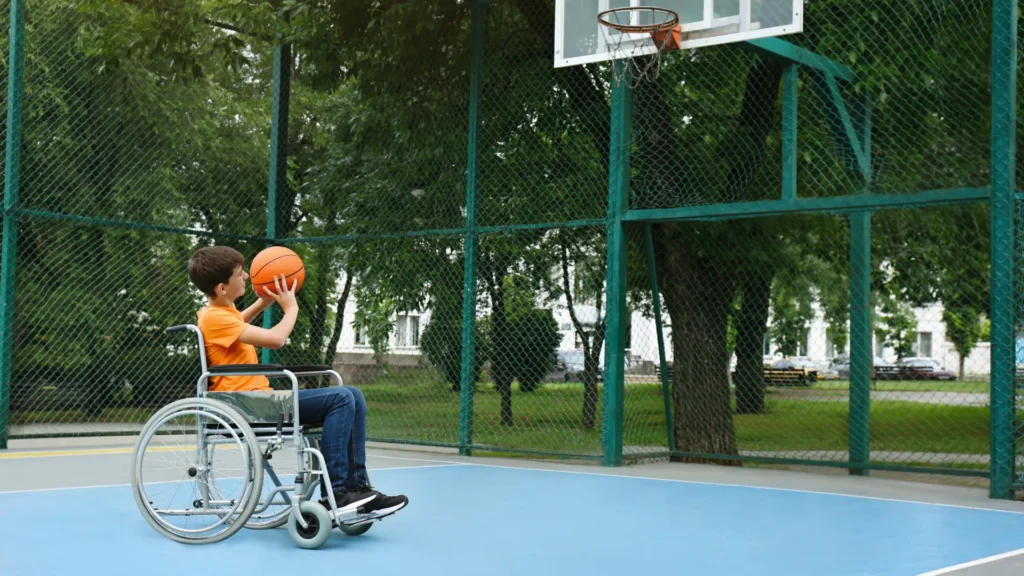
| Relay race | Offer walking, rolling, directing, timing, or team strategy roles |
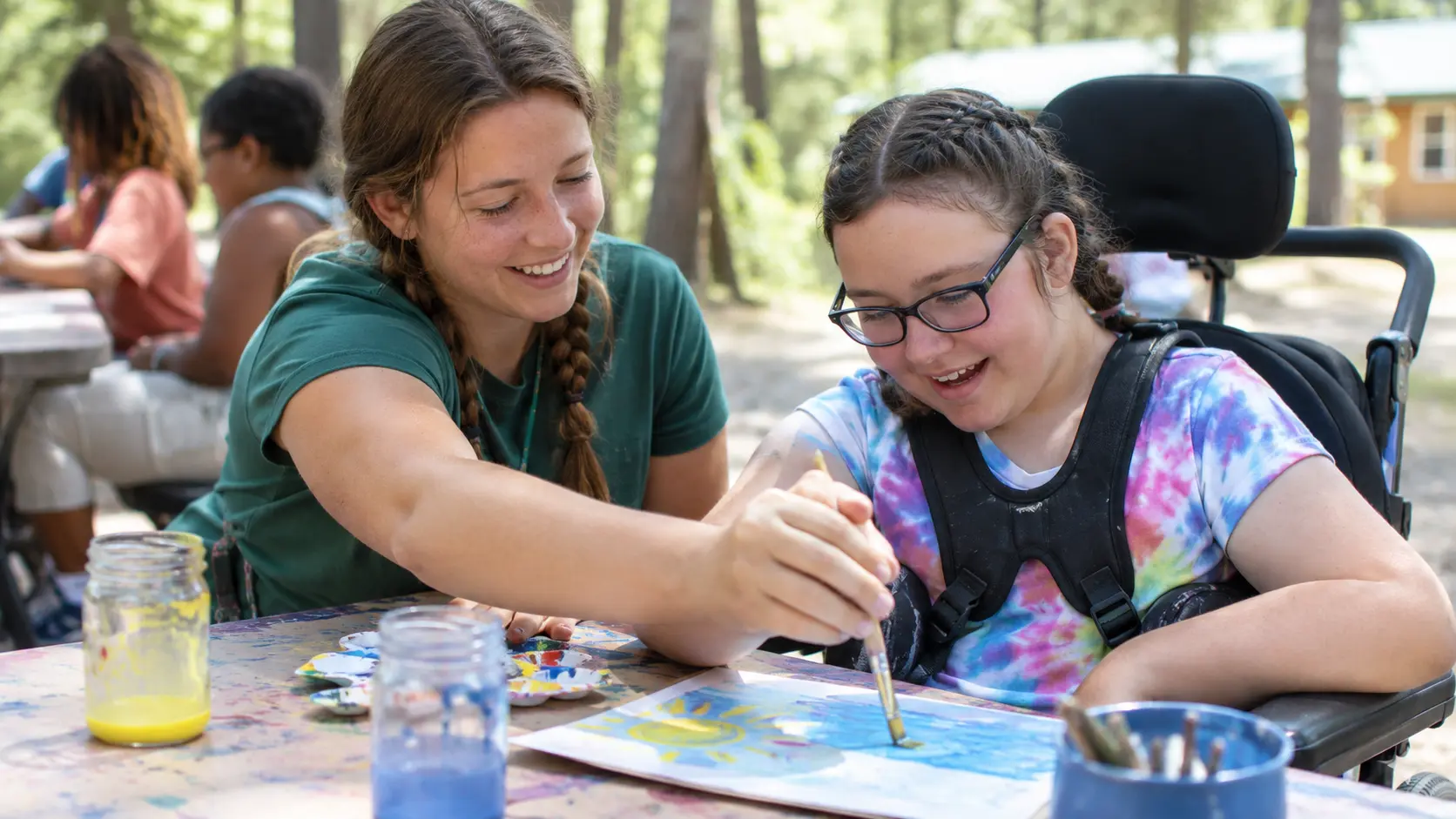
| Arts and crafts | Provide different tools, grips, materials, or work surfaces |
| Group game | Use visual instructions, demonstrations, and a quieter practice round |
| Nature walk | Choose an accessible route or create a parallel observation station |
| Music activity | Offer instruments with different handling needs or a role in rhythm and song selection |
| Team challenge | Let campers contribute through planning, building, testing, or presenting |
Ask the camper what works when appropriate. Avoid assuming what someone can or cannot do based on a diagnosis or a visible disability.
Sensory needs also matter. A busy dining hall, loud whistle, crowded transition, or unexpected schedule change can make participation difficult. Consider quiet spaces, advance notice, visual schedules, predictable routines, and options for breaks. These adjustments can help many campers, not only those with a formal accommodation. The right choice depends on the camper and activity, so ask rather than assume.
How do you prepare staff to support inclusive participation?
Staff need clear information before campers arrive. Include accessibility and inclusion in counselor orientation, activity planning, and daily briefings. Give counselors clear instructions, a named contact, and permission to ask for help when the agreed support is not working before the first camper arrives.
Training should cover:
- Respectful language and how to ask before helping.
- The camper’s agreed support plan and privacy expectations.
- How to adapt common activities.
- How to recognize when a camper needs a break or additional support.
- Who can approve changes to a plan.
- How to communicate with families.
- What to do when a support arrangement is not working.
- Emergency procedures relevant to the camper and site.
Do not ask counselors to make clinical judgments or independently change medical instructions. Their job is to follow the approved plan, observe, communicate, and seek help from the designated person.
Give staff a practical one-page summary for each camper who needs specific support. Include only necessary details, the actions staff should take, and the person to contact. Review the information when the plan changes.
The American Academy of Pediatrics identifies inclusion and accessibility as considerations for camp and out-of-school-time settings in its camp health guidance.
How should accessibility appear in emergency and daily plans?
Accessibility must continue during an emergency. A route that works during a quiet site tour may be blocked during a crowded evacuation. An audible alarm may not reach every camper. A written instruction may not be usable by someone who needs another communication format.
Review emergency plans with the people responsible for safety and with qualified professionals where needed. Consider alerts, evacuation routes, shelter locations, transportation, mobility equipment, communication supports, and who is responsible for each step. For covered organizations, the U.S. Department of Justice explains effective communication requirements and examples of auxiliary aids; camps should confirm which ADA provisions apply to their program and facilities.
Do not create a plan based on assumptions. Ask what support is needed, test the process where practical, and update it if the site or camper’s needs change. Follow local fire, building, health, licensing, and disability-access requirements.
For day-to-day operations, build time into transitions. A camper may need extra time to move between activities, use a restroom, understand instructions, or collect equipment. A schedule with no flexibility can turn a reasonable support plan into a daily source of stress.
How does accessibility fit into camp rules and registration?
Accessibility should be reflected in the way a camp communicates expectations and gathers information. Registration forms can ask families how the camp can support participation, but the form should not be the only opportunity for discussion. Make it clear whom families can contact with questions or updates.
The camp’s rules and expectations should be applied fairly and with attention to individual support plans. A behavior policy should not punish a camper for a disability-related need without considering the circumstances and applicable obligations.
Consistent summer camp discipline also requires staff to understand the difference between a safety concern, a support need, and a rule violation.
Summer camp accessibility planning checklist
A summer camp accessibility review should cover the full experience, from registration and arrival to activities, meals, restrooms, and emergency response. Assign an owner to each barrier, record what can be fixed before opening, and document any remaining decisions that need qualified review.
Before registration opens
- Review the site, facilities, routes, and transportation arrangements.
- Identify activities that may need adaptation.
- Check communication formats and registration questions.
- Confirm how accommodation requests will be reviewed.
- Identify the staff member responsible for coordination.
- Review legal and licensing obligations with qualified advisers.
Before campers arrive
- Confirm agreed support plans with families.
- Share relevant information securely with assigned staff.
- Check equipment and accessible spaces.
- Review activity adaptations and transition times.
- Include relevant supports in emergency planning.
- Brief staff on questions and escalation routes.
During the season
- Ask whether supports are working.
- Record barriers and follow up.
- Update plans when circumstances change.
- Seek feedback from campers and families.
- Include accessibility issues in the post-session review.
Frequently asked questions
When should families request accommodations?
Encourage families to contact the camp as early as possible, ideally during registration or before the session. Also provide a way to share new information later. The camp should explain how requests are reviewed and who handles them.
Should camps create a separate activity for a camper with a disability?
Not automatically. First consider whether the main activity can be adapted so the camper can participate with peers. A separate option may sometimes be appropriate if it reflects the camper’s preference and provides meaningful participation, but it should not be the default.
How should counselors receive accommodation information?
Give relevant staff the specific instructions they need to support the camper, using a secure process. Avoid sharing full medical or personal records with people who do not need them.
Can a camp guarantee that every accommodation is possible?
A camp should not make promises before assessing the request, facilities, staffing, and applicable obligations. Respond promptly, discuss options with the family, and seek qualified advice when needed. Avoid blanket assumptions about what a camper can or cannot do.
Make accessibility part of the plan from the beginning
Summer camp accessibility improves when questions are asked early, barriers are identified honestly, and staff know what to do. Review the full camper experience, talk with families, and adapt activities without lowering expectations for participation. Then assign an owner to track requests and improvements throughout the season.