






Key takeaways
- Decide who is responsible for food service before building the menu or ordering supplies.
- Forecast meal counts from confirmed attendance, staff numbers, session dates, and likely changes.
- Establish a documented process for allergies and special dietary needs with families and qualified professionals.
- Follow applicable food codes and local health department requirements; do not rely on informal kitchen habits.
- Track food costs, deliveries, inventory, and waste so you can adjust before the budget slips.
What does summer camp food service management include?
Summer camp food service management is the work of planning, purchasing, preparing, serving, and documenting meals and snacks for campers and staff. It may involve an on-site kitchen, a contracted caterer, delivered meals, or a combination of these options. The person responsible must coordinate the kitchen or provider with the camp schedule, attendance records, and dietary communication.
Food service touches several parts of camp operations: Meal times affect the daily schedule, attendance affects quantities, dietary needs affect menu choices and preparation, kitchen staffing affects service speed and safety, and supplier delays can disrupt the whole day.
Name one person who owns food service, even if a vendor or kitchen manager handles the daily work. That person should coordinate the menu, meal counts, staffing, supplier communication, records, and escalation process.
How do you choose a model for summer camp food service management?
Choose the model that fits your facilities, attendance, staffing, budget, and ability to meet food safety requirements. I recommend naming the person responsible for daily food service before comparing quotes or finalizing the menu. Running a kitchen in-house gives the camp more direct control, but it also requires suitable facilities, trained people, purchasing, cleaning, maintenance, and oversight.
An outside provider may bring staff and systems the camp does not have. It also introduces contract requirements, delivery schedules, service dependencies, and less direct control over some parts of the process.
| Decision factor | In-house food service | Outside provider |
| Facilities | Camp needs suitable kitchen and storage | Provider may prepare food off site |
| Staffing | Camp hires, schedules, and trains kitchen team | Provider supplies some or all staff |
| Menu control | More direct control | Depends on contract and provider |
| Cost | Equipment, wages, supplies, utilities, oversight | Contract fees, delivery, service charges |
| Flexibility | Changes may be easier if capacity exists | Changes depend on notice and agreement |
| Oversight | Camp manages daily procedures | Camp still checks contract and service |
Before choosing, confirm local permits, inspections, food-handler requirements, and any rules that apply to your camp’s service model. Ask your local health department or qualified food safety adviser what is required. A vendor contract does not transfer every responsibility away from the camp.
How do you plan menus, meal counts, and food purchasing?
Build the meal plan from attendance and the camp calendar. Start with the number of campers and staff expected for each session, then account for arrival and departure days, day trips, special events, and known dietary requirements. A regular review prevents the camp from carrying excess stock while still protecting meal availability when attendance changes.
A useful planning process:
- Set the meal cycle. Decide how often menus repeat and which meals are served each day.
- Forecast headcount. Use current enrollment and staff rosters, then set a deadline for updates.
- Estimate quantities. Use the menu, portion guidance, age groups, and expected attendance.
- Check storage capacity. Do not order more perishable food than the kitchen can safely store.
- Confirm supplier lead times. Identify ordering deadlines and delivery windows.
- Plan substitutions. Know which items can be replaced without creating a dietary or allergen issue.
- Review waste. Compare planned quantities with what was prepared, served, and discarded.
Keep a menu and purchasing sheet that records the meal, expected headcount, planned quantity, supplier, order date, delivery date, and actual quantity received. This makes it easier to spot recurring over-ordering or shortages.
For a small camp, a spreadsheet may be enough. A larger operation may need an inventory system or kitchen management software. The tool matters less than having one reliable source of information. Camps participating in the USDA Summer Food Service Program should also check the USDA Food Buying Guide resource center for the meal-pattern materials that apply to that program.
How should camps handle allergies and special dietary needs?
Treat allergy and dietary information as a safety matter, not a preference note on a meal list. Establish a process with families before the session, and involve qualified health professionals when an individual plan requires clinical guidance. Put the approved plan in writing and make sure kitchen staff and assigned supervisors know exactly where to find it.
Ask families to provide the information the camp needs to plan safely. Confirm what the camper must avoid, what steps are required to prevent exposure, who should be contacted, and what written instructions or emergency plans apply. Do not ask kitchen staff or counselors to interpret medical information beyond their training.
Your process should cover:
- How dietary information is collected and updated.
- Who reviews the information and confirms the plan.
- How relevant details reach kitchen staff and assigned supervisors.
- How ingredients and labels are checked.
- How cross-contact is prevented during storage, preparation, and serving.
- How substitutions are approved and communicated.
- What staff should do if a meal is delivered incorrectly or information is unclear.
Keep personal and health information private. Share only what staff need to carry out their responsibilities, and store records securely.
Never guess whether a food is safe for a camper. If ingredients, labels, or preparation details are uncertain, stop and follow the camp’s escalation procedure. The U.S. Food and Drug Administration provides information on food allergies and food labeling, but camps should also follow current local requirements and each camper’s approved plan.
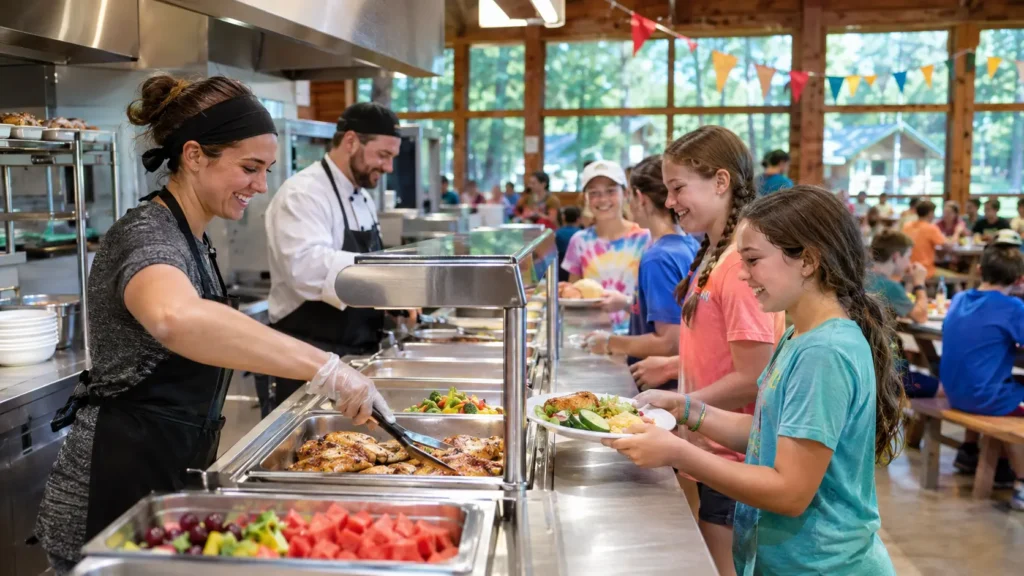
What food safety and sanitation procedures should be in place?
Food safety procedures should cover the entire path from delivery to service. That includes receiving, storage, preparation, cooking, holding, serving, cleaning, and disposal. Follow the food code and requirements adopted by your state or local health authority. The FDA publishes a model code, but local agencies determine which edition and provisions they adopt.
At a minimum, establish written procedures for:
- Checking deliveries and rejecting damaged or unsuitable products.
- Storing food at required temperatures and separating raw and ready-to-eat items.
- Handwashing and staff hygiene.
- Cleaning and sanitizing food-contact surfaces.
- Preventing cross-contamination and allergen cross-contact.
- Monitoring cooking, cooling, reheating, and holding where applicable.
- Managing pests, waste, and cleaning chemicals.
- Reporting illness and following staff exclusion rules.
- Keeping required temperature, cleaning, and inspection records.
The FDA’s 2026 Food Code is the current model code, but the version adopted and the rules that apply can vary by jurisdiction. Check your local health department’s requirements rather than treating a general online checklist as the law. For allergen labelling, use current FDA food allergy guidance.
Assign responsibility for each daily check. A log is useful only if someone completes it, reviews exceptions, and follows up.
How do you staff and manage a camp kitchen?
Kitchen roles depend on the size of the operation and whether meals are prepared on site. A larger camp may have a kitchen manager, cooks, prep staff, and dishwashing support. A smaller camp may rely on a contracted service or a limited team.
Write down who is responsible for:
- Menu planning and substitutions.
- Ordering and receiving deliveries.
- Food storage and inventory.
- Preparation and meal service.
- Cleaning and sanitation.
- Temperature and other required records.
- Dietary and allergen communication.
- Equipment problems and emergency coverage.
Train staff before they begin their duties. Cover hygiene, equipment, cleaning, safe food handling, allergen procedures, emergency contacts, and the records they must complete. Provide role-specific training rather than assuming everyone knows the camp’s process.
Build the kitchen schedule around meal preparation and service, not only the camp’s public program timetable. Allow time for receiving deliveries, prep, cleaning, breaks, and unexpected changes. Identify backup coverage for absences.
How do you control food costs and reduce waste?
Track food costs in a way that lets you spot changes during the season. A useful starting measure is cost per meal, calculated by dividing total food and meal-service costs by the number of meals served. Review the numbers by meal and session before the next supplier order.
Cost per meal = total food and meal-service cost ÷ meals served
Decide which costs belong in the calculation and use the same method each week. You may track food purchases separately from wages, equipment, utilities, and catering fees.
| Measure | What it tells you |
| Cost per meal | Whether food spending is moving above plan |
| Meals planned vs. served | Whether headcount forecasts are accurate |
| Waste by meal | Which menu items or quantities need review |
| Delivery accuracy | Whether suppliers deliver the ordered quantities |
| Inventory loss | Whether storage, rotation, or ordering needs attention |
Use a first-in, first-out approach where appropriate, follow safe storage rules, and adjust orders based on actual use. Do not reduce portions or remove dietary options simply to meet a budget target. Review menu design, purchasing, substitutions, and waste first.
How does food service fit into the wider camp operation?
Meal service affects the schedule, staffing, attendance planning, and family communication. Put meal times into the daily schedule and make sure activity leaders know when groups need to arrive and leave the dining area. Coordinate meal times with activity transitions and make sure staff know who handles last-minute attendance changes.
Keep parent-packed lunches separate from camp-managed meal service. The first requires clear family guidance; the second requires meal forecasts, supplier controls, kitchen procedures, and documented responsibility for food safety.
Food service is one part of how to run a summer camp. Include it in the camp budget, staffing plan, supplier calendar, and pre-opening checks.
Summer camp food service opening checklist
A summer camp food service management plan should be tested before the first meal is served. Confirm the service model, facilities, staff, supplier arrangements, dietary information, and local requirements, then use the checklist to assign each remaining task before camp opens. Confirm the owner and deadline for each item.
Before the season
- Decide whether meals will be prepared in-house, outsourced, or combined.
- Confirm facilities, permits, inspections, and local requirements.
- Name the person responsible for food service.
- Confirm kitchen staffing and training.
- Build menus and estimate meal counts.
- Collect and review dietary information securely.
- Confirm suppliers, order dates, and delivery windows.
- Prepare food safety, cleaning, and recordkeeping procedures.
- Check equipment, storage, and backup arrangements.
During the season
- Update meal counts as attendance changes.
- Check deliveries against orders.
- Complete required safety and sanitation records.
- Communicate substitutions before service.
- Review waste and cost trends.
- Follow up on equipment or supplier problems.
- Ask staff and campers for practical feedback.
Frequently asked questions
How many meals should a summer camp plan for?
Use the confirmed camper and staff count for each session and meal period. Account for arrival days, departures, trips, special events, and known changes. Set a clear deadline for updating the count and a process for handling late changes.
How should camps handle dietary restrictions?
Collect relevant information before camp, confirm the plan with families, involve qualified health professionals when needed, and communicate approved instructions to the staff who need them. Never guess about ingredients or substitutions when an allergy or medical need is involved.
Is it better to outsource summer camp food service?
There is no universal answer. Compare the camp’s facilities, staffing, budget, attendance, required expertise, and ability to meet local food safety rules. Outsourcing may reduce kitchen staffing demands, but the camp still needs to manage the contract and verify service.
How can a camp reduce food waste?
Improve attendance forecasts, compare planned and actual portions, rotate stock safely, review unpopular menu items, and adjust ordering. Track waste by meal so the team can identify patterns rather than making broad cuts.
Conclusion
Summer camp food service management depends on clear ownership, realistic meal counts, trained staff, safe procedures, and dependable suppliers. Build those pieces before campers arrive, then review them throughout the season. Review the plan during the season rather than waiting until the final meal has been served.