





Key takeaways
- Start with confirmed staffing numbers, housing capacity, arrival dates, and any accessibility or safeguarding needs.
- Put housing expectations in writing before staff arrive. Cover privacy, visitors, quiet hours, shared spaces, keys, cleaning, and reporting concerns.
- Assign one person to manage housing questions and maintenance requests.
- Treat housing as part of staff wellbeing and camp operations, not an afterthought.
- Review the setup after each session and update the plan before the next group arrives.
What does summer camp staff housing need to cover?
Summer camp staff housing is the accommodation, facilities, and day-to-day rules a camp provides for employees who live on site during a session. For an overnight camp, the plan affects staff rest, privacy, supervision, safety, and how smoothly the site runs.
Housing arrangements vary. Some camps use cabins, dormitories, shared houses, or designated staff quarters. Others provide separate rooms for certain roles or staff with specific needs. The building matters, but the operating plan matters just as much.
Before assigning rooms, decide who owns each part of the process:
- Camp director: approves the housing plan and resolves major concerns.
- Housing coordinator: manages room assignments, keys, move-in, and maintenance requests.
- Program leaders: communicate schedules and any role-specific arrangements.
- Facilities team: checks rooms, utilities, cleaning, and repairs.
- Staff members: follow the housing rules and report problems promptly.
If one person is expected to handle every question while also running the camp program, issues will get missed. Name a primary contact and a backup.
How should you plan summer camp staff housing capacity and room assignments?
Build the housing plan from confirmed staffing needs, not from a rough estimate made months earlier. Start with the number of employees expected on site, their arrival and departure dates, the number of beds available, and any limits that apply to each building.
Create a room inventory before assigning people. Record the building, room, bed count, accessible features, bathroom arrangements, and any restrictions. Then compare the inventory with the staff roster.
| Planning detail | What to confirm |
| Occupancy | Approved capacity and number of usable beds |
| Dates | Staff arrival, training, session, and departure dates |
| Room setup | Shared or private rooms, bathrooms, storage |
| Accessibility | Routes, entrances, bathrooms, and individual requests |
| Supervision | Which staff roles have on-call or overnight duties |
| Contingency | Spare beds or an alternative plan for late changes |
Avoid assigning rooms solely by job title or seniority. Consider privacy, practical needs, reasonable accommodation requests, and any safeguarding rules that apply to your camp. Make assignments privately. Do not circulate personal information about why a staff member has a particular room.
Example: A camp has 42 seasonal employees but only 38 beds in its main staff building. Four employees are scheduled to arrive two days later, after a second facility opens. Put those dates and assignments into the roster now. If the second facility is delayed, the director needs an agreed backup, not a last-minute scramble.
Which summer camp staff housing policies should you establish before arrival?
A written housing policy prevents small disagreements from turning into staff conflicts. Send it before the first day of orientation, then review the key points in person. Staff should know who answers questions, how to report a concern, and where to find the current policy.
Cover at least these areas:
- Visitors: Who may enter staff housing? Are visitors allowed in bedrooms? Are sign-in or approval steps required?
- Quiet hours: Set reasonable hours that protect sleep while recognizing that some camp roles operate on different schedules.
- Shared spaces: Explain expectations for kitchens, bathrooms, laundry, lounges, and outdoor areas.
- Keys and access: State how keys or access cards are issued, stored, returned, and reported missing.
- Cleaning: Define routine responsibilities and who handles common areas.
- Personal property: Explain storage, security, and how lost property is handled.
- Maintenance: Give staff a clear way to report broken fixtures, pests, leaks, heating or cooling problems, and other hazards.
- Concerns and complaints: Identify a confidential reporting route and a person outside the immediate supervisory chain where appropriate.
Keep the policy practical. A long document that no one reads is not useful. Best practices recommend a one-page arrival sheet for the rules staff need most. Put the essential rules on a one-page arrival sheet and make the full policy available for reference.
Review the policy against applicable employment, housing, fire-safety, safeguarding, and local requirements. A camp’s internal rules do not replace legal obligations. Ask qualified local advisers when the arrangement raises employment or housing questions. The American Camp Association publishes a public reference to its November 2025 accreditation standards; use the current edition to identify relevant facilities, staff, and health-and-wellness requirements.
How do you protect staff privacy, safety, and wellbeing?
Staff housing should provide a place to rest. Camp schedules can blur the line between work and personal time. Set clear expectations about when staff are on duty, who can contact them outside a shift, and how urgent concerns are handled.
Consider these practical safeguards:
- Keep sleeping areas separate from public or camper-facing spaces where the site allows.
- Restrict keys and access codes to people who need them.
- Explain how staff can report harassment, unsafe conditions, or boundary concerns.
- Provide a clear process for urgent maintenance and emergencies.
- Avoid sharing room assignments or personal accommodation details more widely than necessary.
- Make sure overnight and on-call responsibilities are explicit rather than assumed.
- Provide a private route for requesting an accommodation or raising a housing concern.
Do not rely on informal promises such as “someone is always around.” Identify the person on duty, the backup contact, and the procedure staff should follow.
How should you manage cleaning, maintenance, and room turnover?
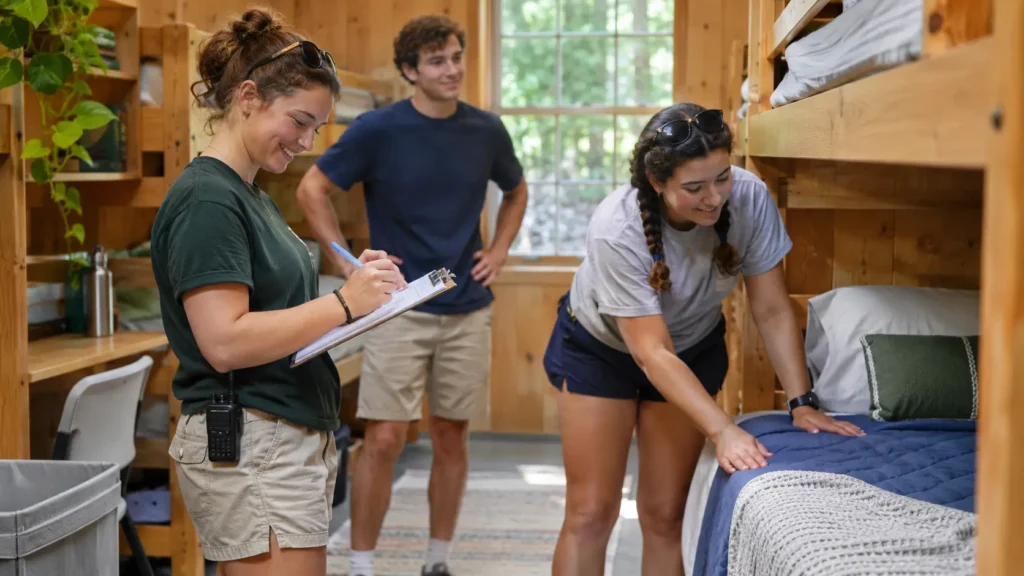
A housing plan needs a maintenance routine. Before staff arrive, inspect every occupied room and shared space. Check doors, windows, lighting, outlets, plumbing, heating or cooling, smoke alarms, furniture, and cleanliness. Record problems and assign an owner and deadline. A documented log also helps the next housing coordinator pick up open repairs without relying on verbal handoffs.
Use a simple room checklist:
- Room is clean and ready.
- Beds and furniture are safe and in good condition.
- Lighting and electrical fixtures work.
- Doors, windows, and locks operate correctly.
- Bathroom fixtures and hot water work.
- Required safety equipment is present and inspected by the responsible person.
- Staff know how to report maintenance issues.
- Keys or access credentials are ready.
During the season, set a regular inspection cadence that respects staff privacy and follows applicable rules. Tell staff what is inspected, when, and why. Do not enter private rooms casually or without the notice or authority required by your policies and local law. Keep inspection records separate from informal staff notes so repairs and follow-up remain traceable.
For repairs, use a log with the date, location, issue, priority, assigned person, status, and completion date. That record helps the next shift understand what is outstanding.
At move-out, provide a clear checklist for returning keys, removing personal belongings, reporting damage, and leaving shared areas clean. Inspect rooms promptly so the next group can move in without delay.
How does staff housing fit into the wider camp operation?
Housing decisions connect directly to staffing, schedules, budgets, and the camp’s daily plan. A counselor who lives on site may have different arrangements from a day-program employee. A maintenance worker may need access to facilities outside normal program hours. Put those details into the staffing plan instead of relying on verbal agreements.
A current camp counselor job description should make on-site expectations and schedules clear. The summer camp business plan should account for housing costs, utilities, cleaning, supplies, and maintenance.
Staff housing is one part of the larger work involved in how to run a summer camp. Treat it as a planned operation with an owner, budget, written procedures, and a review date.
What should a staff housing plan include before opening day?
A staff housing plan should be ready before orientation, with room assignments, written policies, working facilities, and named contacts. Walk through each occupied space with the housing coordinator, record outstanding repairs, and confirm the backup plan for late arrivals or unavailable rooms.
- Confirm the number of staff who need accommodation.
- Verify usable beds and approved occupancy.
- Complete room assignments and communicate them privately.
- Review housing rules with staff.
- Check keys, access, lighting, plumbing, and safety equipment.
- Assign housing and maintenance contacts.
- Prepare an emergency contact and escalation process.
- Confirm cleaning supplies, linens, waste collection, and laundry arrangements.
- Set a schedule for inspections and issue follow-up.
- Prepare a move-in and move-out process.
Do a final walkthrough with the person responsible for housing. A spreadsheet may show that every staff member has a bed, but a physical inspection confirms that the room is actually ready.
Frequently asked questions
Do all summer camp staff need to live on site?
No. It depends on the camp model, location, work schedule, role, and employment arrangement. Day camps may not provide housing. Overnight camps may house some or most seasonal employees. State the arrangement clearly during recruitment and confirm it in the relevant employment documents.
How should camps assign roommates?
Use a consistent process that considers occupancy limits, privacy, accessibility needs, safeguarding requirements, and staff requests where feasible. Explain how people can raise a concern. Avoid sharing private reasons for an assignment with other employees.
What belongs in a staff housing policy?
Include access, visitors, quiet hours, shared-space expectations, cleaning, keys, personal property, maintenance reporting, emergency procedures, and a route for complaints. Check the policy against local requirements before using it.
Who should handle housing complaints?
Name a housing contact and a backup. For serious concerns, provide a reporting route that does not require the staff member to report only to the person involved. Explain how urgent safety issues are escalated.
How often should staff housing be inspected?
Inspect before occupancy and set a reasonable routine during the season. Frequency and notice requirements depend on the facility, applicable law, and nature of the inspection. Respect privacy and document maintenance issues.
Conclusion
Good summer camp staff housing does not require elaborate facilities. It requires a plan that matches the number of people on site, clear expectations, safe and maintained spaces, and someone who responds when something goes wrong. Review the arrangements during the season, not only after staff have left.
Start with the room inventory and staff roster. Assign an owner. Put the rules in writing. Then ask staff what is working while there is still time to make changes.