


Key Takeaways
- Recognize every player by name. That one rule matters more than the venue or the food.
- Pick the format first: a banquet for big programs and milestone seasons, a casual team party for small or young teams.
- Start planning six weeks out, and send RSVPs at four weeks.
- Keep the program under 90 minutes, with the slideshow during dessert.
- Skip any “funny” award a 10-year-old could take as a dig.
Last updated: October 2026
The last game ends, the handshake line breaks up, and somebody asks, “So are we doing a banquet?” Ten seconds later, you’re in charge. Now you need a date, a room, food for twenty families, something for every kid, and a coach who’ll keep the speech short. Good sports banquet ideas aren’t about bigger centerpieces — they’re about a plan that makes every player feel seen. So where do you start when the clock’s already running?
A sports banquet is an end-of-season gathering where a team, its families, and its coaches share a meal, look back on the season, and recognize every player by name, usually with short speeches and awards. Below: a timeline, venue and theme ideas, a sample program, and an awards table for your fall 2026 season.
What Are the Best Sports Banquet Ideas for a Youth Team?
The best sports banquet ideas for a youth team are simple: recognize every player by name, show a short highlight slideshow, serve easy food, and keep the program under 90 minutes. Families remember how their kid felt when their name was called. They rarely remember the tablecloths.
What earns its place on the night:
- A highlight slideshow built from every family’s photos.
- A personal award for each player, with a sentence about why.
- A memory wall — team photos, a signed ball, the schedule with scores.
- A senior or “moving up” moment for players aging out.
- Thank-yous for volunteers and sponsors.
Themes and a photo booth? Nice extras. Don’t let them eat your planning time.
Should You Host a Sports Banquet or a Casual Team Party?
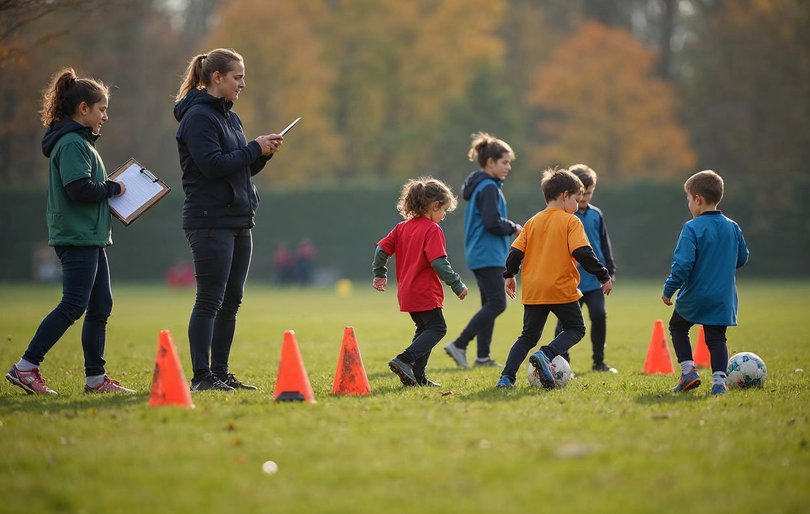
Host a full sports banquet when your program is large, your players are older, or the season marks a milestone, like seniors graduating. Choose a casual team party when the team is small, the kids are under 10, or families are worn out. Both work.
| Factor | Sports banquet | Casual team party |
|---|---|---|
| Best for | Multi-team programs, high school, milestones | Single teams, younger players |
| Setting | Cafeteria, hall, restaurant back room | Park, pizza place, the field |
| Program | Planned run-of-show with speeches | Eat, play, hand out awards |
| Awards | Each player called up with a blurb | Awards in a circle |
| Planning time | Five to six weeks | Two to three weeks |
If your team has fewer than 12 players and most are under 10, skip the formal program. A pizza-and-slideshow party with awards in a circle is plenty.
When Should You Start Planning an End-of-Season Banquet?
Start planning an end-of-season banquet about six weeks before the date. That gives you time to book a room, collect photos, and get RSVPs before families scatter into the next sport. A casual team party needs two to three weeks.
| When | Task |
|---|---|
| 6 weeks out | Pick the format, date, and venue. Recruit two or three helpers. |
| 4 weeks out | Send invitations with an RSVP deadline and an allergy question. Start collecting photos. |
| 3 weeks out | Coaches finalize awards and write a blurb for each player. |
| 2 weeks out | Make or order awards. Build the slideshow. Open a potluck sign-up. |
| 1 week out | Send RSVP reminders, confirm the headcount, test the slideshow. |
| Day of | Arrive an hour early. Label allergy-safe dishes. |
| Day after | Send a thank-you, share the photos, and note what you’d change. |
What Venue, Theme and Budget Sports Banquet Ideas Work Best?
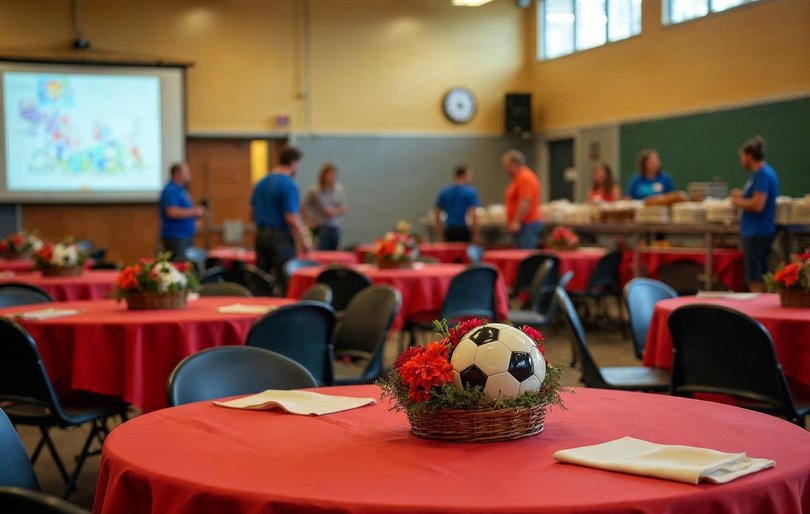
The best low-cost sports banquet ideas use free or borrowed space — a school cafeteria, a church hall, a park pavilion — and sport-themed decorations families already own. A potluck or a pizza order keeps food simple, so your effort goes into the program, not the catering.
Venue and format ideas:
- School cafeteria or gym — tables, chairs, and often a screen.
- Park pavilion — bring a speaker and share the slideshow online afterward.
- Restaurant back room — someone else cooks and cleans.
- Potluck in a community room — the most personal option.
- Pizza and slideshow at the field — right after the final game.
Theme and decoration ideas: team colors everywhere, centerpieces made from the sport itself (a ball in a basket, a cleat holding flowers), and a “season scoreboard” wall.
Budget-light ideas: borrow the school’s projector, print the program in black and white, and swap trophies for medals. Many teams fund the night with one of their booster club fundraising ideas from earlier in the season, so families don’t pay at the door.
What Should a Sports Banquet Program Include?
A sports banquet program should include a welcome, the meal, a highlight slideshow, coach remarks, player awards, recognition for graduating or moving-up players, and thank-yous for volunteers and sponsors. For a youth team, 75 to 90 minutes is plenty. Go longer and the younger siblings take over the room.
| Time | Segment | Notes |
|---|---|---|
| 0-10 min | Welcome | Name tags, memory wall |
| 10-35 min | Meal | Players sit with families |
| 35-45 min | Highlight slideshow | Play it during dessert |
| 45-52 min | Coach remarks | Three to five minutes per coach |
| 52-75 min | Player awards | Every player called up by name |
| 75-82 min | Senior or moving-up recognition | One short memory per player |
| 82-88 min | Thank-yous | Volunteers, sponsors, team parent |
| 88-90 min | Team photo and cheer | Everyone together |
Print a program listing every player. Kids keep these.
Close with one of the team cheers your players yelled before games. It beats any speech as a final note.
What End-of-Season Awards Recognize Every Player?
End-of-season awards should recognize every player by name with something specific to them — not one MVP and a stack of identical trophies. Group awards by type (effort, sportsmanship, skill, team-voted, and lighthearted) and give each child one that describes something they actually did.
| Type | Award ideas (rename to fit your team) | Fits a player who… |
|---|---|---|
| Effort | Engine Award, Early Bird Award, Most Improved | Never stopped running; showed up first; grew the most |
| Sportsmanship | Teammate First Award, Handshake Award, Bench Captain | Picked others up; respected opponents; led from the sideline |
| Skill | Brick Wall Award, Sure Hands Award, Playmaker Award | Anchored the defense; caught everything; set up teammates |
| Team-voted | Players’ Pick, Glue Award | Teammates named them the heart of the team |
| Lighthearted (kind only) | Weather Warrior, Loudest Fan on the Bench, Snack Hero | Played every rain game; cheered nonstop; never forgot snack day |
The rule I’d hold every coach to: no “funny” award that pokes at a weakness, a mistake, or a body. “Most Likely to Trip Over the Ball” gets a laugh from adults and stays with the kid all winter.
A 2019 survey by the Aspen Institute’s Project Play and Utah State University found kids quit a sport by age 11 on average — and 36% of the time, because they stopped enjoying it. Feeling seen is part of why a kid signs up again.
Write a two-sentence blurb for each player and read it as they walk up. Directors who hand out camp awards use the same trick: the words matter more than the plaque.
In practice, picture a U10 coach with 13 players and one evening to prep. She pulls one real moment per kid from her notes and matches each to an award type. About an hour of work — and every kid leaves with a sentence their parents will repeat for weeks.
How Should Coaches Give the Speech and Thank Volunteers?
Coaches should keep the banquet speech to three to five minutes, name specific moments from the season, and thank the people who made it work by name. Players remember the comeback in game six. They forget the general lines about hard work.
- Open with one story. The rainout, the first win, the goal nobody expected.
- Talk about growth, not the record.
- Save individual praise for the awards. It keeps the speech short and fair.
- Thank by name. The team parent, the scorekeeper, the parent who lined the field every Saturday.
Sponsors deserve their own moment. Name each business, say what their support covered — jerseys, field time, medals — and have players deliver a signed team photo. If you’re thinking about how to get sponsors for youth sports next season, a sincere thank-you here is where the renewal starts.
How Do You Make the Banquet Work for Every Family?
Make the banquet work for every family by planning around food allergies, keeping it free or close to it, and recognizing players who can’t attend. Allergies aren’t rare: the CDC’s National Center for Health Statistics reported that 5.8% of U.S. children had a diagnosed food allergy in 2021.
On a 15-player roster, that’s often one kid. Ask on the RSVP form, not at the door.
- Label every potluck dish with its main ingredients, and set up a separate allergy-safe table.
- Expect more than one allergen. FARE notes that about 40% of children with food allergies have more than one, so “nut-free” alone may not cover it.
- Fund it ahead of time so cost never keeps a player home.
- Deliver awards to players who miss the night, with the blurb written out, and share the slideshow with every family.
Nobody should hear their name called to an empty chair. If a family can’t make it, have a teammate accept the award and record the moment for them.
How Can Leagues Make the Banquet Easier Every Season?
Leagues make the banquet easier by turning it into a template: the same timeline, a reusable award list, and one place to collect RSVPs, allergies, and photos. A team parent who inherits a working plan spends time on the kids, not on a spreadsheet.
If you’re still working out how to start a youth sports league, put the end-of-season banquet on your first-year calendar. It’s one of the strongest reasons families come back.
With sports management software, rosters, family contacts, and event messages sit in one place, so RSVP reminders and allergy questions reach every household, not only the ones in the group chat.
FAQ
What does a sports banquet mean?
A sports banquet is an end-of-season event where players, families, and coaches share a meal, review the season, and recognize each player with speeches and awards.
What should a coach say at a sports banquet?
Tell one specific story from the season, praise growth over the record, thank volunteers and sponsors by name, and finish in three to five minutes.
What do you wear to a sports banquet?
Youth players usually wear team shirts or casual clothes. High school banquets lean business casual. When in doubt, ask the team parent.
What are good team party ideas for young kids?
A pizza party at the field, a park picnic with relay games, or a potluck with a short slideshow. Hand out awards in a circle and finish with the team cheer.
Conclusion
The best sports banquet ideas come back to one promise: every player hears their name and something true about their season. Pick the format that fits your team, start six weeks out, keep the program under 90 minutes, and plan for every family at the table. Then send the day-after thank-you and save your notes.